I awaken at 8am and my mind is immediately drawn to the fact that I should be boarding our next flight from Kota Kinabalu to Brunei, not lazing in bed. My travel arrangements had been drawn up and meticulously planned. The last couple of days has been a procession of cancelled flights and scrambling to readjust. Oh the joys of travel!
Three days ago Malaysian airlines sent an email to say there had been an adjustment to our flight into Kota Kinabalu. Normally these adjustments are a few minutes each way. I was gobsmacked to see that this was a 24 hour delay throwing accommodation and onward flights into disarray. A flurry of online activity secures us an alternative flight with a different airline on the correct day. A small compensation is we are rewarded with window seats and great views of Mt Kinabalu.
Mt Kinabalu, the highest mountain in South East Asia
Seemingly cursed we now get another email rebooking us from the flight to Brunei supposedly the next day. This little effort is insanely not just for the corresponding flight the next morning but it is the next night at 9pm!!! A flurry of international calls gets us on the morning flights and rearranges the accommodation accordingly.
View from our hotel room in KKTunku Abdul Raman park islands from our room
Never one to miss an opportunity I turn my attention to making use of the extra time in KK. A leisurely boat ride to Manukan Island, part of the Tunku Abdul Raman National park fits the bill. A paddle and a snorkel in the warm clear sea and leisurely alfresco lunch with a few beers ends our time in Malaysia.
“I don’t want to see the proboscis monkeys” opined my life partner. “They’re ugly!” As unique to Borneo as the orangutans the quirky proboscis monkeys in habit the coastal mangroves while the orangutans “rule” the jungle. Sadly both of these species are threatened by habitat destruction as poor Malay farmers fell the local vegetation and plant palm oil crops. The cheap and plentiful palm oil is sold to the west and appears in everything from foods to cosmetics. When we buy these products we are contributing to the demise of these apes.
Labuk bay is a half hour taxi ride away from Sepilok and on a fine, almost sunny morning we head off to visit the proboscis monkey sanctuary. The so called sanctuary is only partly what it claims to be. As we drive past the entrance gates to the feeding platforms we drive through kilometers upon kilometers of palm oil plantation amazingly resilient as it is in a wet swamp land. Walking to the platform we get a chance to appreciate the mangroves, the mud, the tangle of exposed roots, trapdoor crabs and mudskippers flitting across the mud. As we get to a more open area we see our first proboscis monkey a younger male sitting nonchalantly on the railing and unperturbed by our presence. “She who must be obeyed” is immediately entranced.
Over time more and more venture out of the mangrove forest, mature males mothers with infants. When the food arrives they jostle and bicker amongst themselves. The alpha male with the longest and most protruberant nose growls at those who antagonise him. We are immersed in the tableaux and are thoroughly fulfilled.
Hot and sweaty Suzanne decides to join in the outdoor shower action.
The evening is spent on a firefly cruise. We start out in the late afternoon on a motorised longboat cruising the rivers of the mangroves. Starting in a small tributary the river quickly opens up into a boad expanse of muddy brown water. All around is thick mangrove vegetation. We are alone with the hum of the motor and chirping of crickets as our company. We spot macaques and proboscis monkeys high up in the overhanging canopy. Their is a brief stop at sunset island but the dense cloud precudes any sunset views. Finally as the darkness dominates the light we see our first flicker of light, then another and soon the trees look like Christmas trees with the firefly bioluminescence lighting. It is magical and a great end to our day.
Proboscis monkey in the wildSunset IslandSunset Island
The next morning after breakfast we went back to our cabin and I was sitting at the desk on my laptop. A massive loud bone shattering thud on our roof breaks the silence and I look out through the windows across our balcony and come face to face with a 1 metre tall orangutan hanging off the branches. For a few seconds our eyes lock and I am paralysed with amazement. As I recover my senses and look to grab a camera or phone to record the encounter he catapults himself further into the canopy and we are left with the sounds and vision of branches moving under his weight and I am left with the image of his face permanently etched in my memory.
“Just be careful and don’t leave anything outside. The chalet we are giving you is at the edge of the jungle and there is an orangutan living in there who particularly likes that cabin.” These were the opening lines from the pretty Malaysian girl who was checking us into our accommodation at Sepilok. I am hooked immediately and the chalet does not disappoint. It oozes old world charm set in the midst of the jungle. Having said that there was no sign of the “resident” orangutan.
Our cabin, called Tip of BorneoGardens around our cabin
Sepilok is an easy 30 minute drive from Sandakan at the edge of the rainforest. An easy but steamy 10 minute walk from our resort is the Sepilok Orangutan Rehabilitation Centre. In 1963 the Malay government set aside 43 square km of jungle as a reserve and a rehabilitation site for orangutans. Today 80 orangutans live independently in the reserve and 25 orphaned are in the nurseries.
This and the next 3 pictures are of the orangutan in the jungle, not at the feeding station. They are my favourite picturesJungle mushroomAt the feeding station
Twice daily there is food left on a platform set back from the tourist walkway to encourage sightings and we are walking through the jungle for this when one is spotted in a nearby tree well away from the platform. For me this unstaged encounter was worth the price of admission and some of my better photos are from here. We were lucky to score a similar encounter on the way back with the orangutan shimmying down a vine and landing on the boardwalk railing before sauntering off.
MacaqueMacaque
Right next door is the sun bear sanctuary set up in 2014 again in the jungle to rehabilitate sun bears. These bears are the smallest and unfortunately subject to trapping and being exploited for body parts such as the making of bear’s paw soup. This is a most impressive facility with extensive tree top walkways and lots of these cute fur balls to be seen.
Sun bearTiny green snakeAll tuckered out!Hot and sweaty cooling off with outdoor shower at the end of a long day
Soggy! That’s the prevailing initial impression of Borneo. The views from our aircraft windows set the scene. Skies are grey and there are multiple islands on the horizon. All is filled with thick vegetation and wide brown rivers course through the landscape like turgid varicuse veins. Standing outside the airport it is a surprisingly pleasant 25C without the stifling humidty that these tropical areas are known for. All around is a riot of lush verdant vegetation. The local buildings ageing prematurely with a patina of black mould.
We have landed in Sandakan at the height of their monsoon season. This place that is a tropical backwater has a dark history. For those in the know the name, Sandakan evokes comparisons with the Thai-Burma railroad, Changi prison and the holocaust sites of Europe. It was here that the Japanese brought 2500 British and Australian prisoners of war to in 1942. The initial purpose was to build an airstrip for Japanese war planes in 1942. As the Japanese began to lose the war and the Allies controlled the seas in Asia, the decision was made to move the surviving POWs inland to a town called Ranau at the base of Mt Kota Kinabalu. Suffering from disease and malnutrition the death rate of the forced march was such that only 6 POWs from Sandakan survived.
Late afternoon sees us at the memorial. Nice well manicured gardens adorn the site of some truly horrific war crimes as evidenced by the accounts of the handful who escaped. Tropical trees and vegetation abound cradling the handful of survinving artifacts and the poignant war memorials. As I wander around I close my eyes and try o visualise the World War 11 atrocities that occurred here. The barbed wire fences, the mud, the wooden cages to put the prisoners in, the torture, the screams and anguish. The malnutrition, suffering and loss of life.
Lily pond at memorialBritish power generator used by the JapaneseExcavator used to build the airstrip, sabotaged by the POWs
Looking around, eyes open, this is so reminiscent of other WW11 sites I have visited, Kokoda, Changi, Bridge on the River Kwai, Pulau. What strikes me is actually how little of that past is evident. Men have designated these spaces as memorial sites areas to be preserved, free from human development. Paradoxically this approach has led, in the tropics, for nature to dominate and in the process the jungle actually obliterates that which we strive to remember. Looking at it in another way, though, how efficient is nature in healing mankind’s scars?
As a refreshing counterpoint to man’s atrocities we visit the beautiful Buddhist temple, Puu Jih Syh. Set high above Sandakan and the surrounding ocean it is a retreat, a haven for peace. A balm to the soul after the horrors of the Sandakan Death March.
Temple gatesPuu Jih Syh templeInside templeInside temple
I am propelled into mental gymnastics reexamining Christmases past like a modern day Ebenezer Scrooge from Dickens’ Christmas Carol. My life partner asks, when was the last time we spent Chritmas overseas? As I count back the decades she answers her own question out loud, 1979!
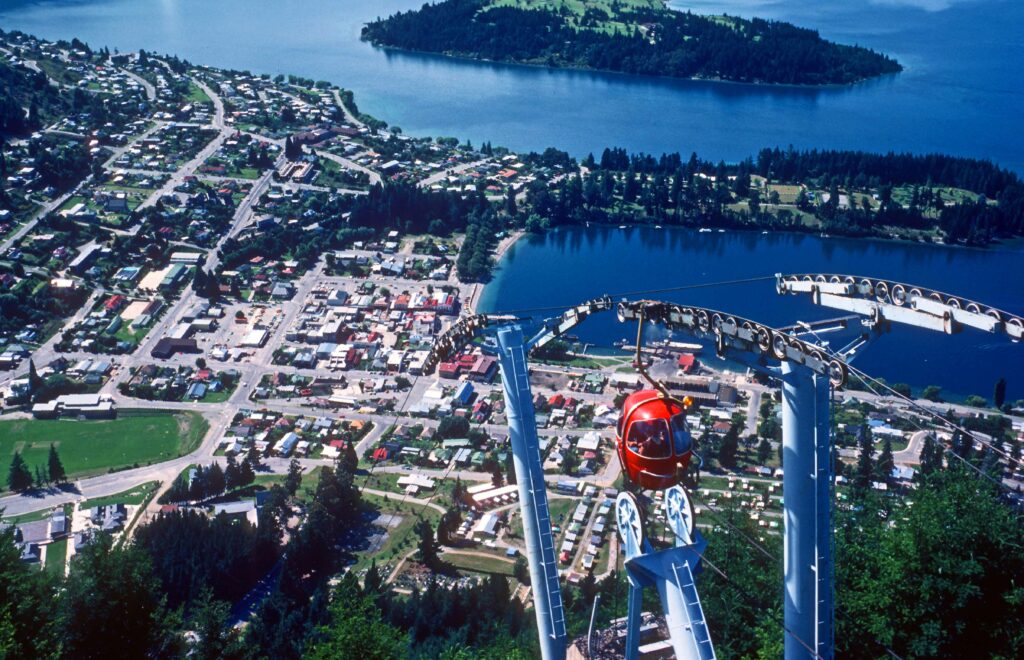
It was our honeymoon, me as a fifth year medical student and she as a 19 year old young woman on a trip to New Zealand. It was the first time overseas for all of us and the first time away from her parents for Suzanne. I remember Christmas day well. We were in Queenstown and Christmas dinner was atop Coronet peak with a romantic gondola ride to get there. I remember the romantic but late crimson sunset and the beautiful woman sitting opposite me. Forty three years on, looking back, how young we were!
Gondola to Coronet peakSuzanne at QueenstownMe at Queenstown
Each and every Christmas since has been at home with our children but as importantly with Suzanne’s parents who were our rocks. They were our supports and part of the glue that held our extended family together. Christmas would never be away from them.
Family Christmas
Last year we lost Suzannes’ mum, Margaret, after a prolonged illness and time in a nursing home.
Mum
Saddened, missing her we gathered around her dad as the last of the generation and celebrated what would ultimately be our last Christmas together. Three months ago, after a year of increasing poor health Arthur also passed away.
Mum and dad
Forty three years on Christmas is not quite the same. Surrounded by our boys, their partners and our expanding cohort of grandchildren all is merry but this year we celebrate a week early and Suzanne and I are again going overseas. For Suzanne it has been almost 4 years since she had any holiday as a devoted daughter she tended firstly to mum then to dad to the exclusion of any of the luxuries of life such as travel.
We are headed to Borneo for some wildlife viewing and a tropical holiday, but come Christmas day we will raise a glass and shed a quiet tear as we reflect on Christmases past. They will never be quite the same!
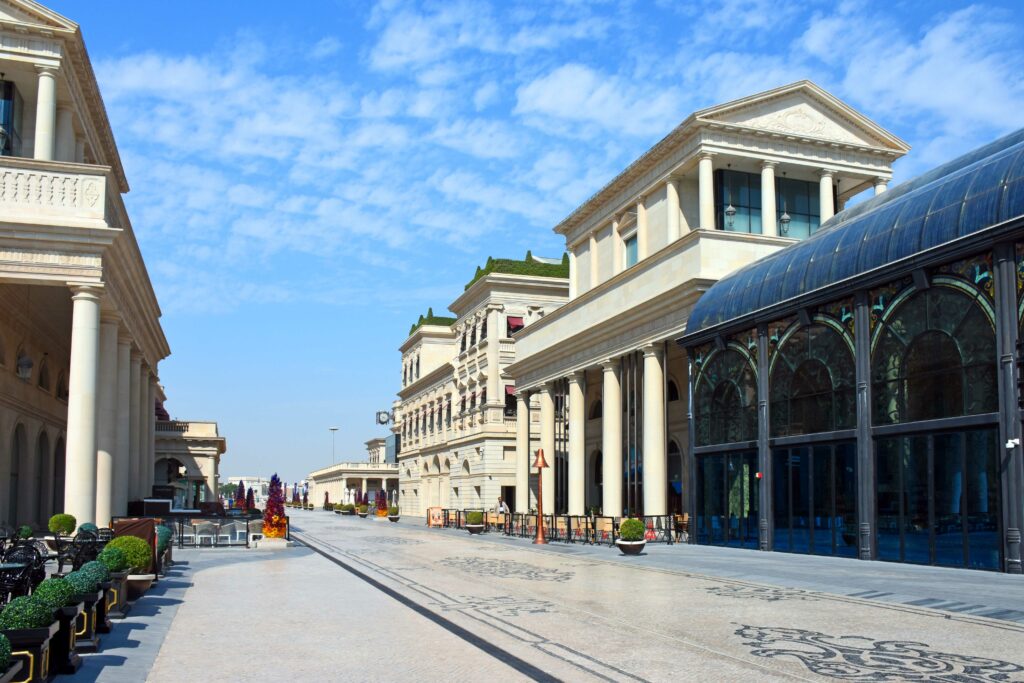
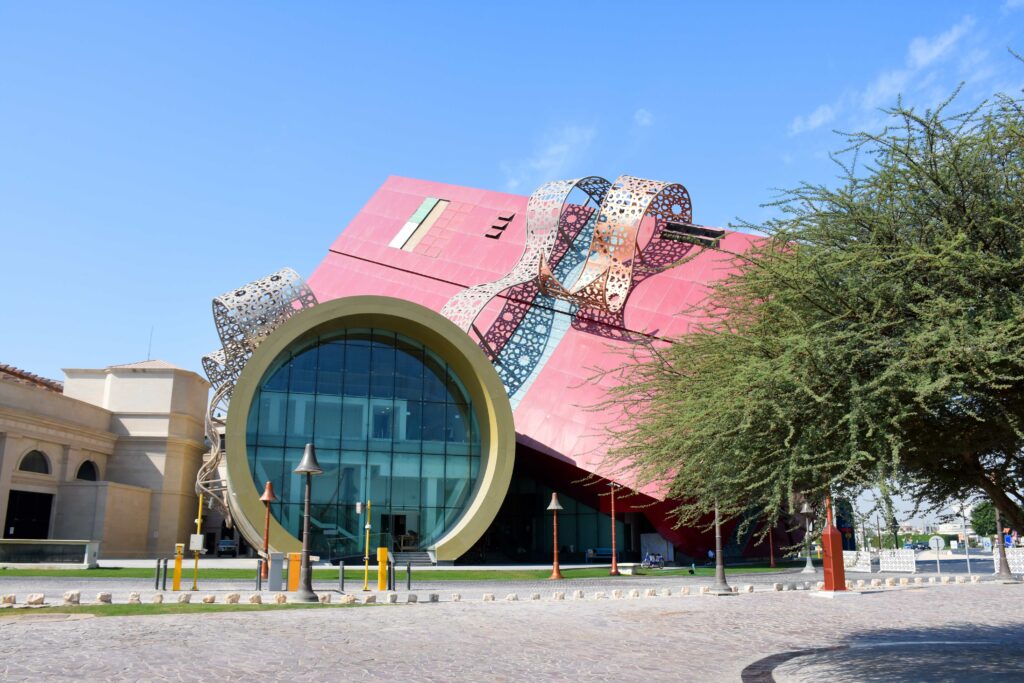
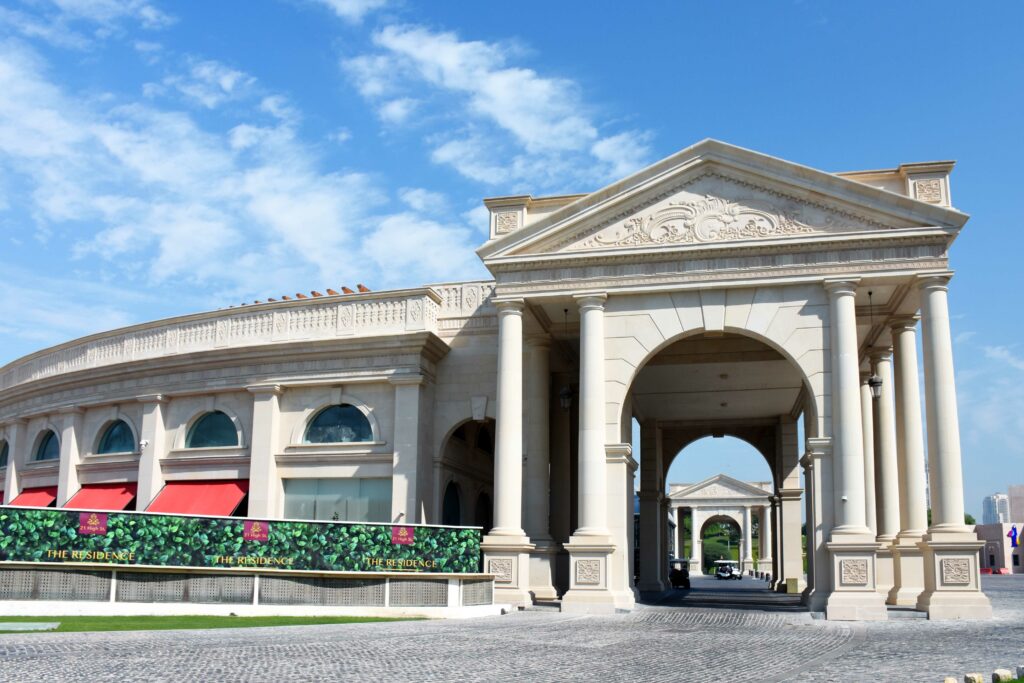
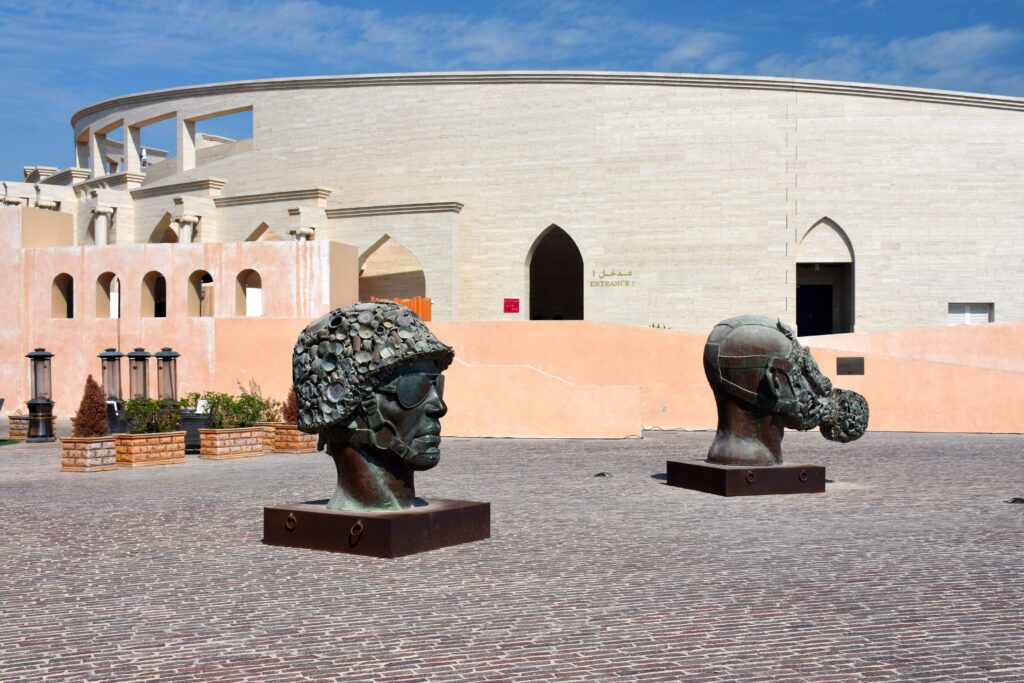
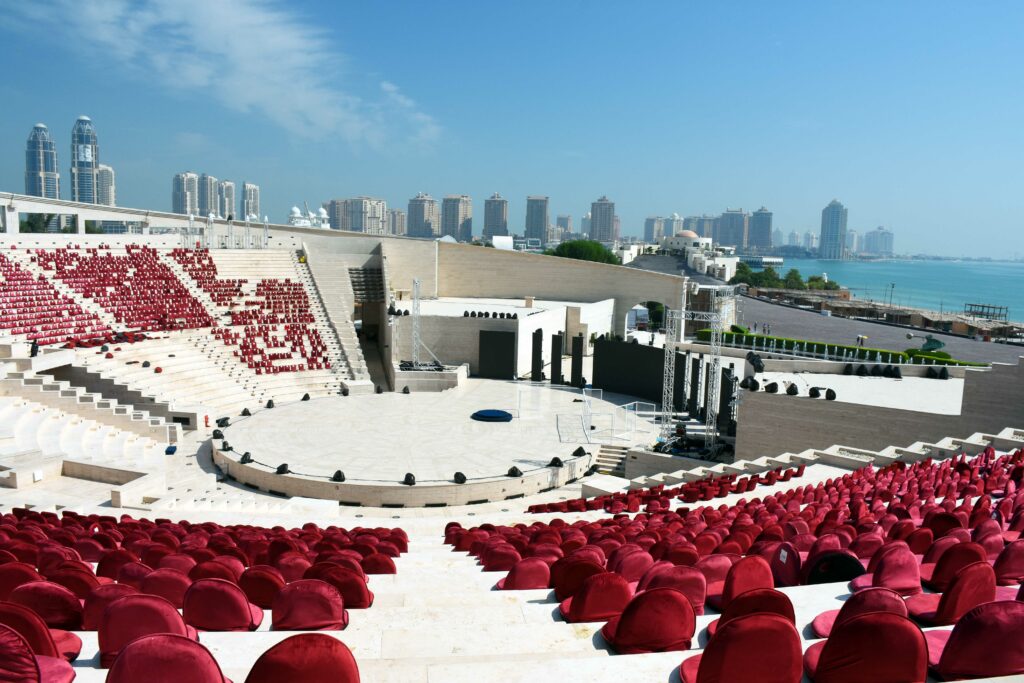
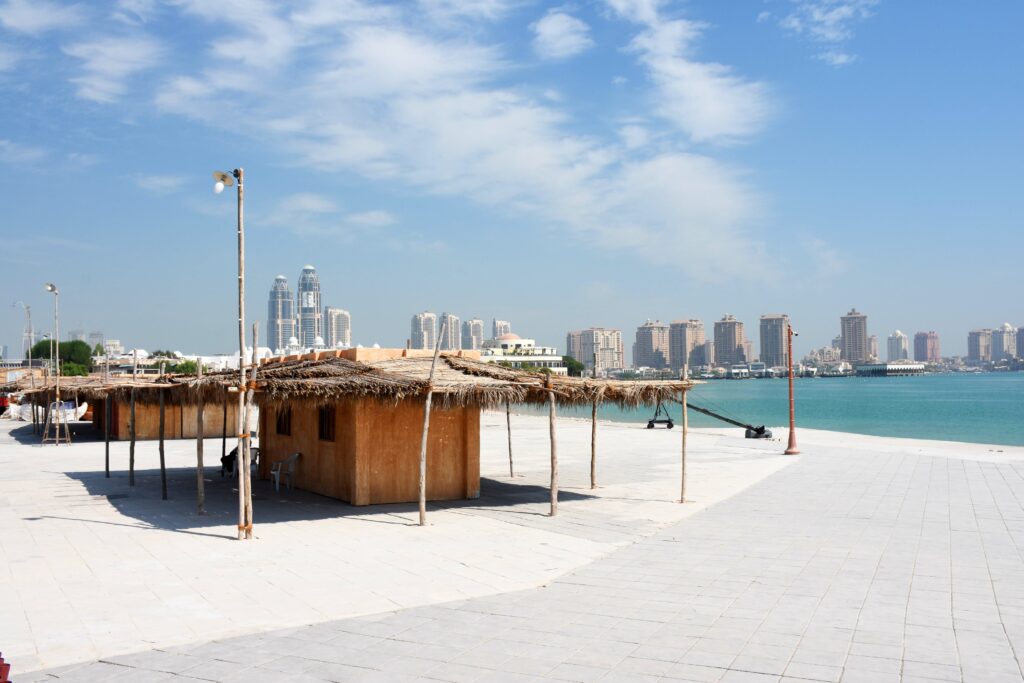
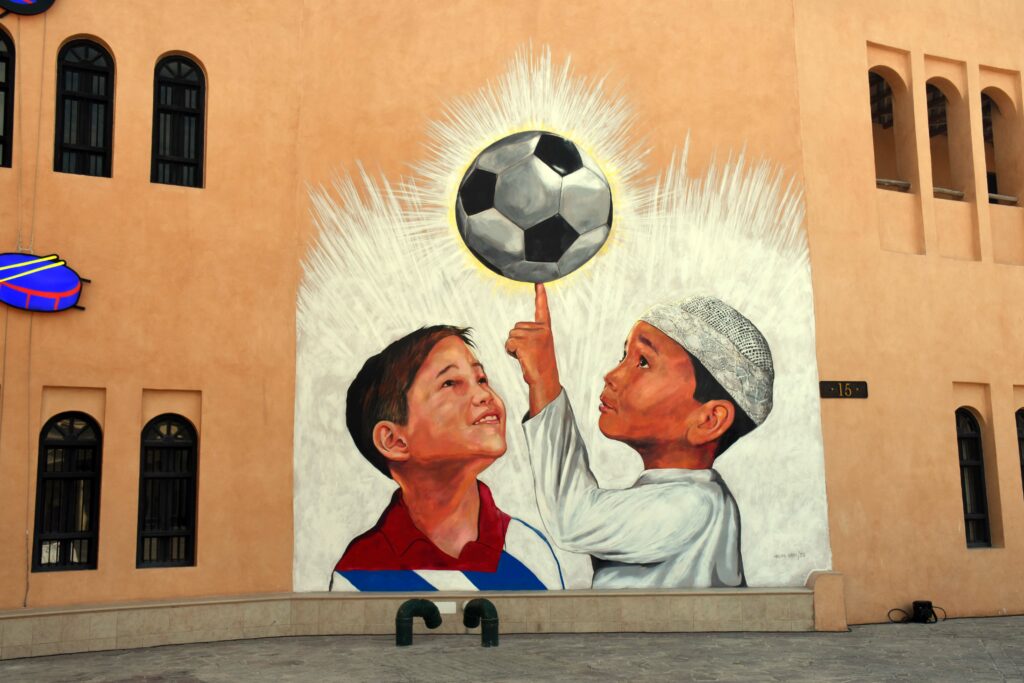
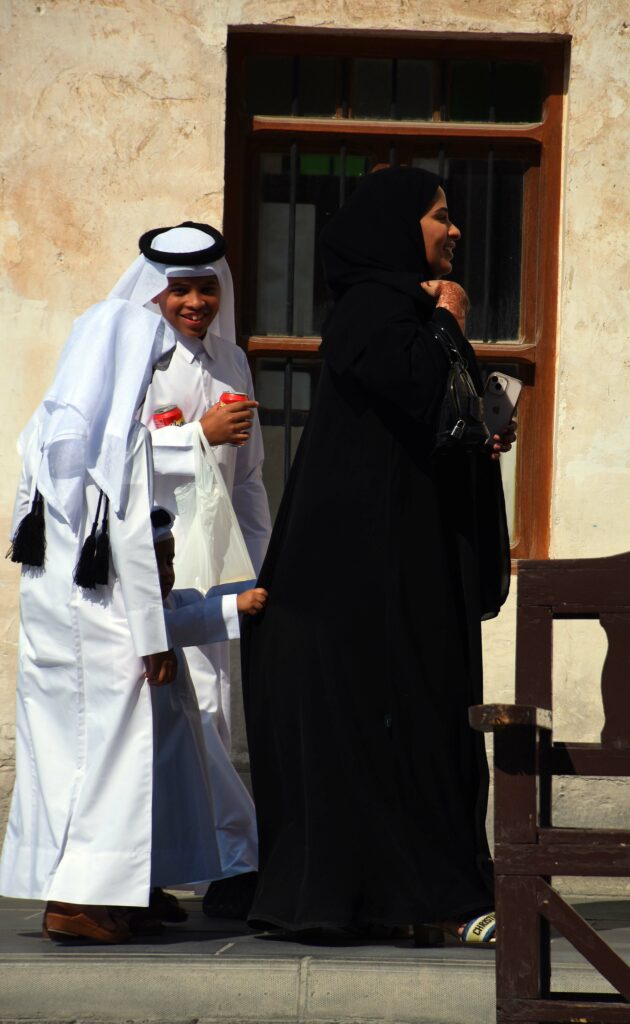
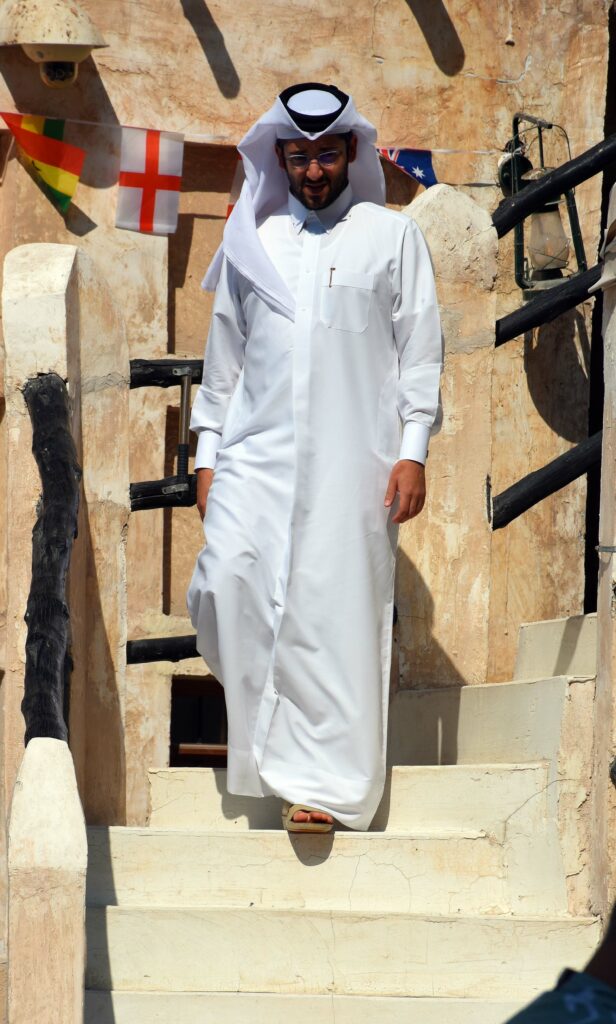
Wandering around it was a weird vibe, as if some contagion had taken the rest of the human race and I alone survived. All around was like a massive movie set but no life around. The omnipresent heat is stifling but as part of the craziness there are air vents in the pavement pumping out cool airconditioned air. In the distance I hear a tap tap of a worker’s hammer and further away the rat tat tat of a jackhammer the only other signs of life working in the last minute bid for readiness for the big event. Fast forward a month and this place will be a heaving mass of sweaty, partying humanity, now it is a ghost town. I am wandering around Katara the cultural cetre of Doha, Qatar.
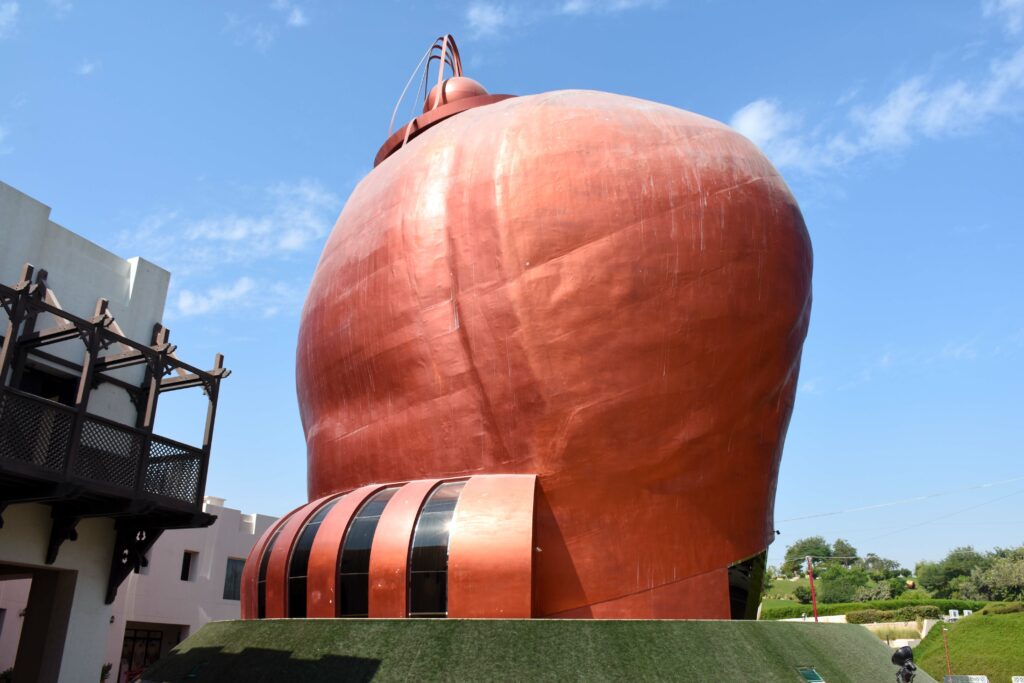
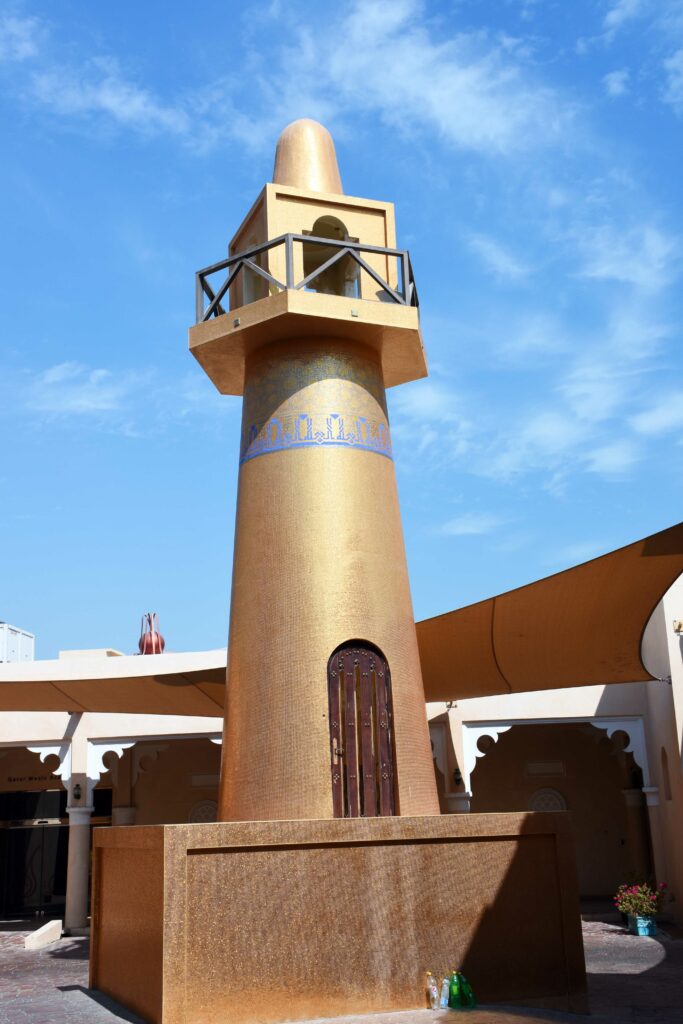
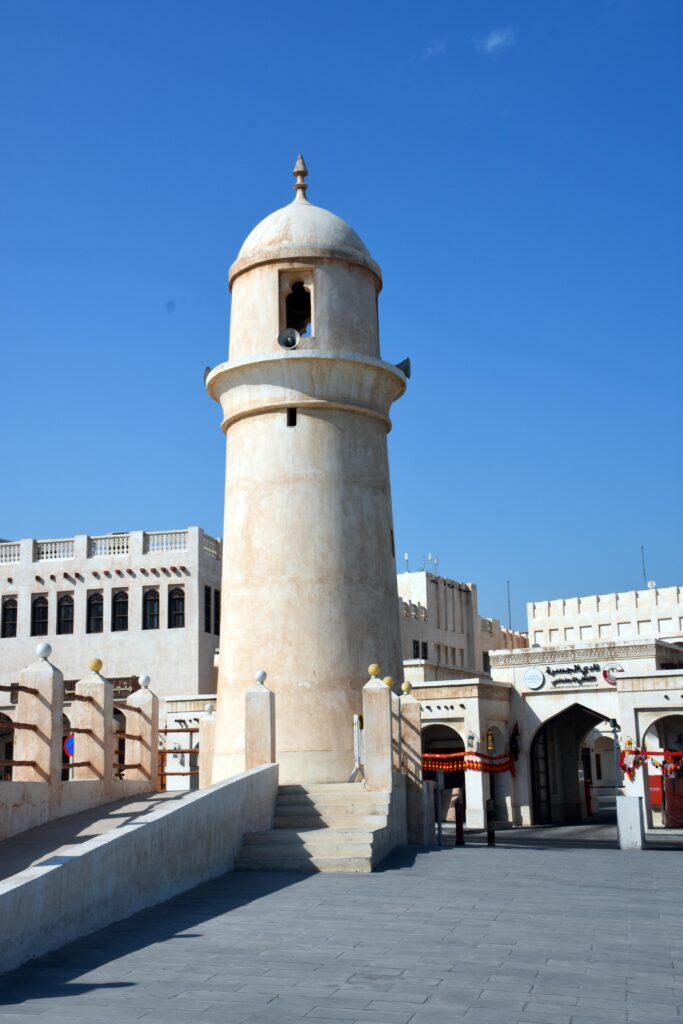
Desreted Katara street sceneKatara Cultural centreKatara Cultural centreKatara Cultural centre, amphitheatreKatara Cultural centre, amphitheatreKatara Cultural centreKatara Cultural centre, golden mosqueKatara BeachKatara Cultural centre
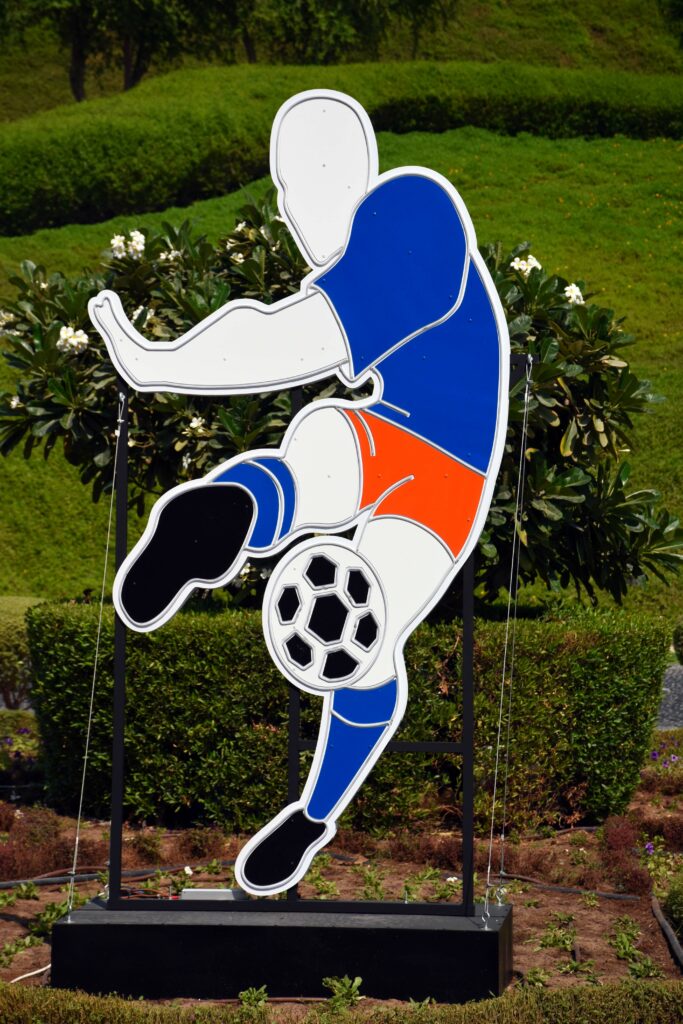
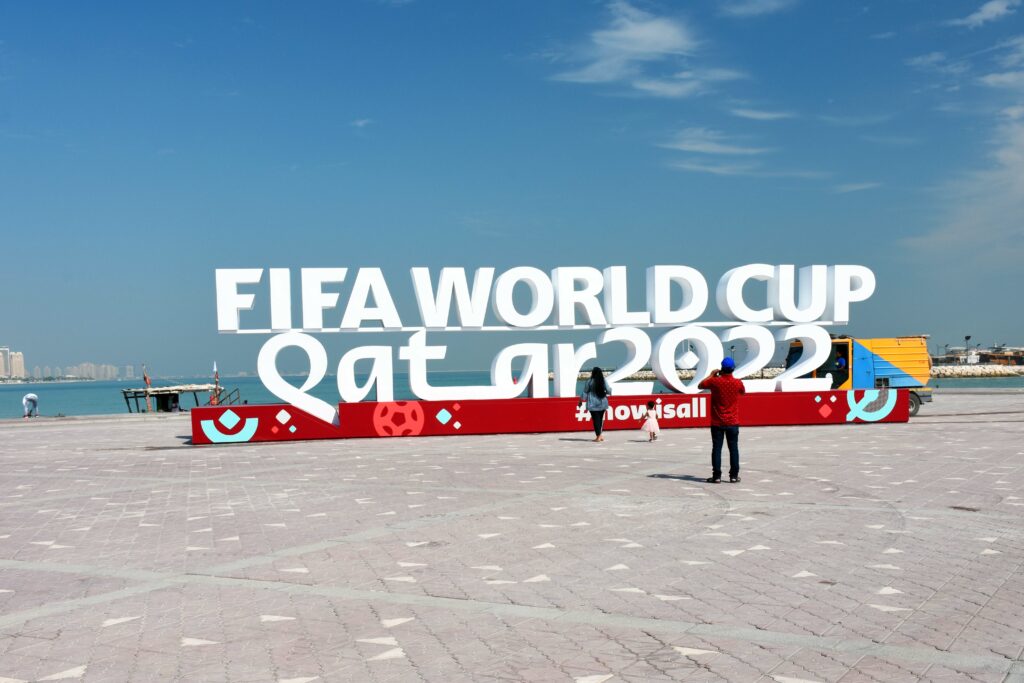
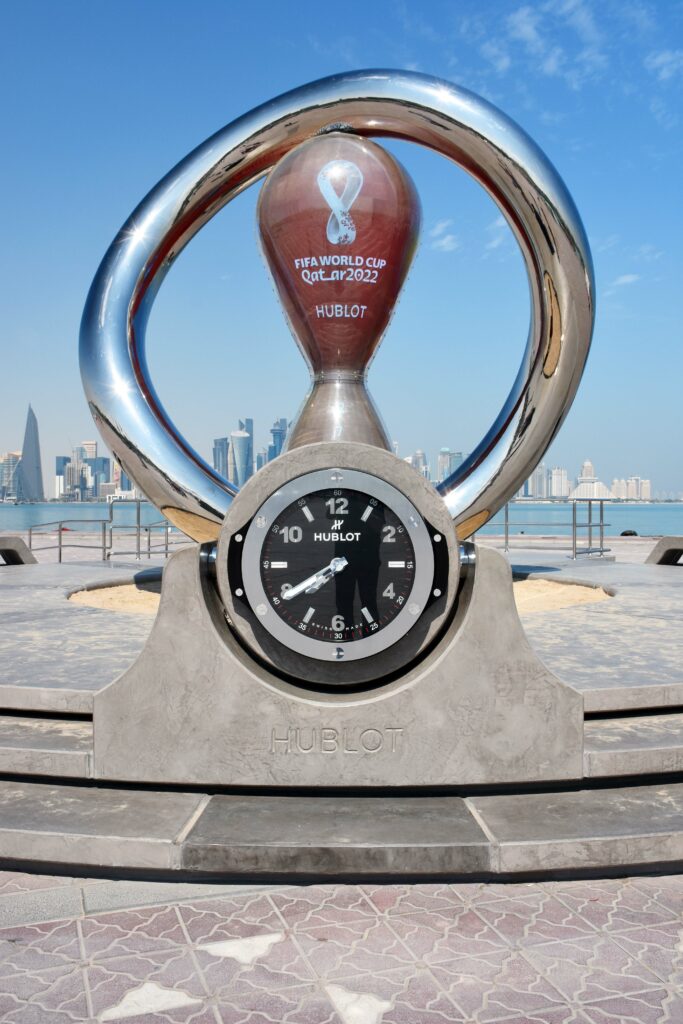
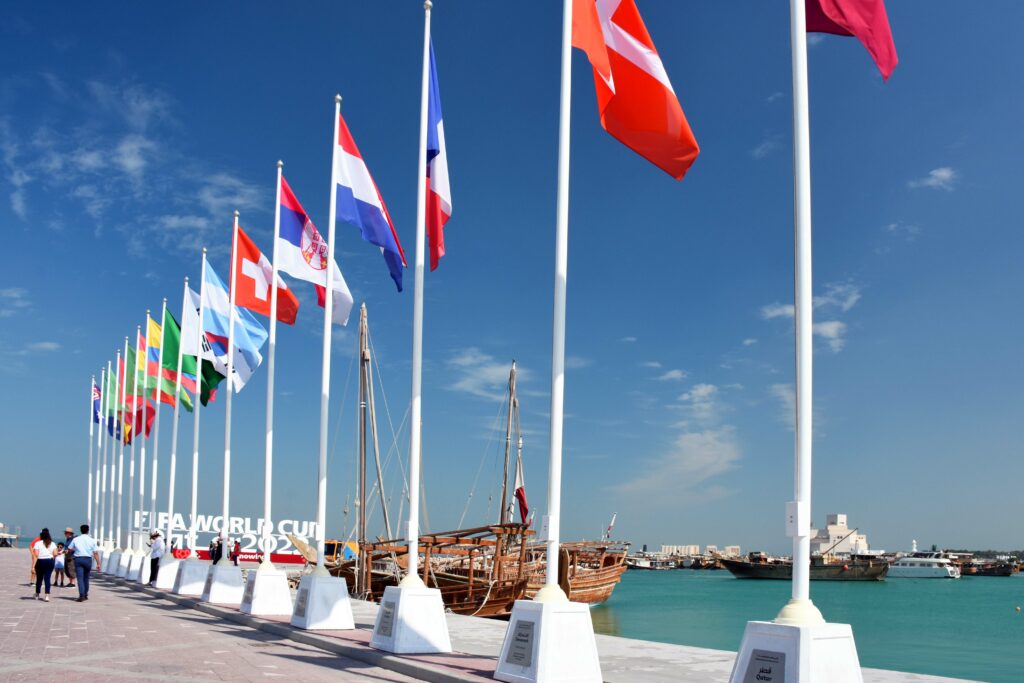
The greatest show on earth, the quadriennial FIFA football world cup, watched by billions, is 3 weeks away and it is in Qatar in 2022. All around the city the last finshing touches are happening and looking at some of the construction works it will be touch and go to finish on time.
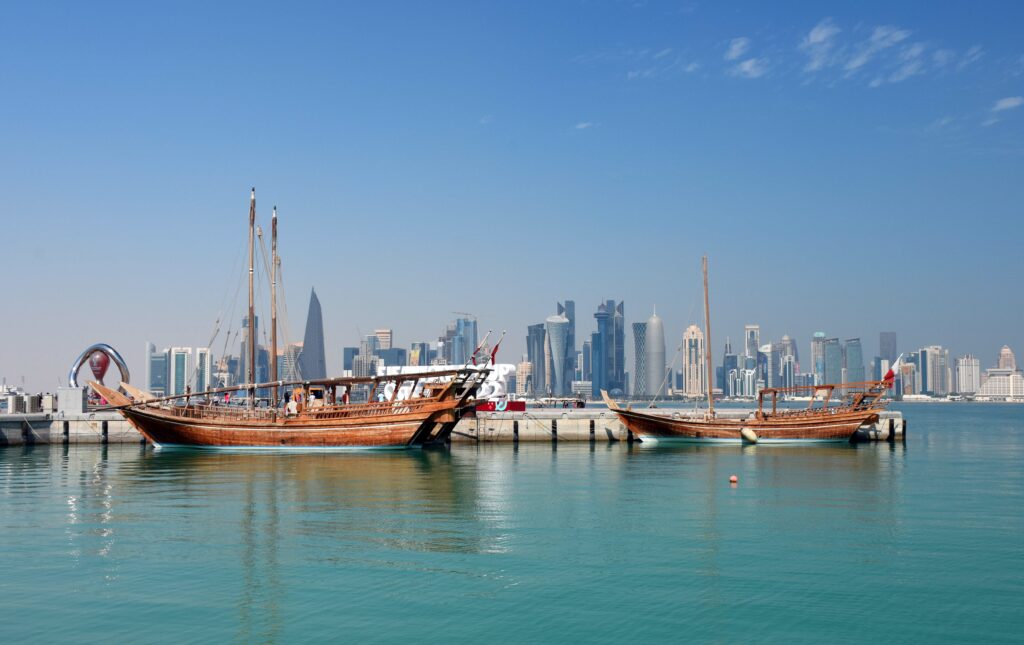
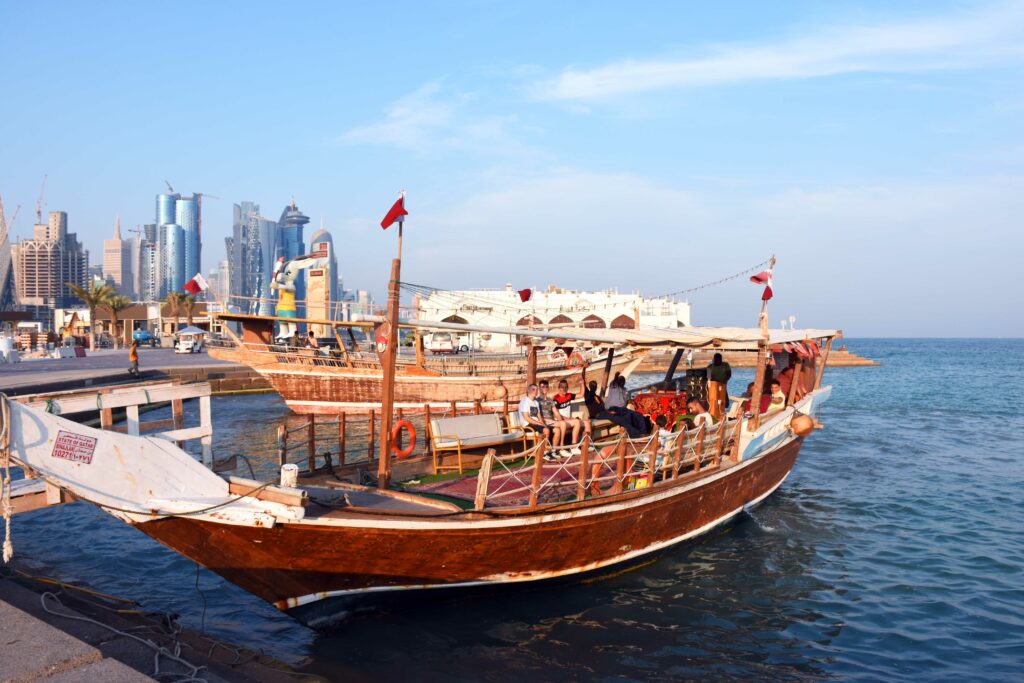
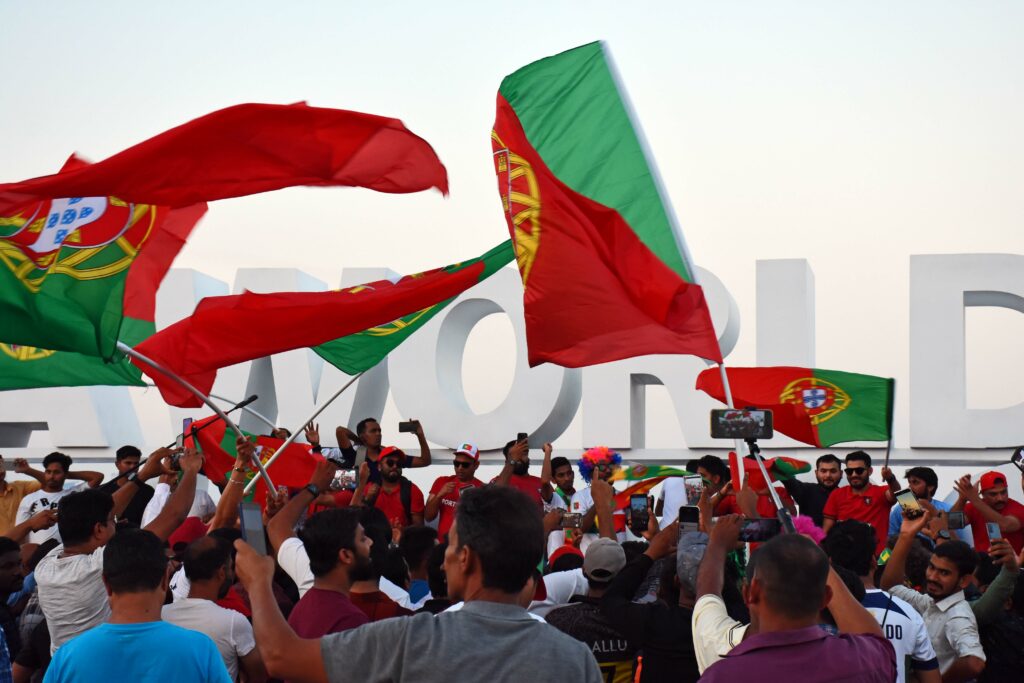
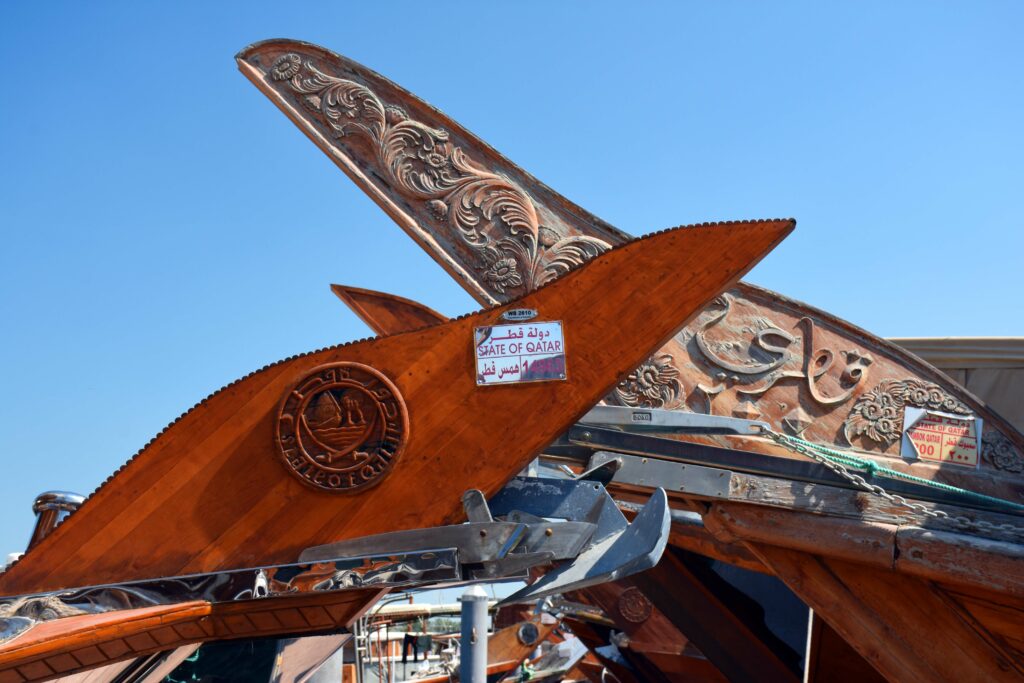
Replica trophyFlags of competing nationsDhow
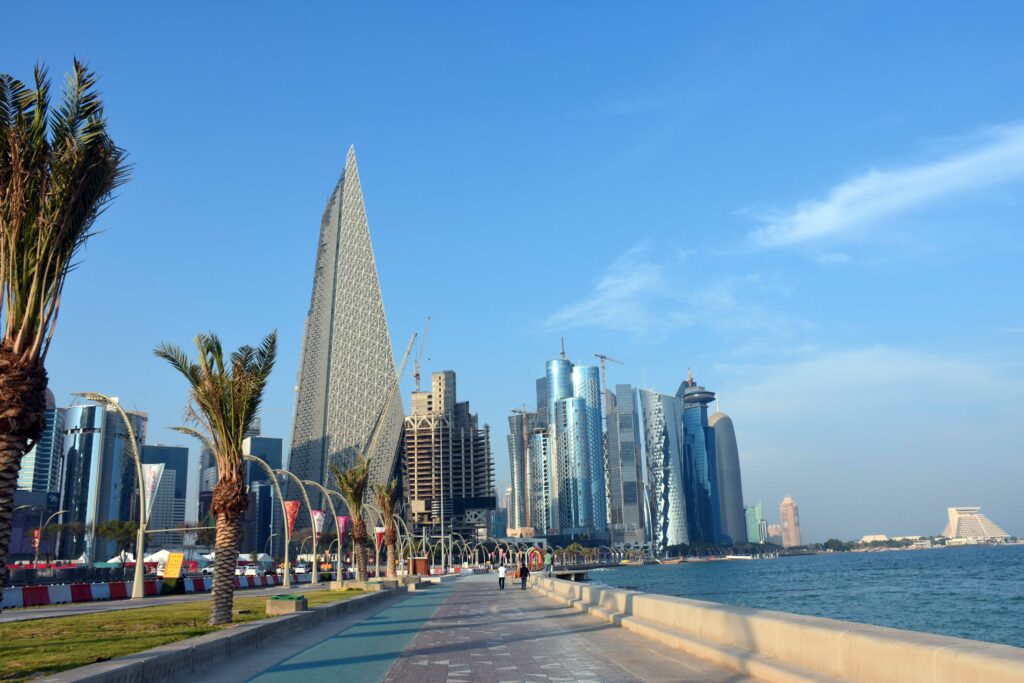
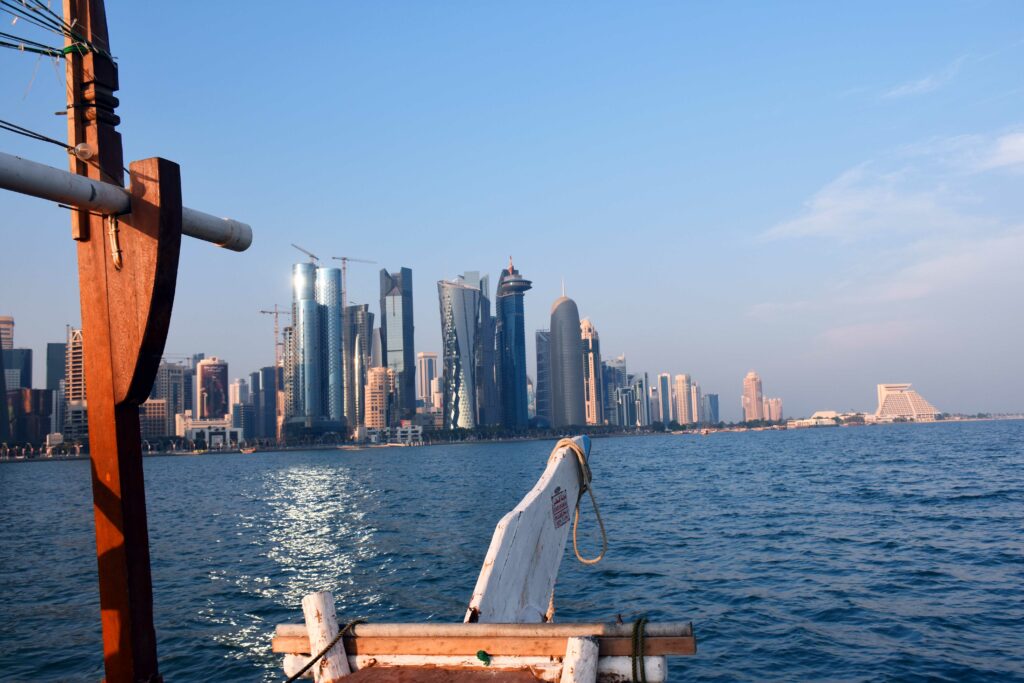
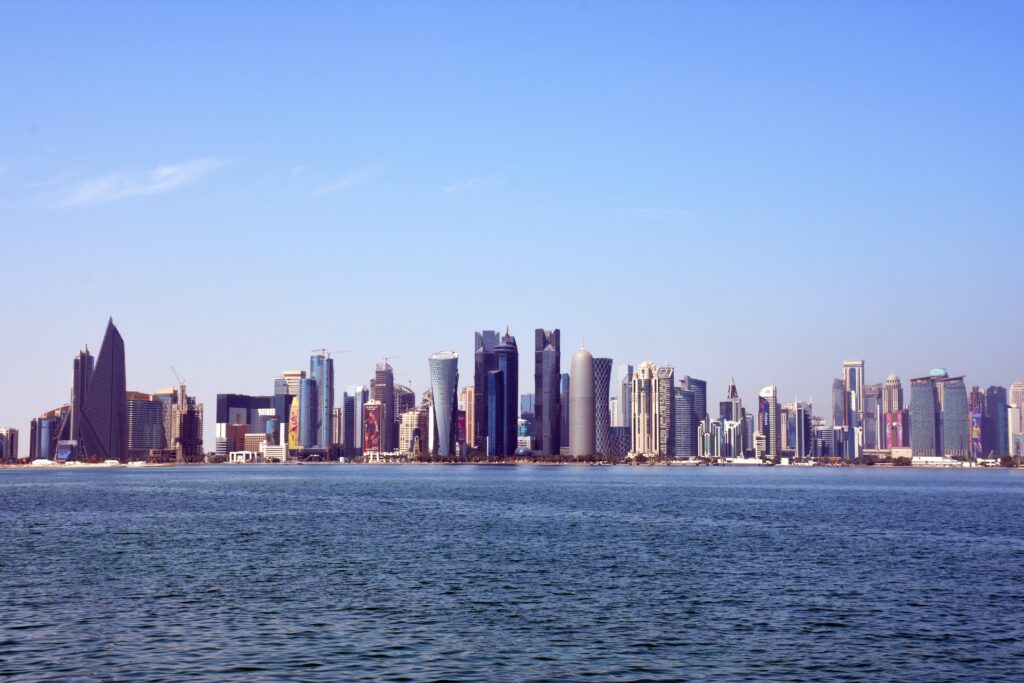
Around the waterfront winds the palm lined corniche with spectacular views across the water to the Doha skyscraper skyline.
Corniche
I walk the length of the corniche as the sun sets and the place comes alive. I am approached by a dhow boat captain offering to take me for a cruise. He is ready to depart with a handful of other passengers already aboard so on the spur of the moment I jump in.
With age I have discovered that just as important as the final destination is the journey and I am determined to extract every last pleasure out of it. Further down the waterfront is a massive replica of the world cup. There is a stage with music, dancing and flag waving albeit on a small scale so far.
Qatari society is run along the same lines as all of the gulf states. A tiny minority are local and hold all the oil wealth. Over 90% of the population are expats from poorer countries in the world looking to make some tax free money to send home. The world cup has been a two edged sword for Qatar. It will certainly gain international publicity for the middle east. It has also shone a light on the system of human trafficking that in some instances with construction workers from the poorest nations was tantamount to slavery. Similarly repressive muslim laws in areas such as treatment of homosexuality has received media attention. I feel that for the average soccer punter, though, human rights will not be uppermost in their minds. The biggest issue for them will be alcohol. At present only high end hotels serve alcohol and the cheapest stubbie of beer is an insane $25 Aud!! Pretty difficult to party hard at that cost! I understand that there will be beer tents at stadiums but I wonder what they will charge.
Nonetheless this is a pleasant city with enough sights to fill in a day.
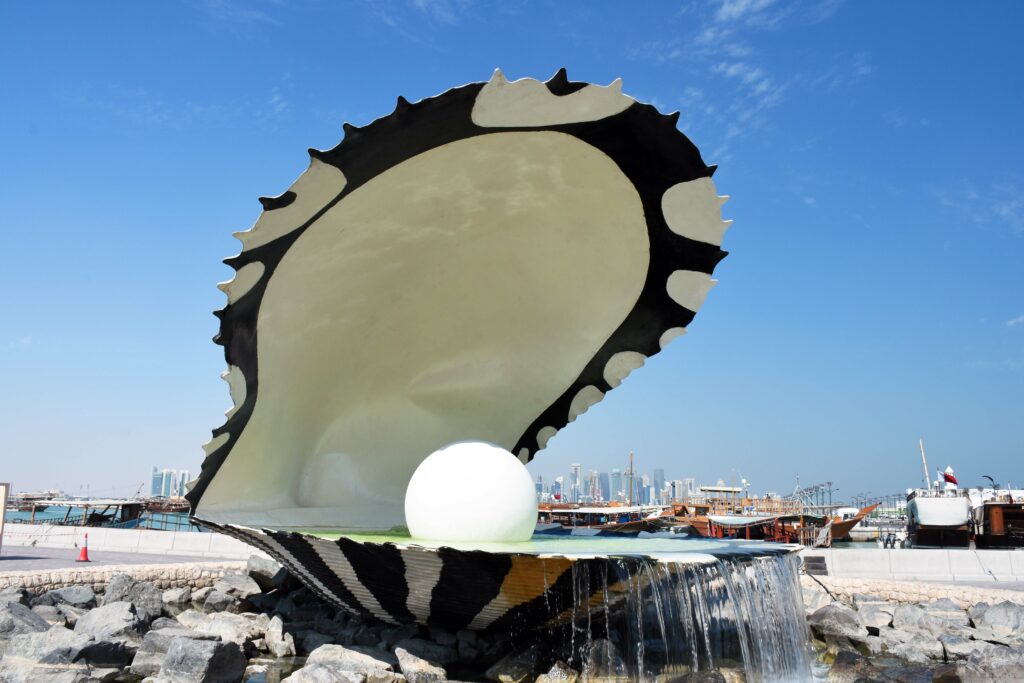
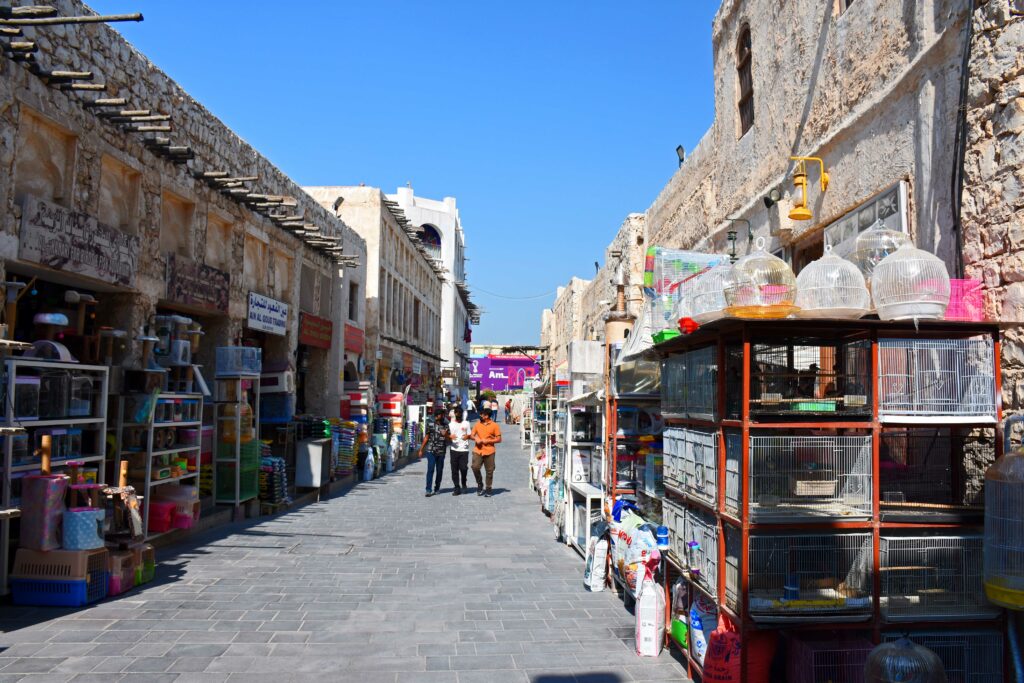
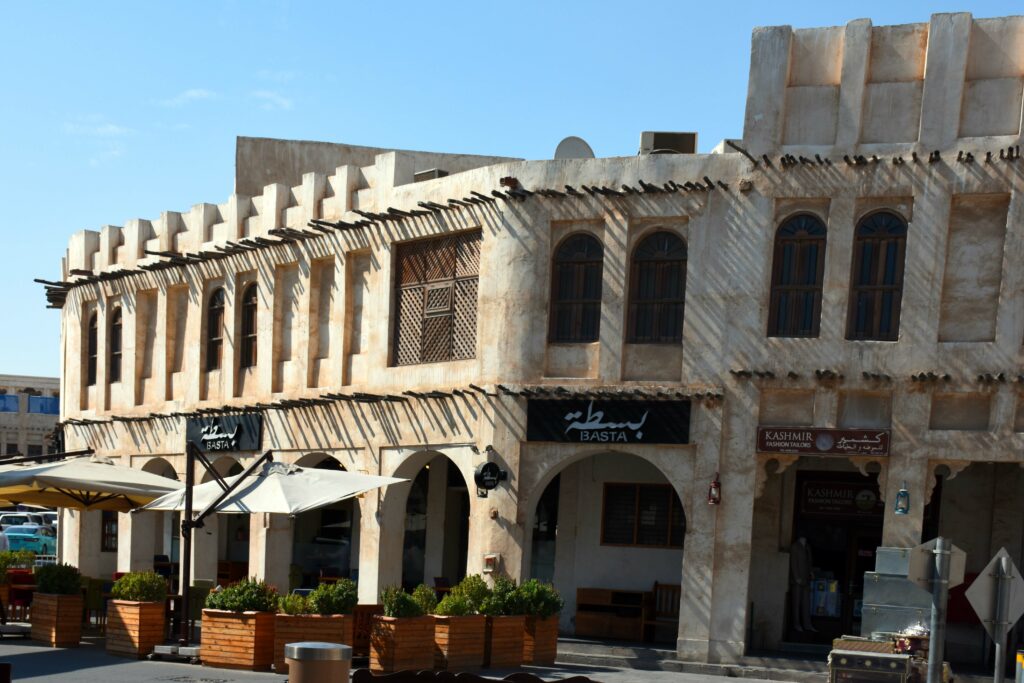
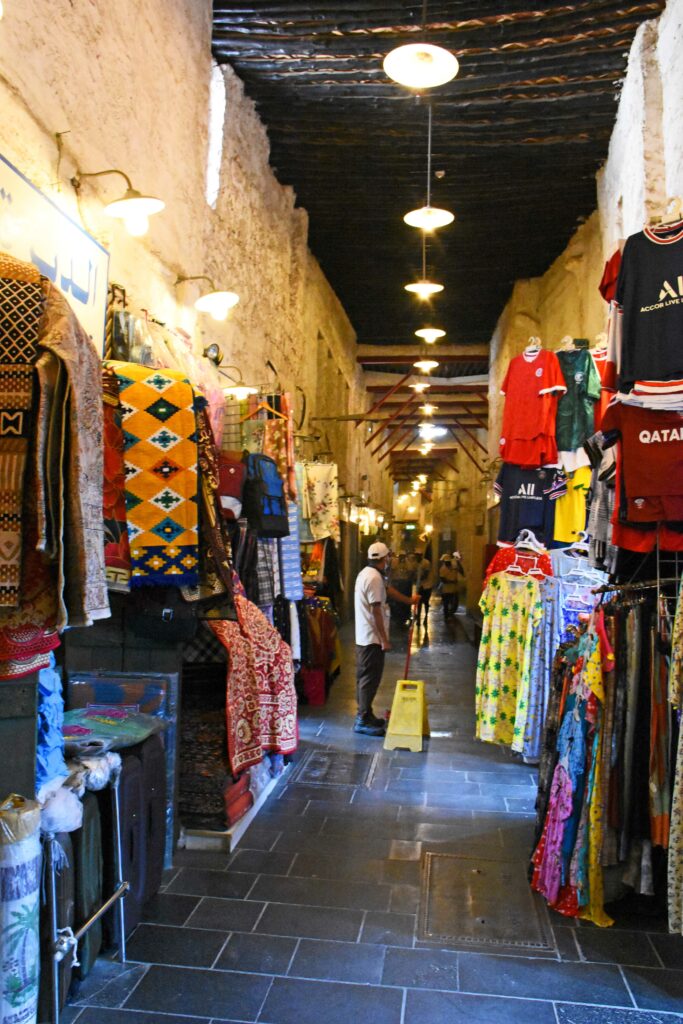
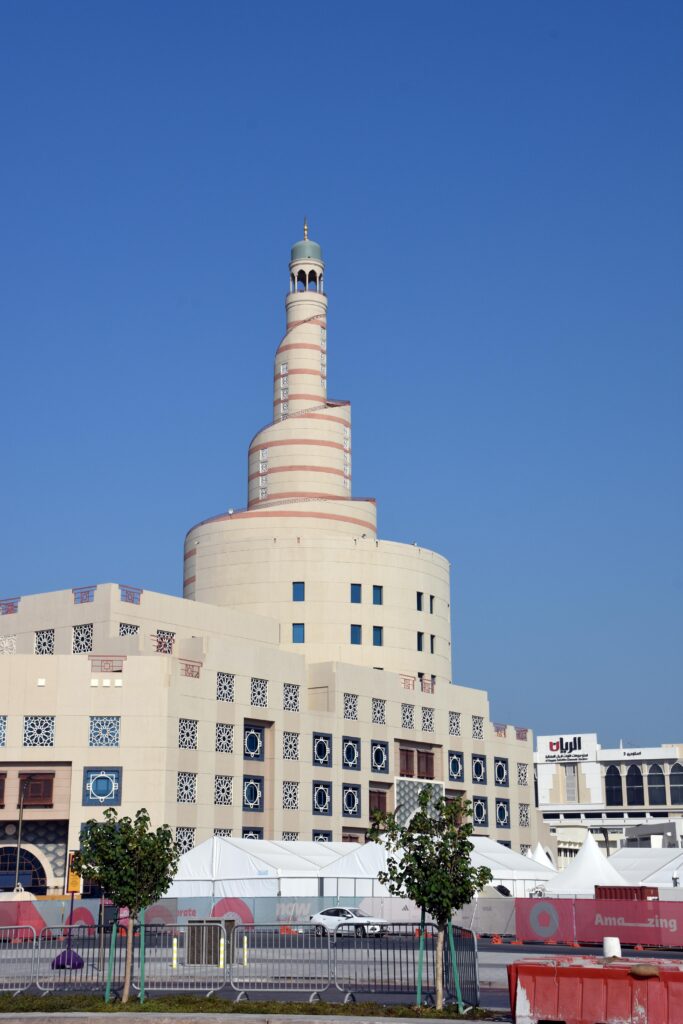
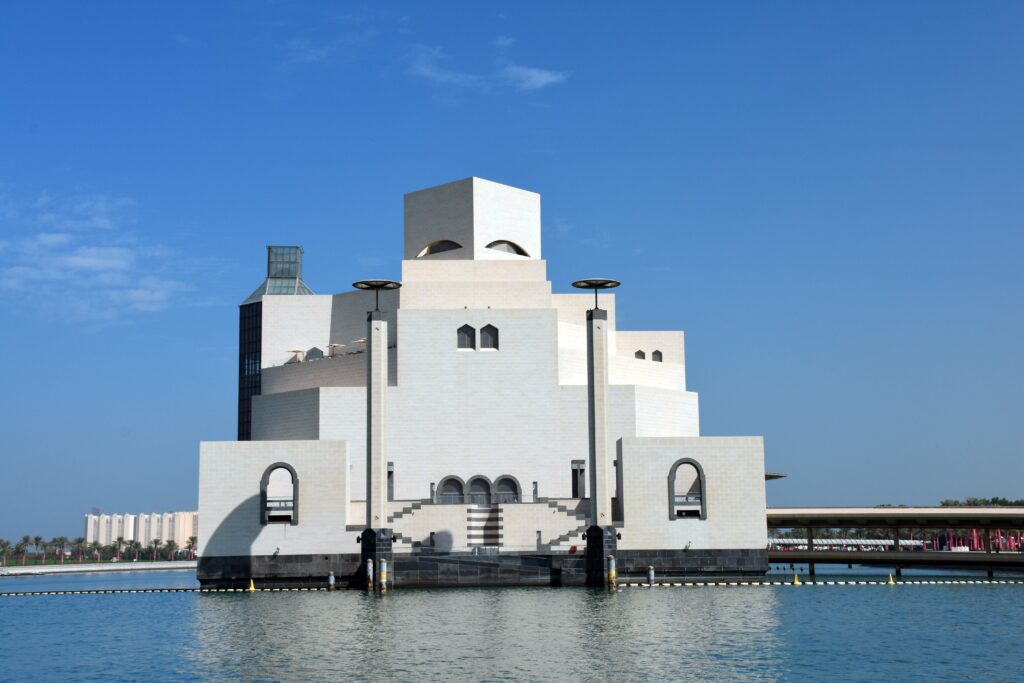
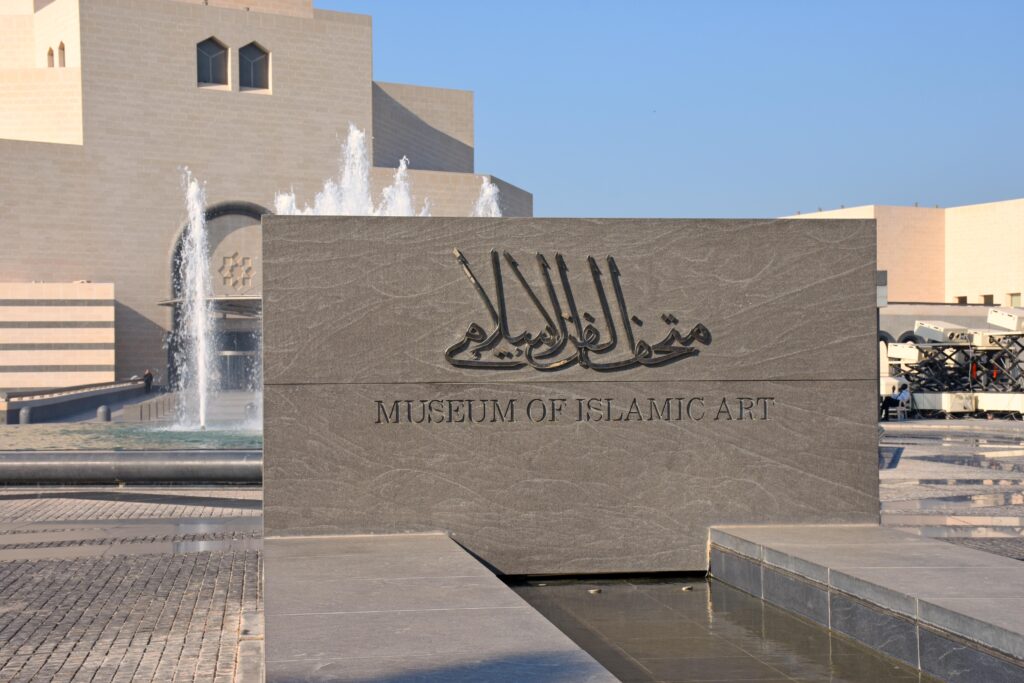
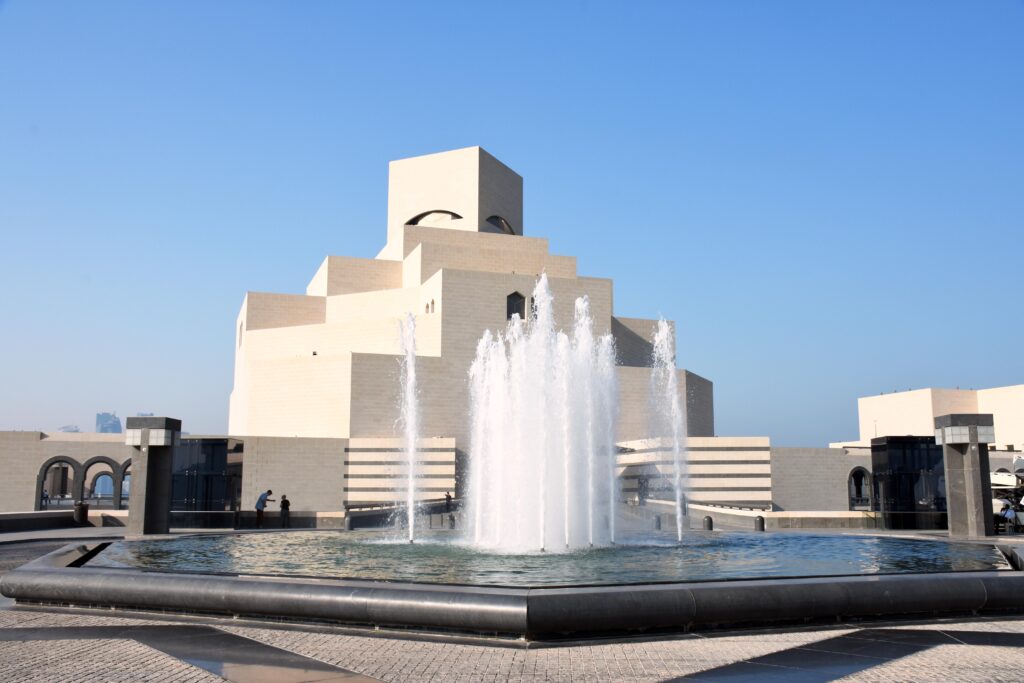
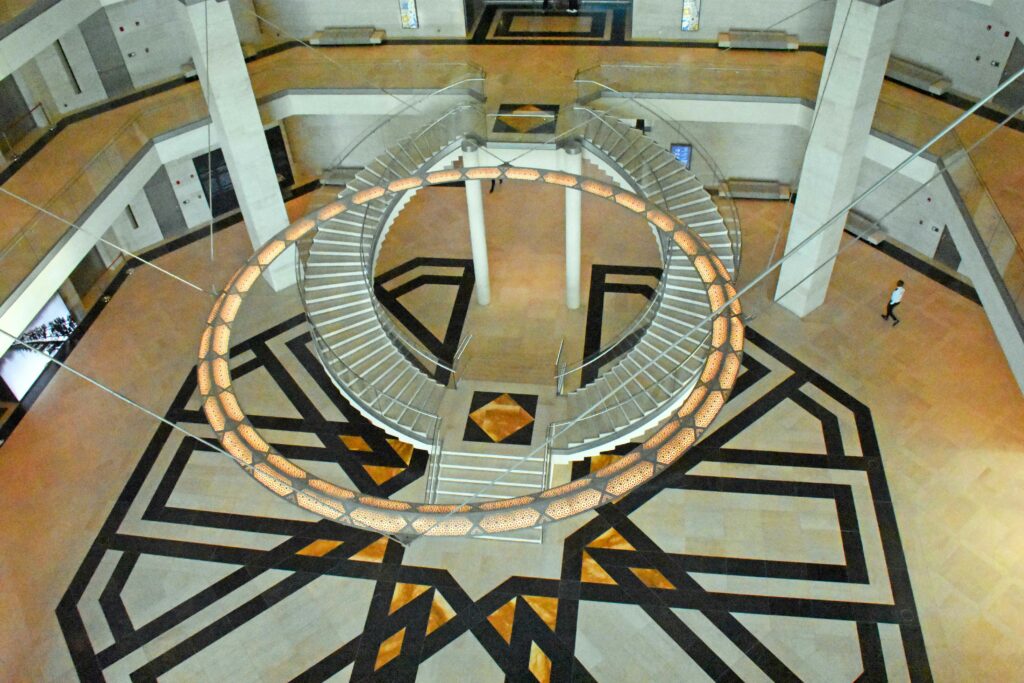
Pearl monumentDhowsCity centre from Banana IslandSouq WaqifSouq WaqifSouq WaqifSouq WaqifSouq WaqifSouq WaqifIslamic cultural centreMuseum of Islamic Art from Banana IslandMuseum of Islamic ArtMuseum of Islamic ArtMuseum of Islamic Art
This is the last post for this trip and I thank my faithful readers. I hope you have enjoyed what you have seen and read. The next trip will be to see orangutans and sun bears in Borneo at Christmas. I will be joined by my life partner and only love, Suzanne. Catch up with you all then.
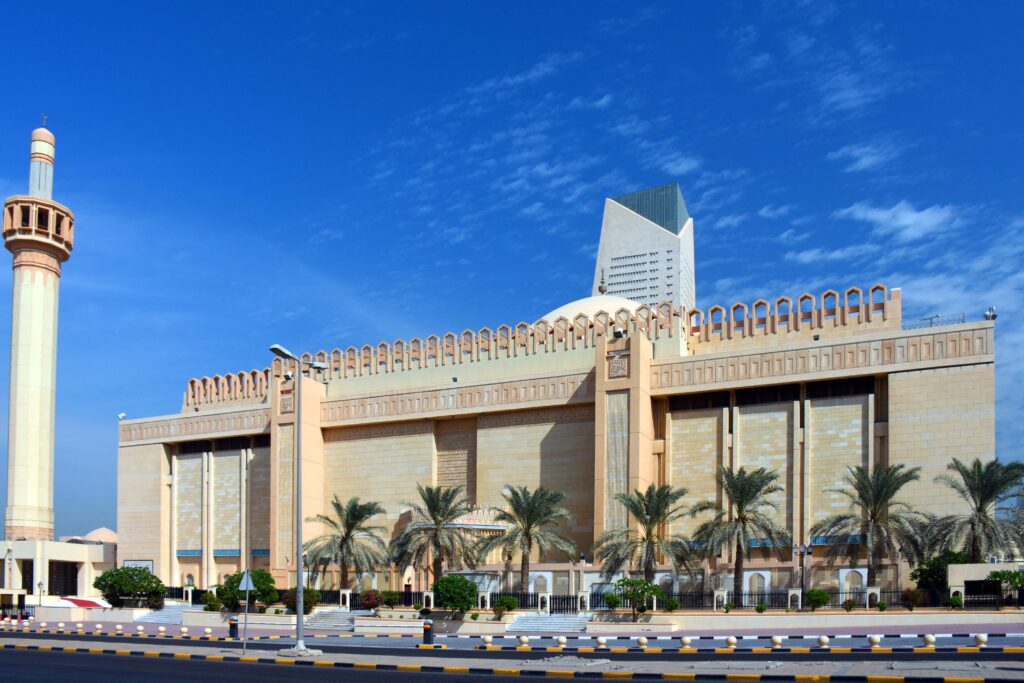
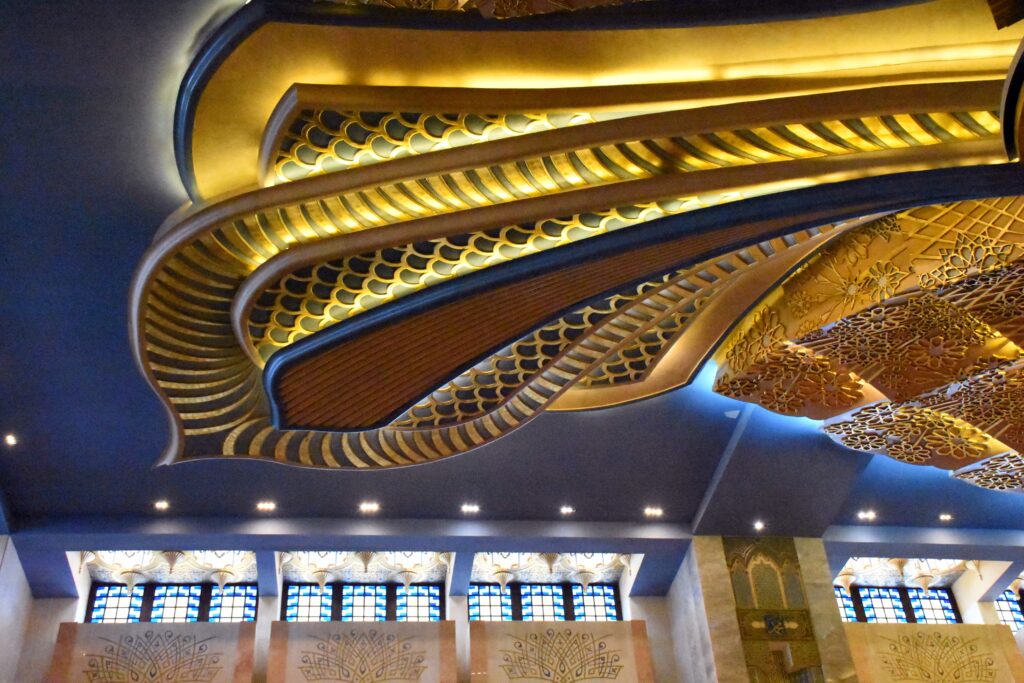
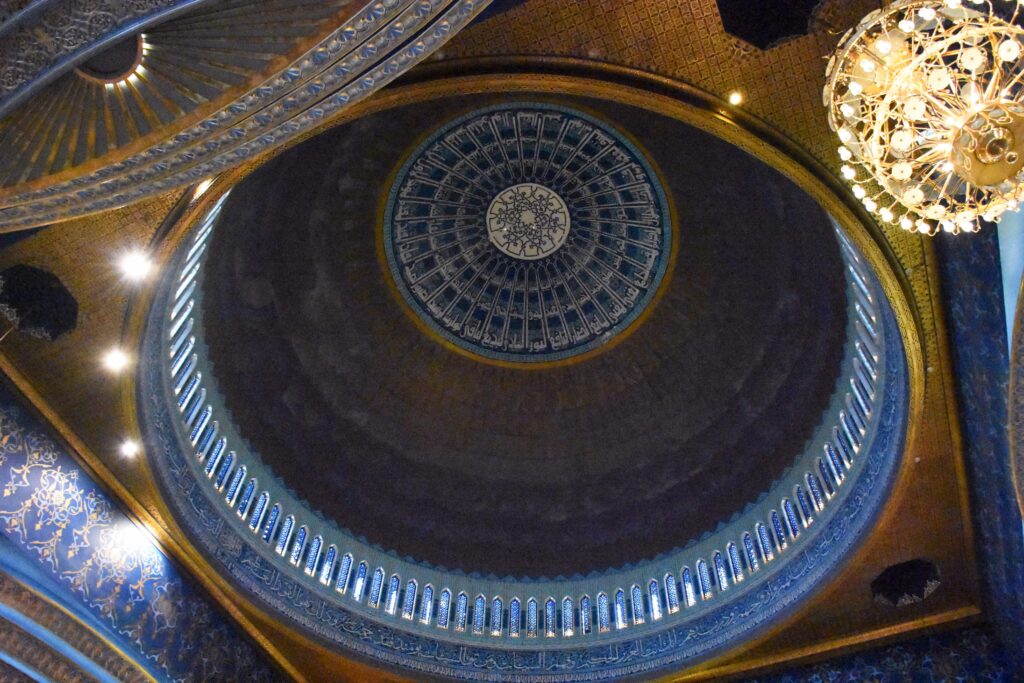
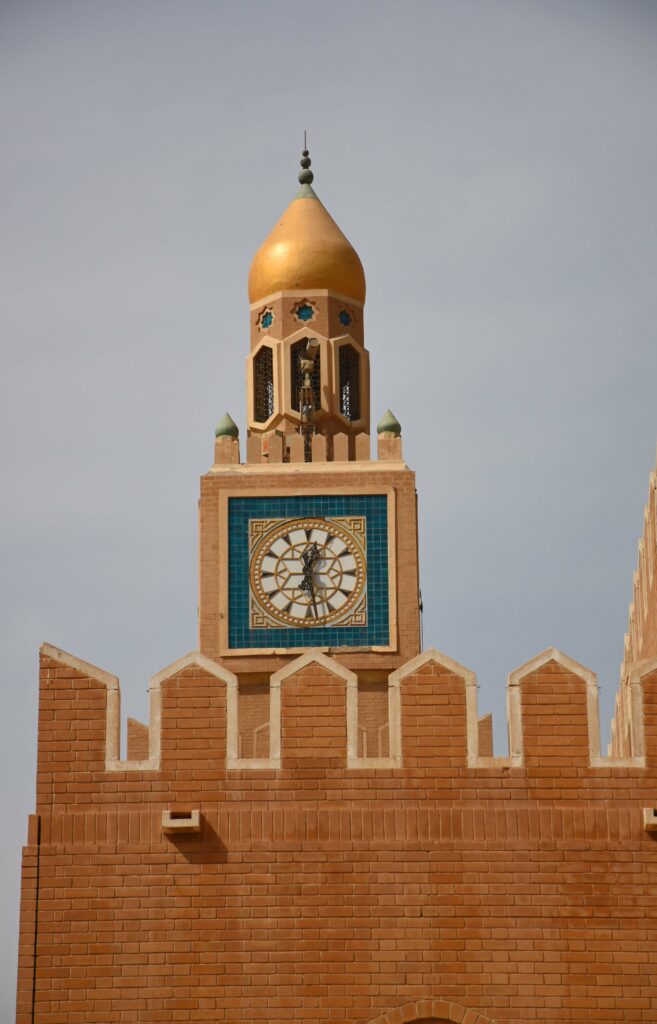
The guard at the side entrance to the Grand Mosque waves me away pointing around the corner he says “security, security”. In the aftermath of Iraq I am very accustomed to this and doff my pack as the next guard leads me forward. I am ushered into clean cafe style area with water bottles onto tables and an urn of tea. No Xray machine in sight. A pretty young lady tells me that the next tour is 25 minutes away. I agree to attend but suggest I take some pictures and come back. She looks most concerned, tells me that the water and tea are free, as is the tour, and scurries off to emerge with my guide 2 minutes later. I rehydrate and proceed in. The mosque was completed in 1986 and is breathtakingly beautiful. Able to accommodate 10,000 worshippers my eyes are immediately drawn to the ceiling, beneath the massive Italian crystal chandeliers there are sinuous waves of royal blue with golden trim. The whole effect is evocative of the sea and sand. As I sit in the empty cafe sipping tea the mellifluous chant of the muezzin bathes me in peaceful sound and i am left wondering about the dichotomy of the peaceful aspects of this religion pitted against the acts of aggression perpetrated in the name of Islam.
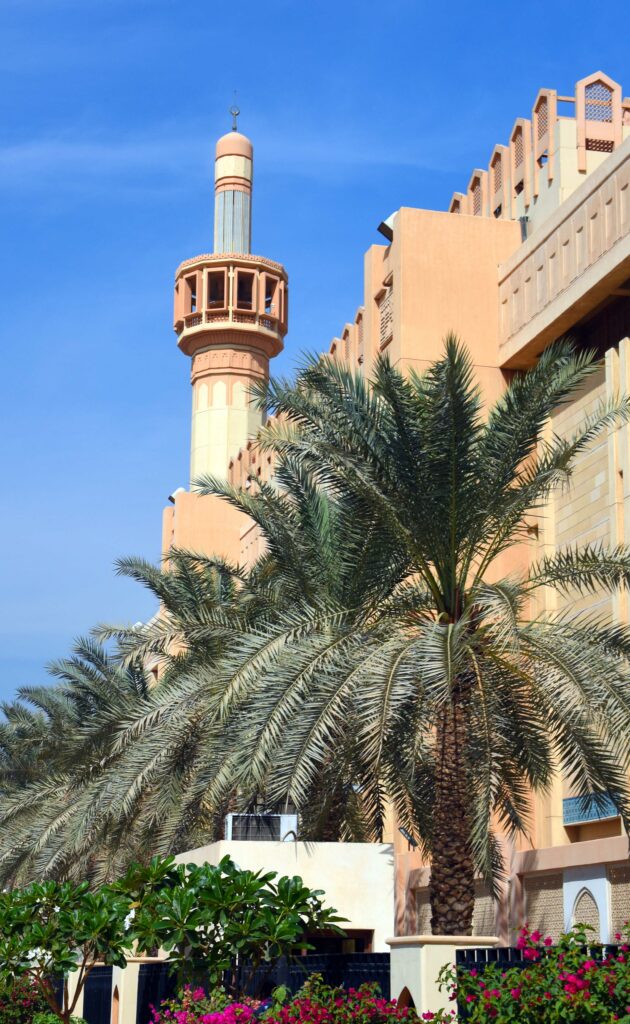
Grand mosqueGrand mosqueGrand mosqueGrand mosque
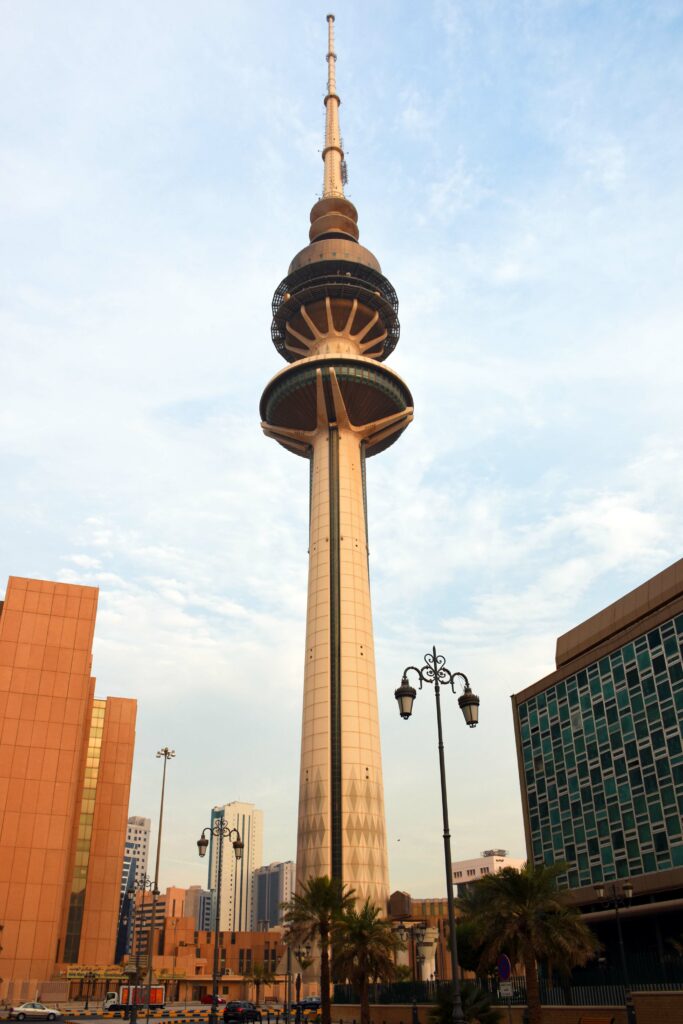
My guide here is Syrian and chatting with him confirms that this is a similar setup to UAE where the population here is 95% expat workers and 5% actual wealthy Kuwaitis who own all assets. Later, the Indian taxi driver predicatbly wants to talk cricket with me. I get suspicious when he says to me, you are rich and deny it. I am made to feel insensitive when he admonishes me with the observation that most Indians cannot afford to travel and he himself has never been to Delhi or Bombay.
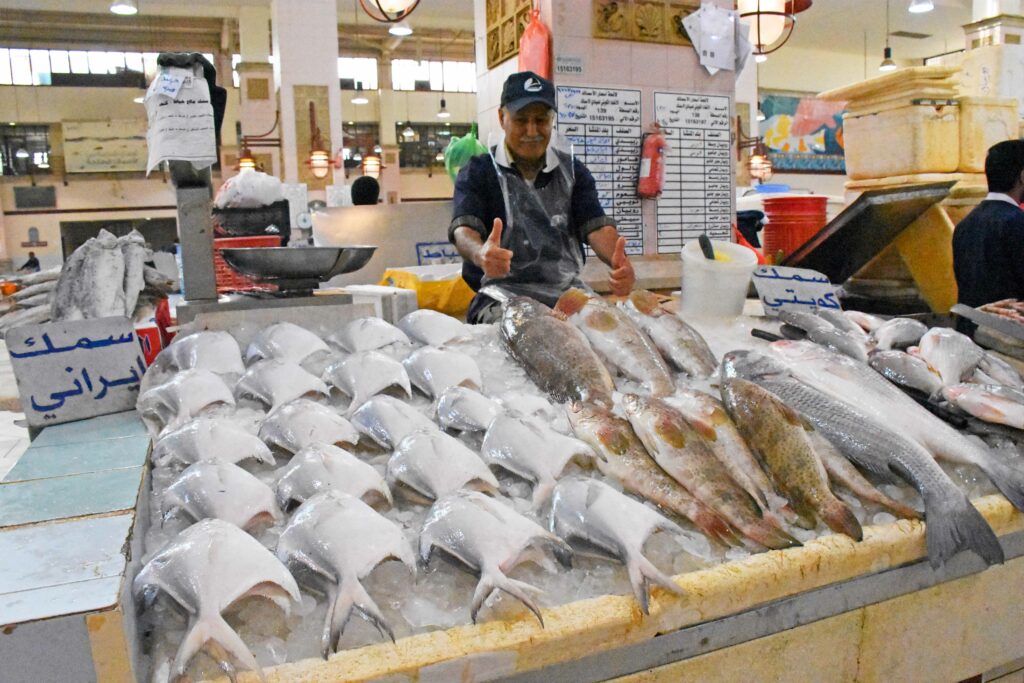
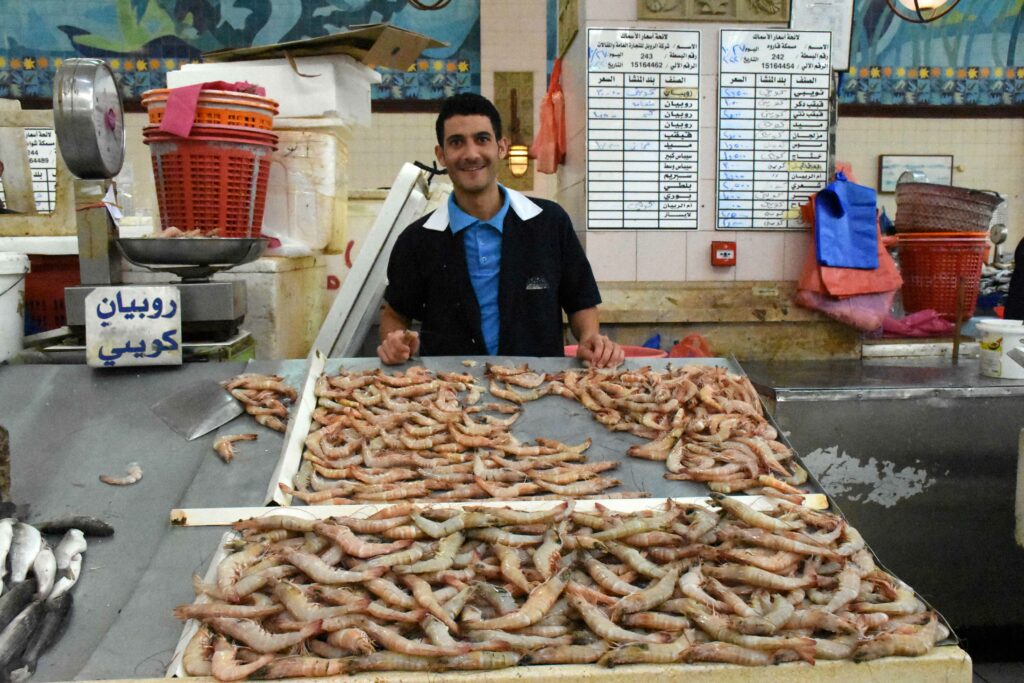
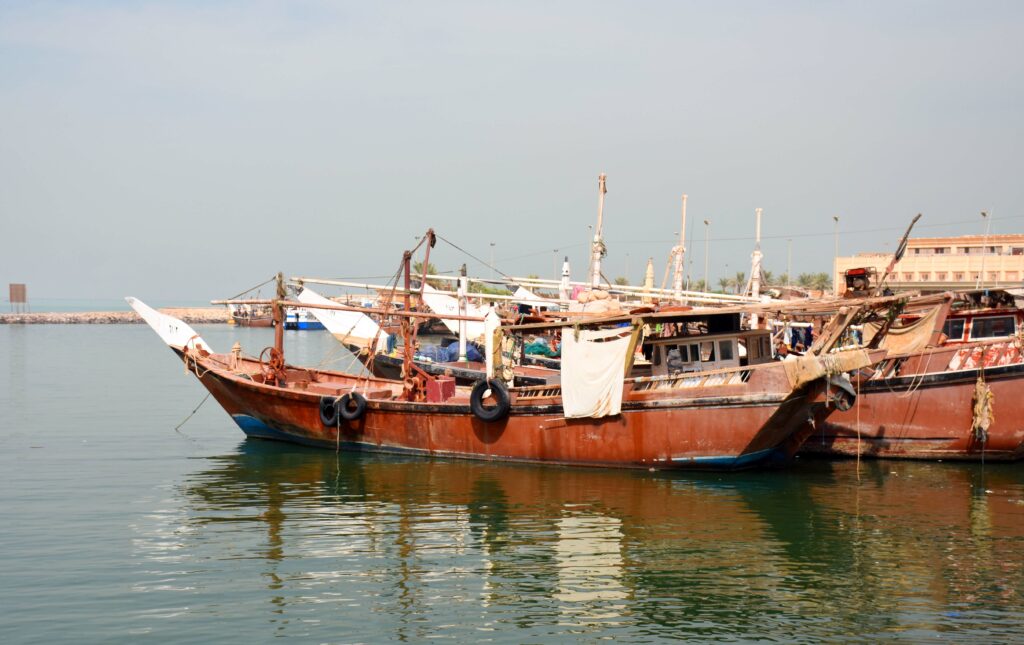
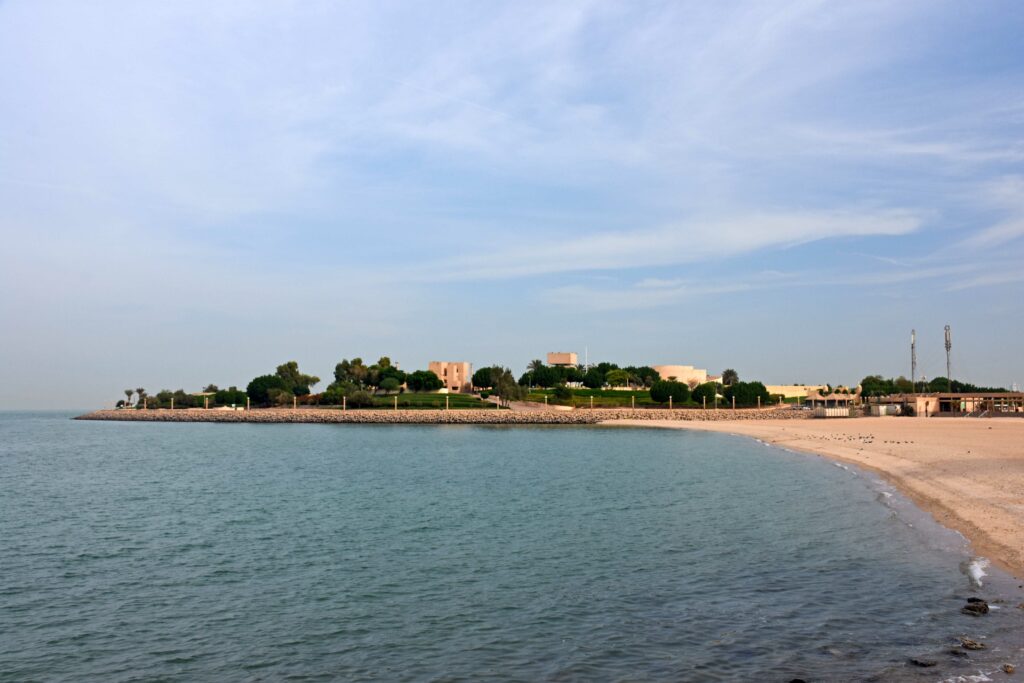
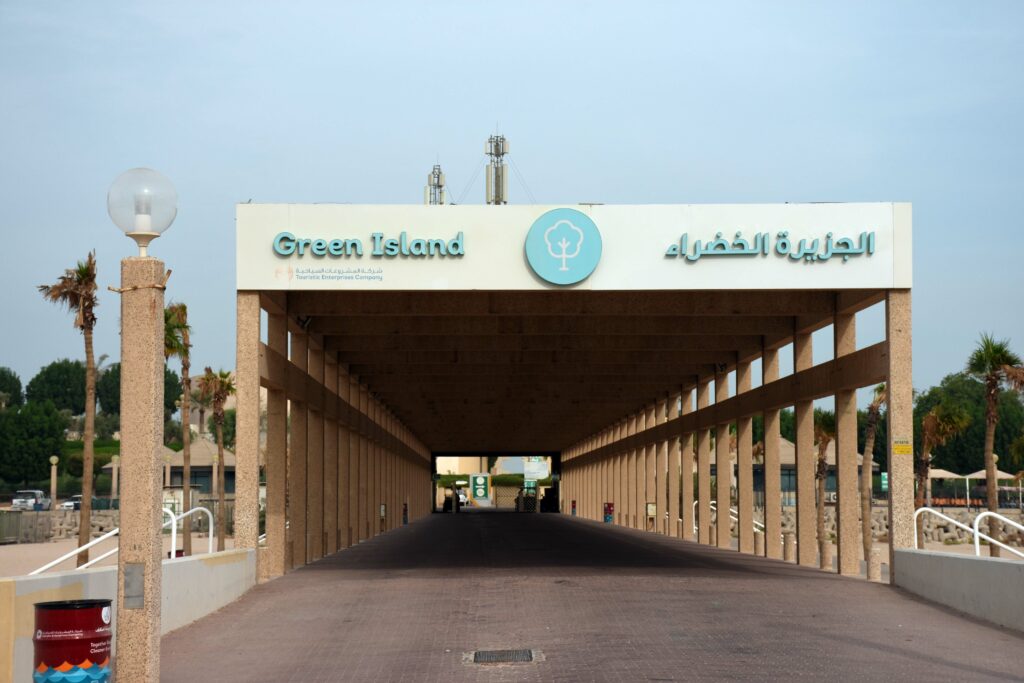
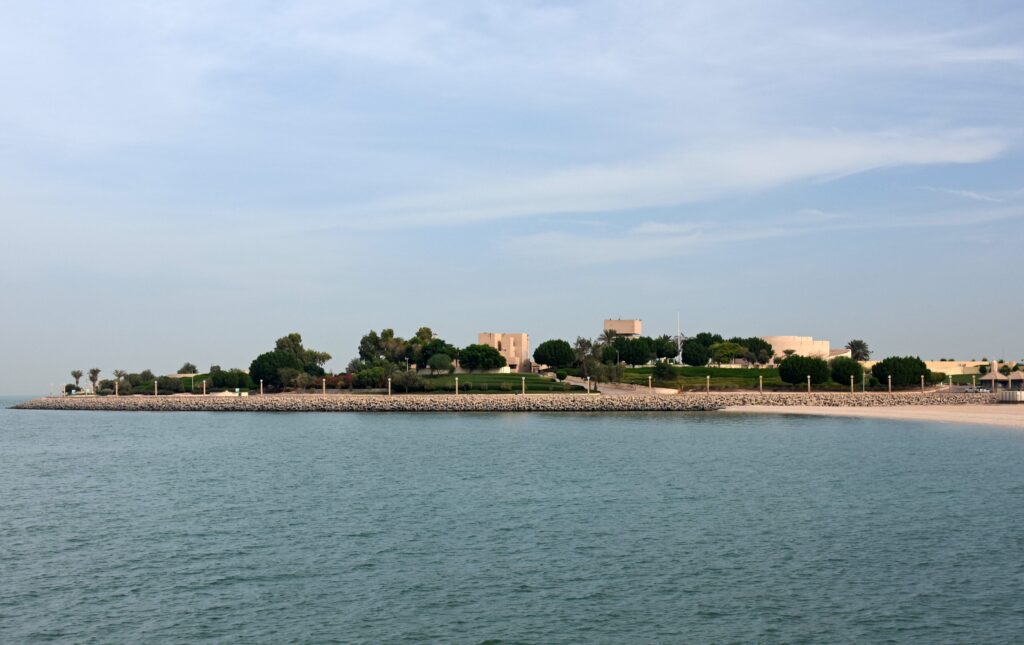
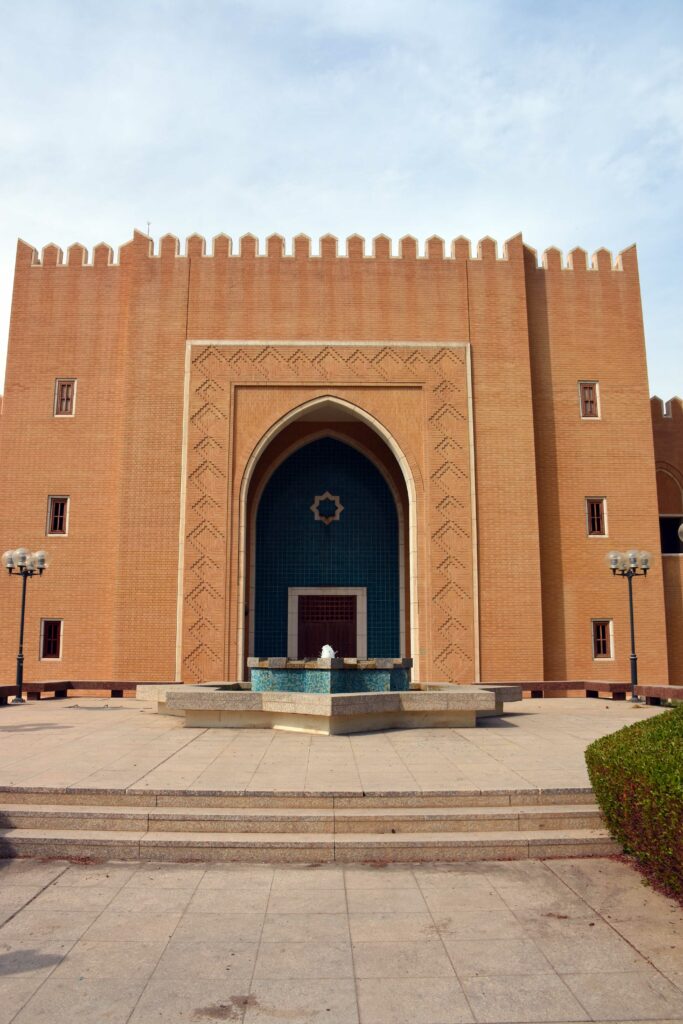
Starting my walking tour along the coast, the 37 degree heat is brutal. It strikes me that I am the only pedestrian for miles around which is probably a reflection on my sanity. Nonetheless the walk is beautiful past dhows, fish market and sandy beaches. The people are surprisingly friendly. As I am walking along a driver stopped at a traffic light winds down the window and asks “Kuwait good?” When I answer “yes” he beams from ear to ear and gives me a big thumbs up.
Fish marketFish marketDhowGreens BeachGreen IslandGreen Island
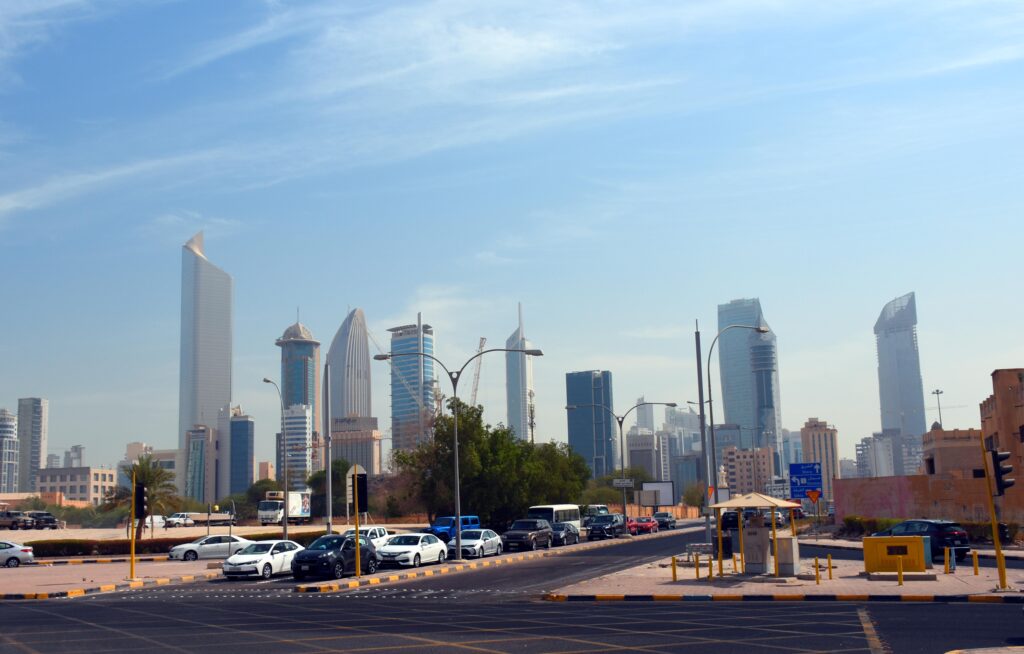
Enjoying my DIY day tour in Kuwait I muse upon the future of this and similar Arab states. While Dubai has a significant tourist industry to fall back on this economy is built solely on oil wealth. With net zero carbon emissions only some 10 -15 years off what will happen to this city, this country? Presumably the Kuwaitis themselves have amassed obscene wealth and they will continue to prosper but eventually the rest of the economy and infrastructure will take a hit. Fascinating times ahead!
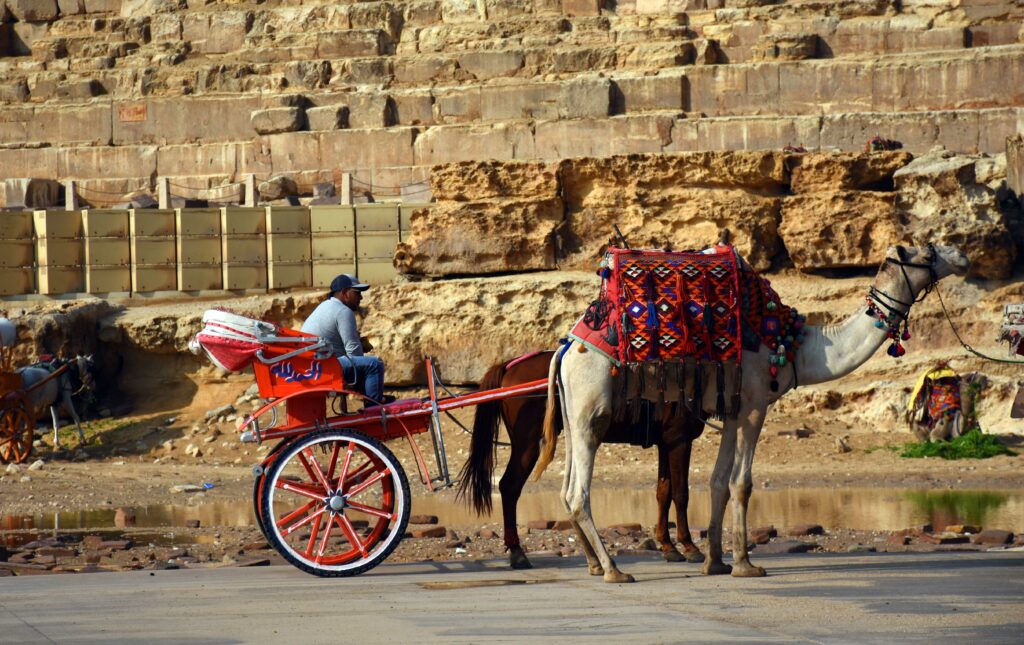
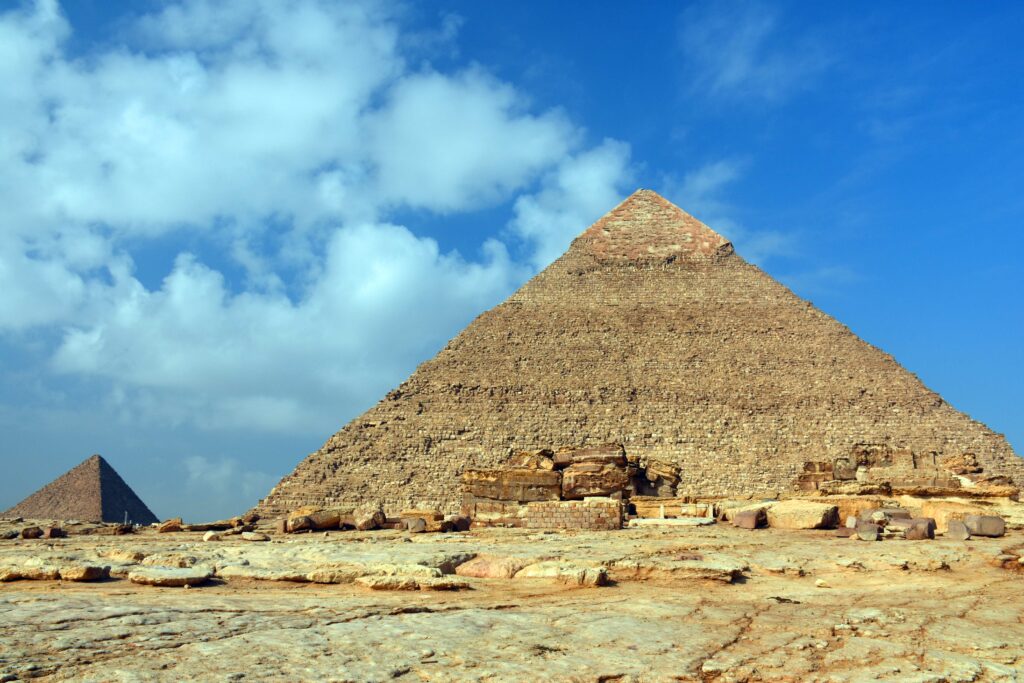
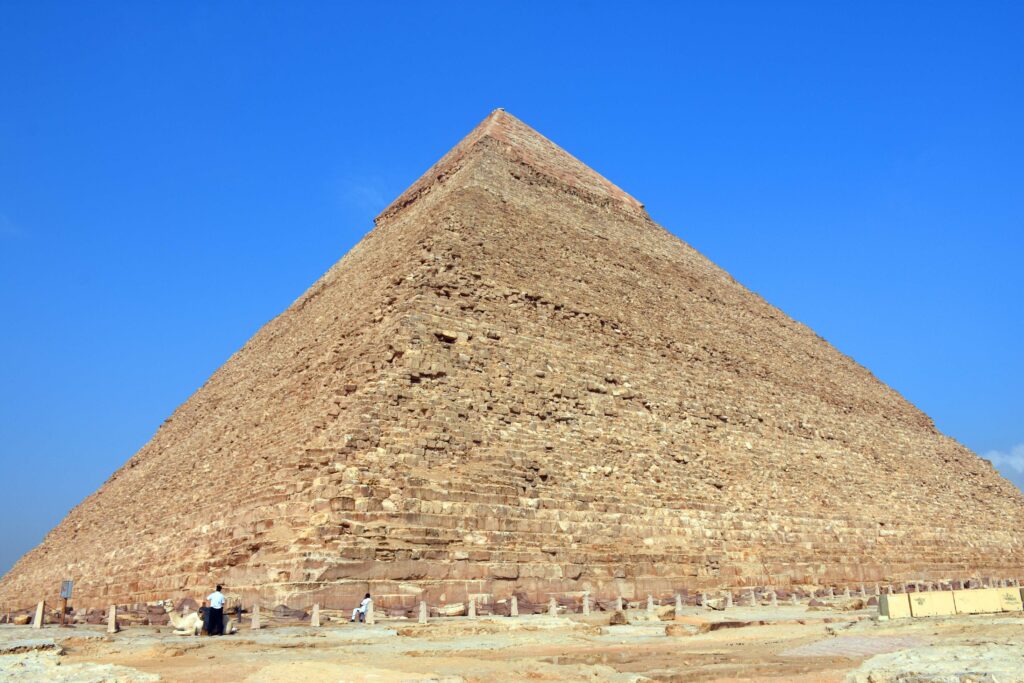
“Taxi meesta? Taxi meesta” is the chant that arose as I passed through Cairo airport. A wry smile crossed my face as I have flash backs to 40 years ago. Welcome back and nothing has really changed. Constant hassle and attempted extortion is still a way of life in Egypt. Cutting a swathe through the touts I negotiate a taxi to the pyramids. Starting price 1000 pounds, finall price 300 pounds and on arrival at Giza a further attempt, unsuccessful, by the driver to extract more money.
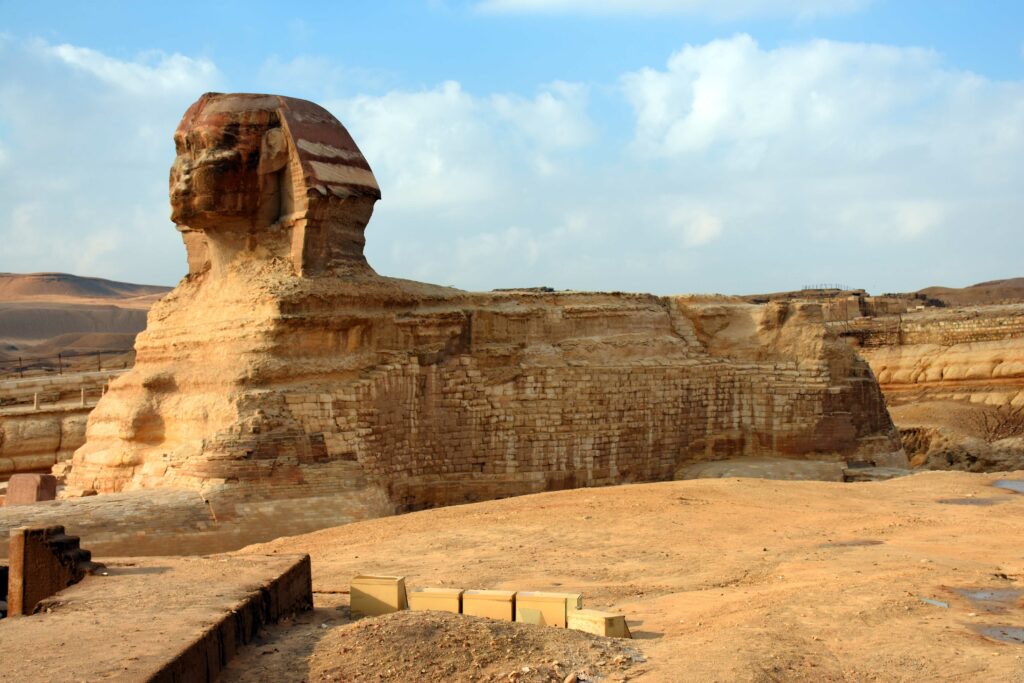
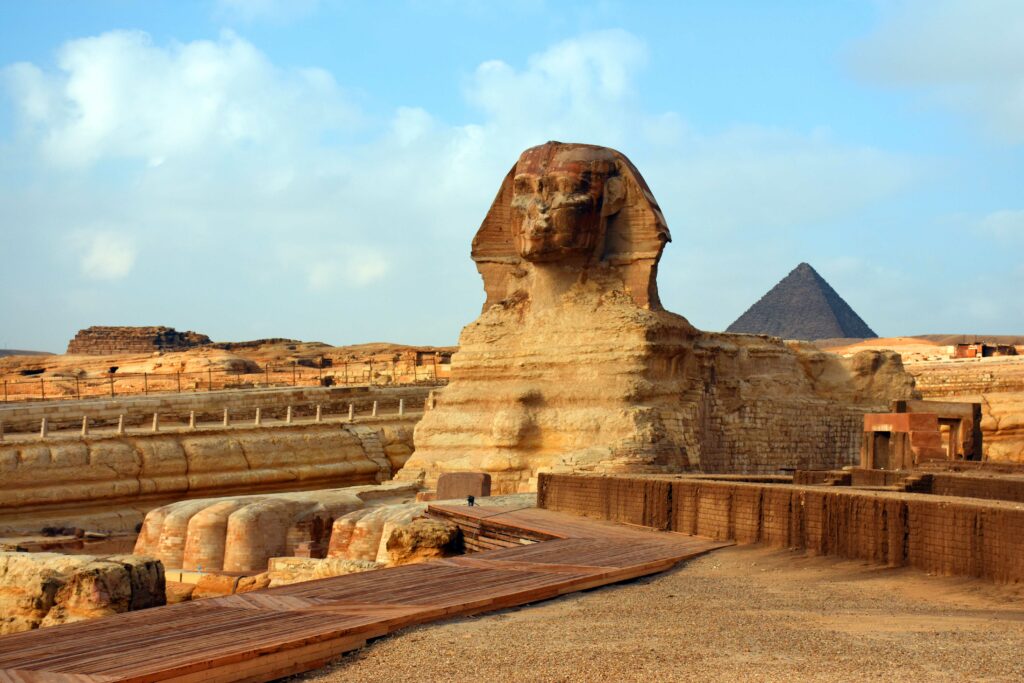
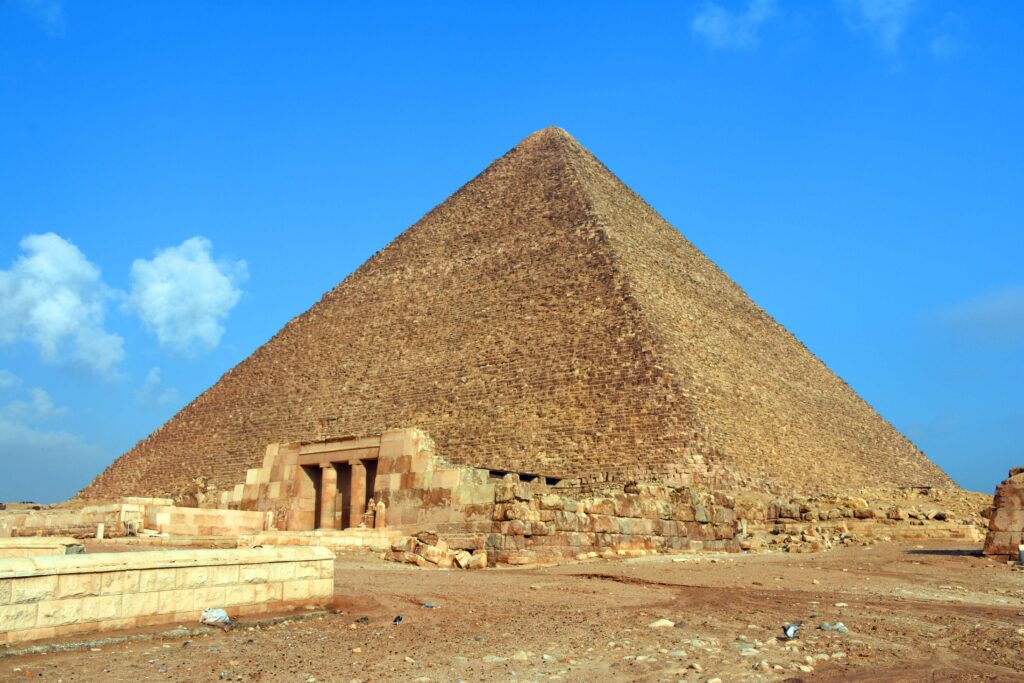
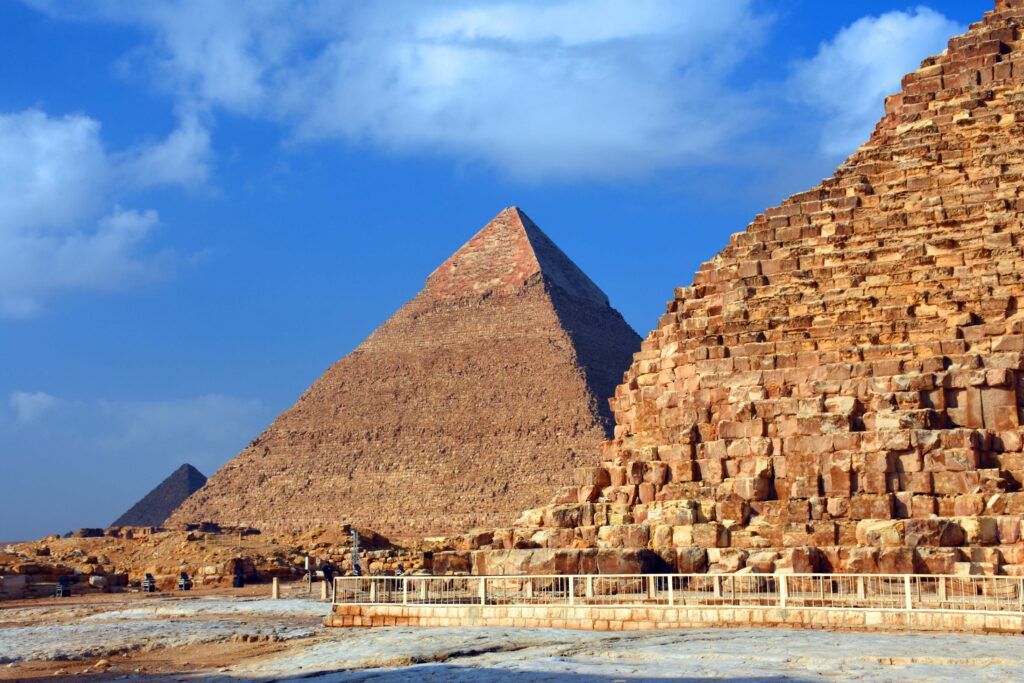
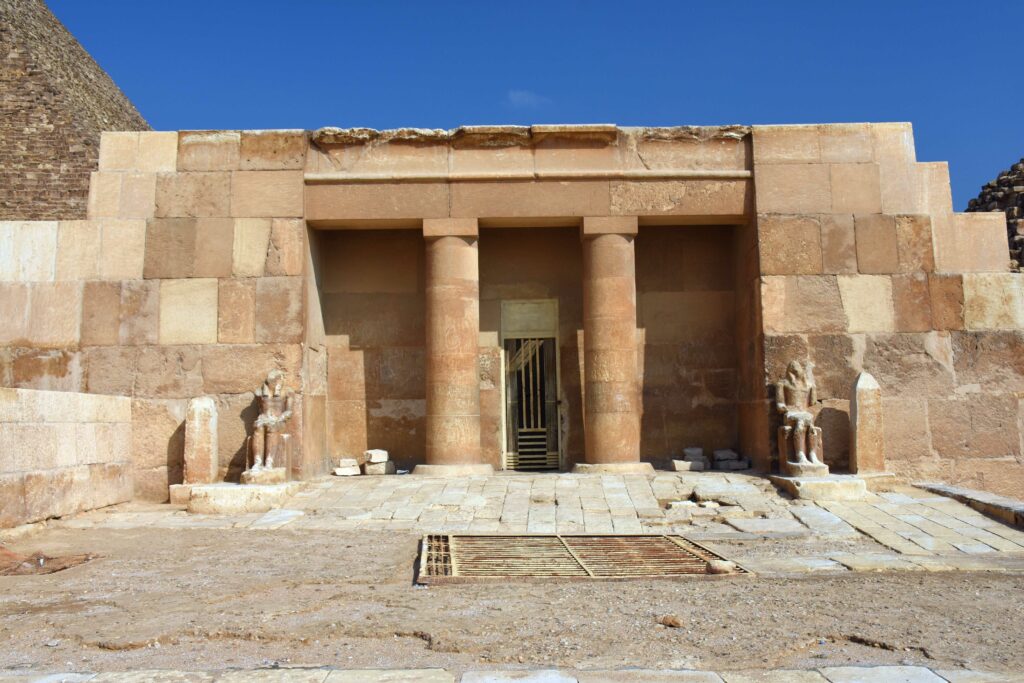
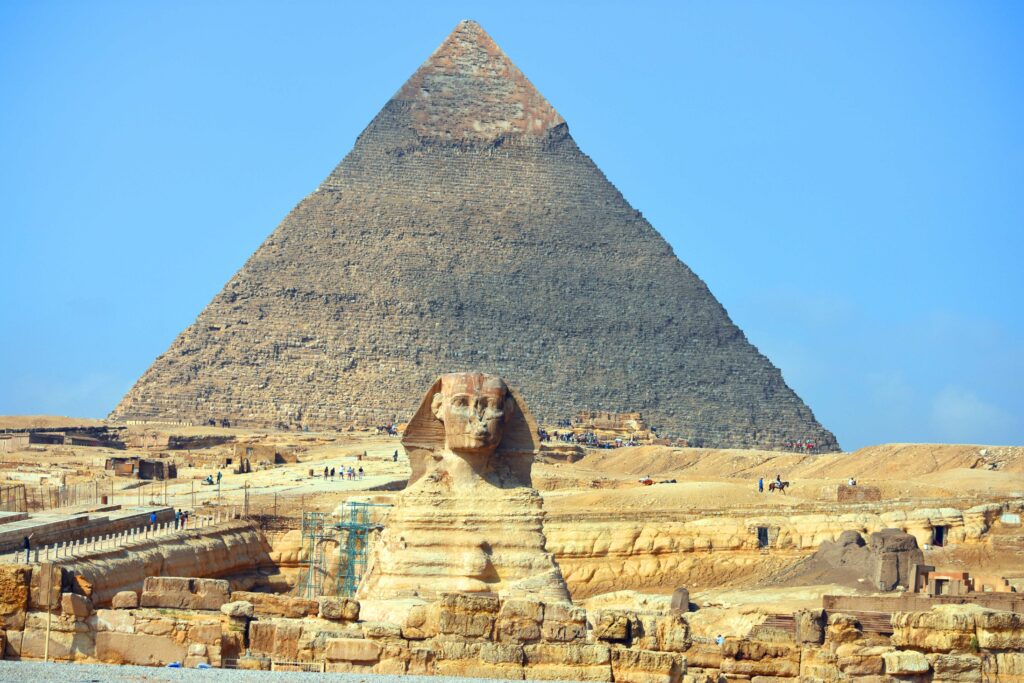
Strangely smoggy skies over Cairo have me wondering about the plan to break up my flight for a quick half day trip to the pyramids. I arrive at 8 am and walk up to the Giza plateau and literally have the place to myself. Not at all what I remember and it is both evocative and atmospheric. The clouds finally burn off and the kiss of morning sun lights up the yellow sandstone blocks of the pyramids and sphinx. I immerse myself in the peaceful beauty and wonder if post Covid had the Egyptian tourist industry taken that much of a beating?
When I was last here there was no ticket office and one could just drive up to the pyramids. Similarly the barrier to exclude tourists from the base of the sphinx is new.
SphinxSphinx
At 9am I finally reach and turn around the Cheops pyramid to see the tourist buses disgorging passengers and almost instantly the place has become a veritable “zoo”. Clearly the tourist business is still alive and well. Nonetheless I manage to avoid the crowds successfully and collect some nice images in the process.
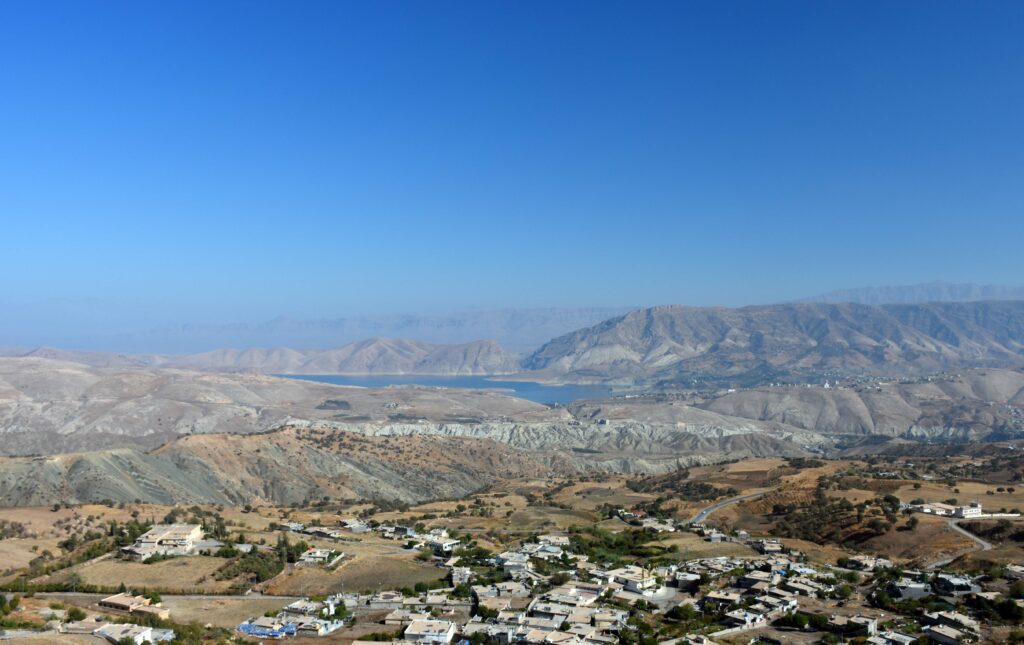
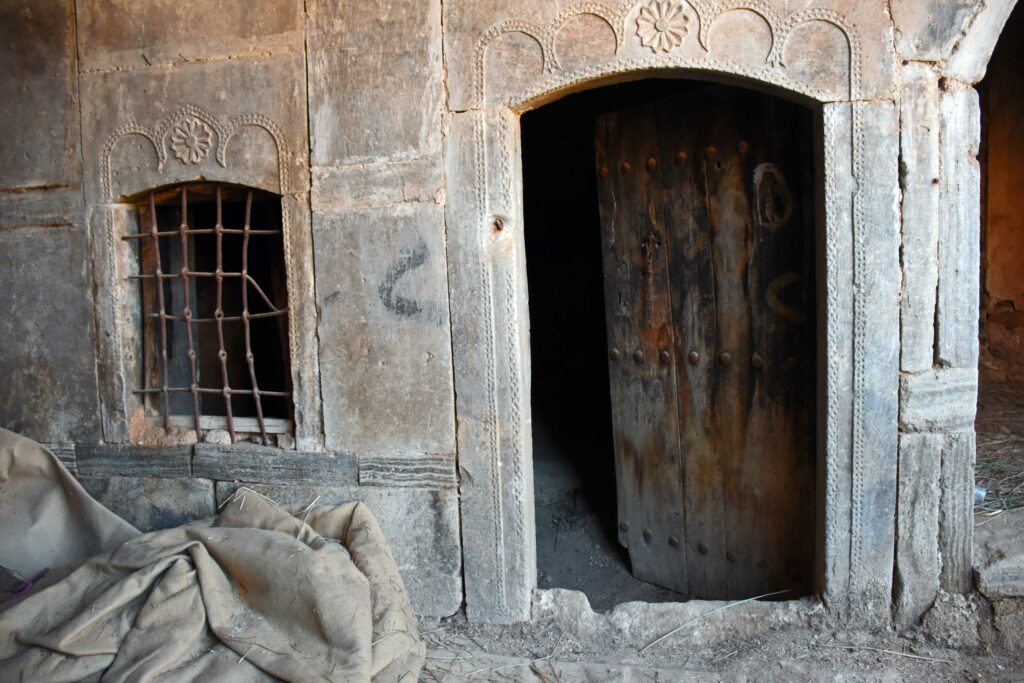
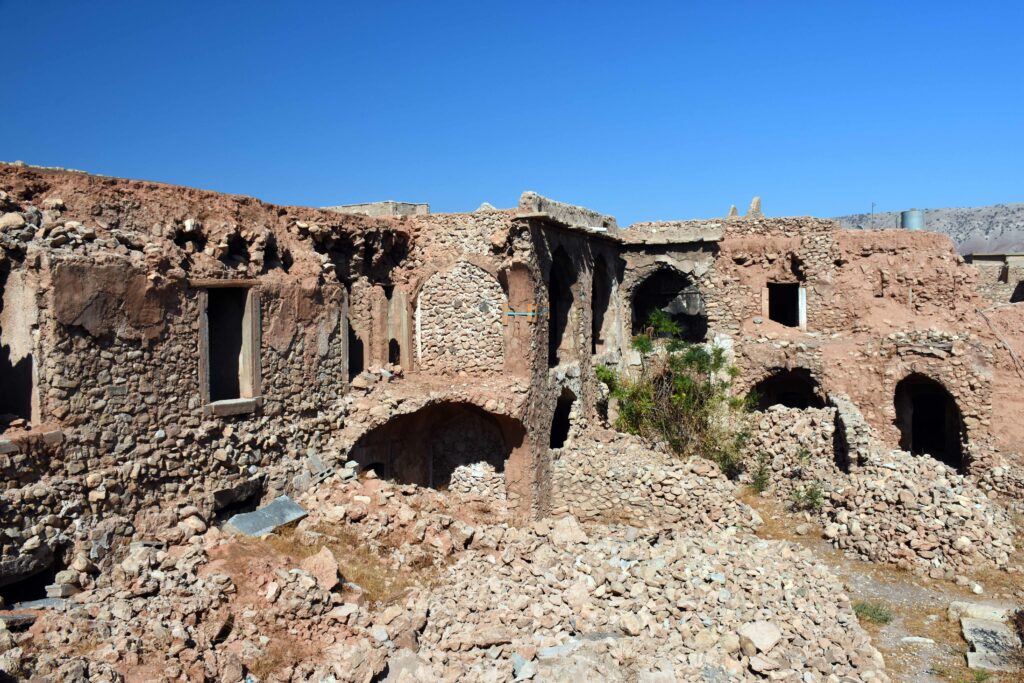
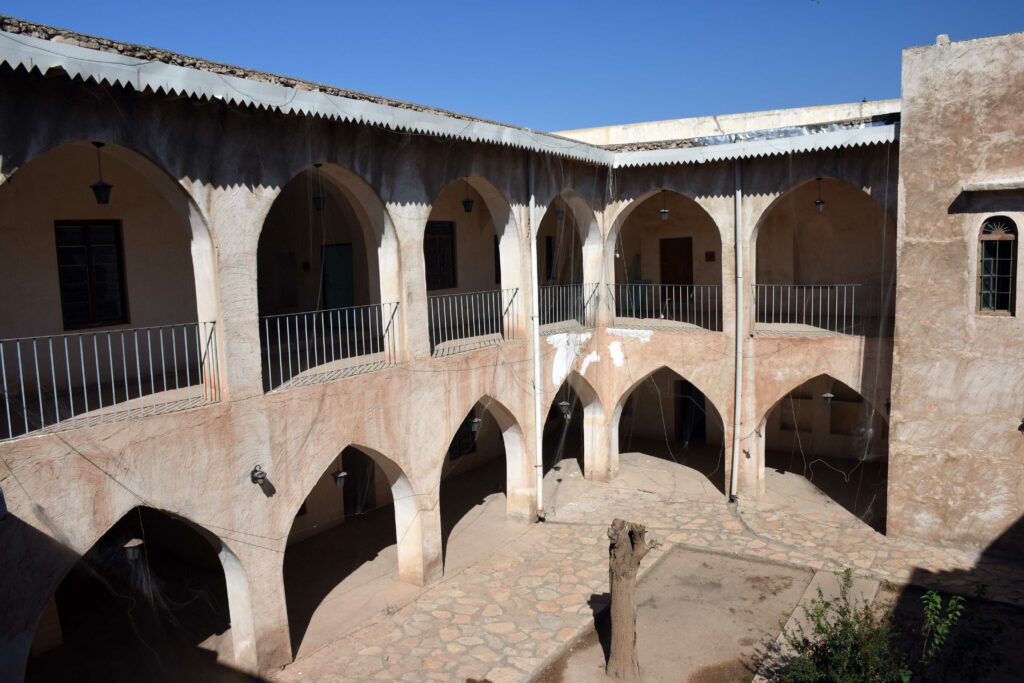
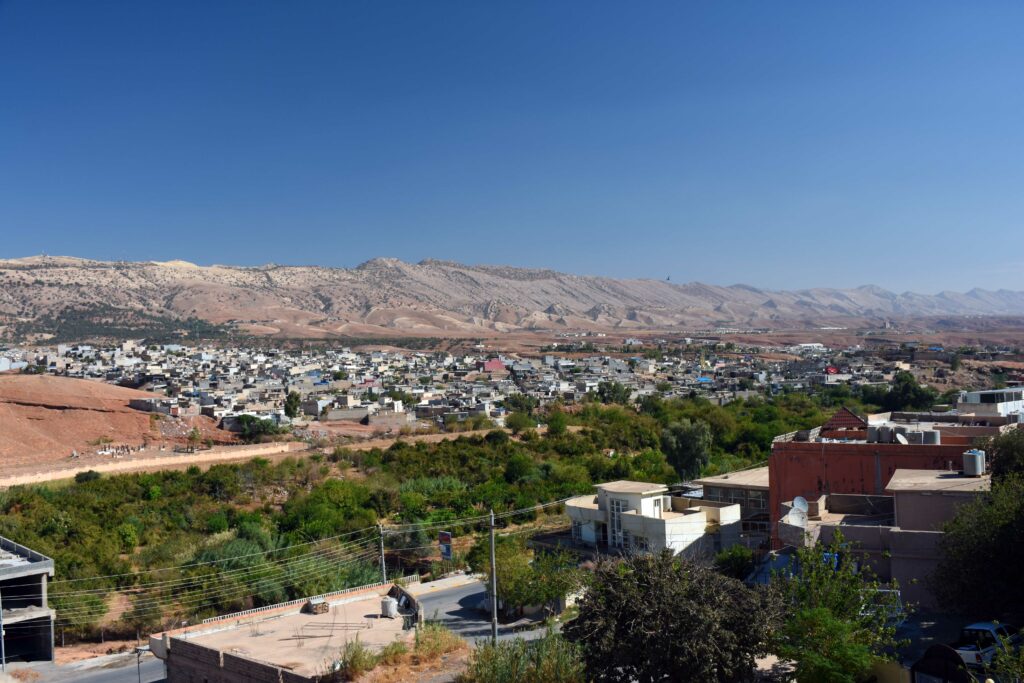
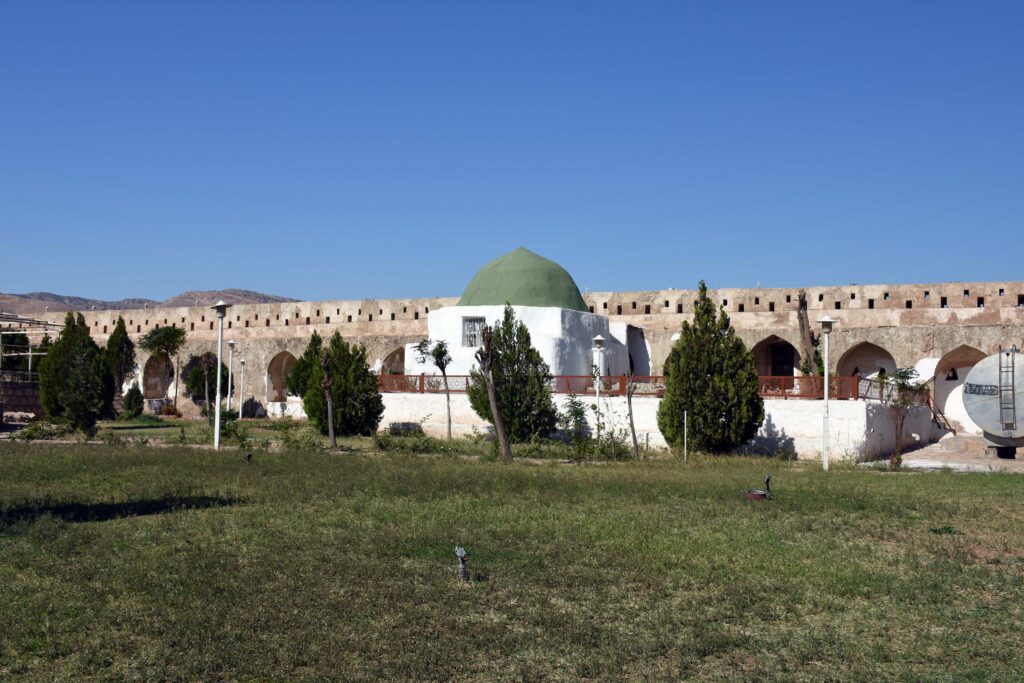
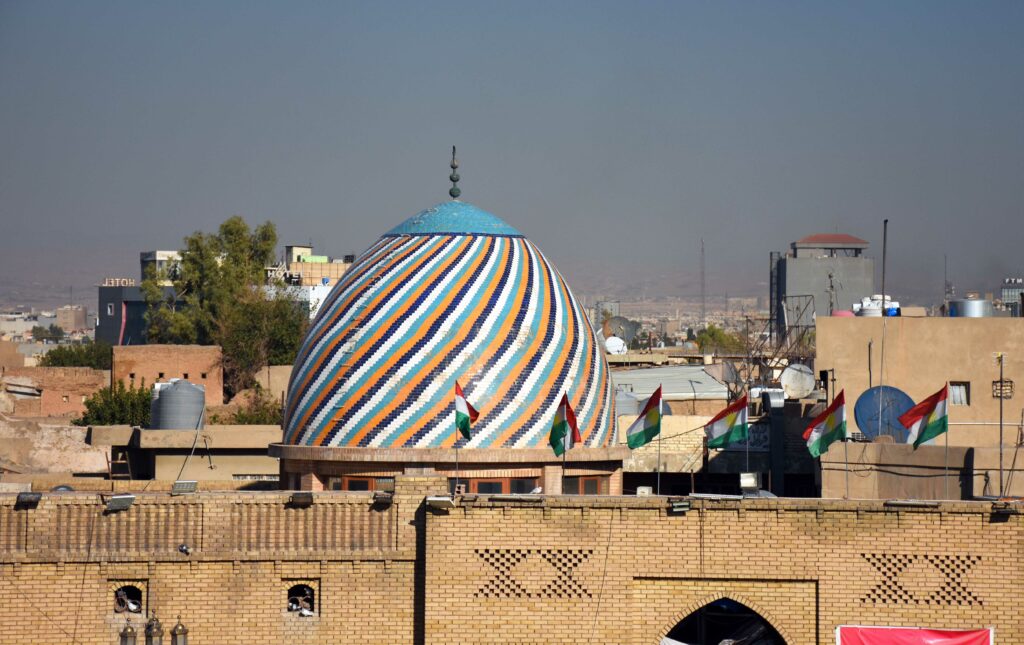
Bright sunshine and a cloudless day greets us for our final day as a group. Of the fellow travellers who have been with us for the full two weeks I will miss many of them, not to mention our vivacious guide Paris who has a knack for turning Arab mens’ heads. The road back to Erbil is multilaned pristine freeway and we cover a long distance quickly. There is a stop at Lake Dukan and at Koya to see the rundown decaying but interesting 12th century caravanserai along the silk road.
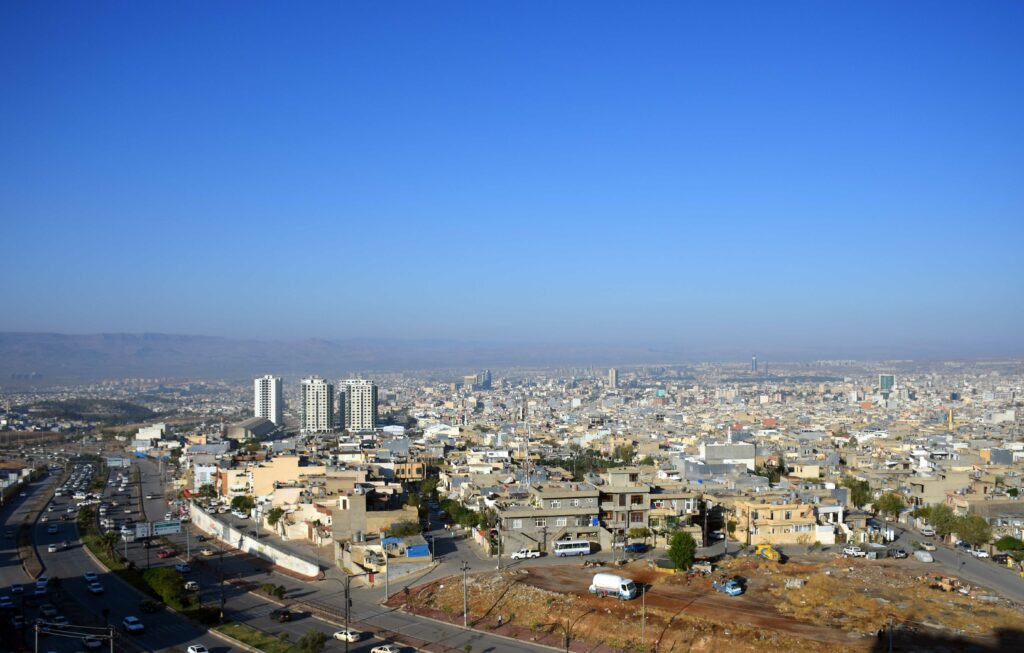
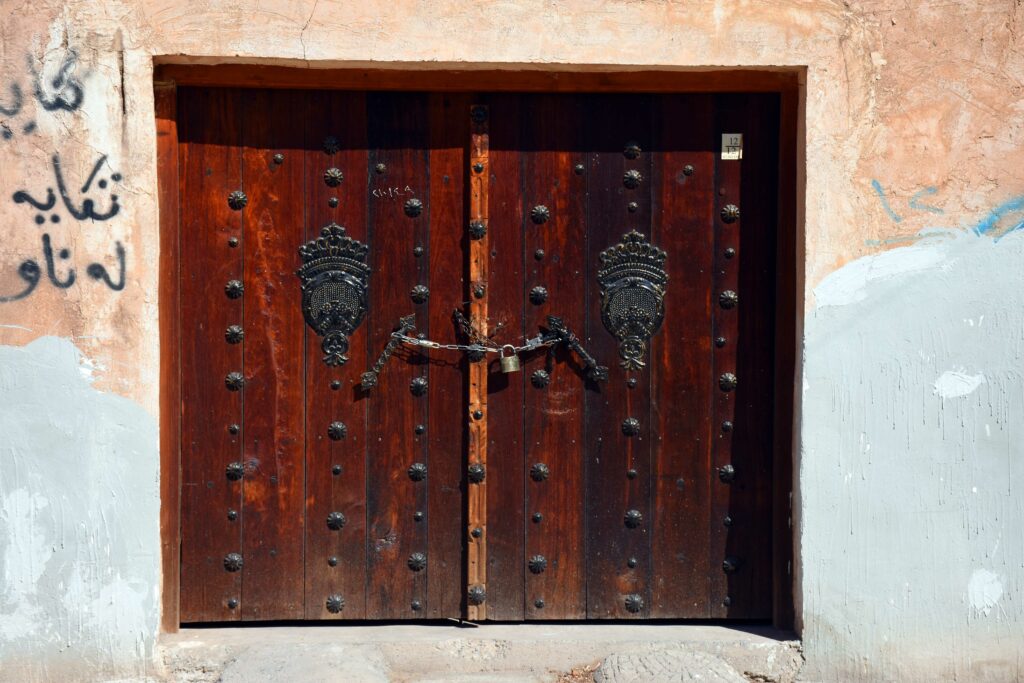
SulymaniLake Dukan12th century caravanserai at Koya12th century caravanserai at Koya400 year old house at Koya400 year old house at KoyaKoyaKoya Qishle, historic barracks
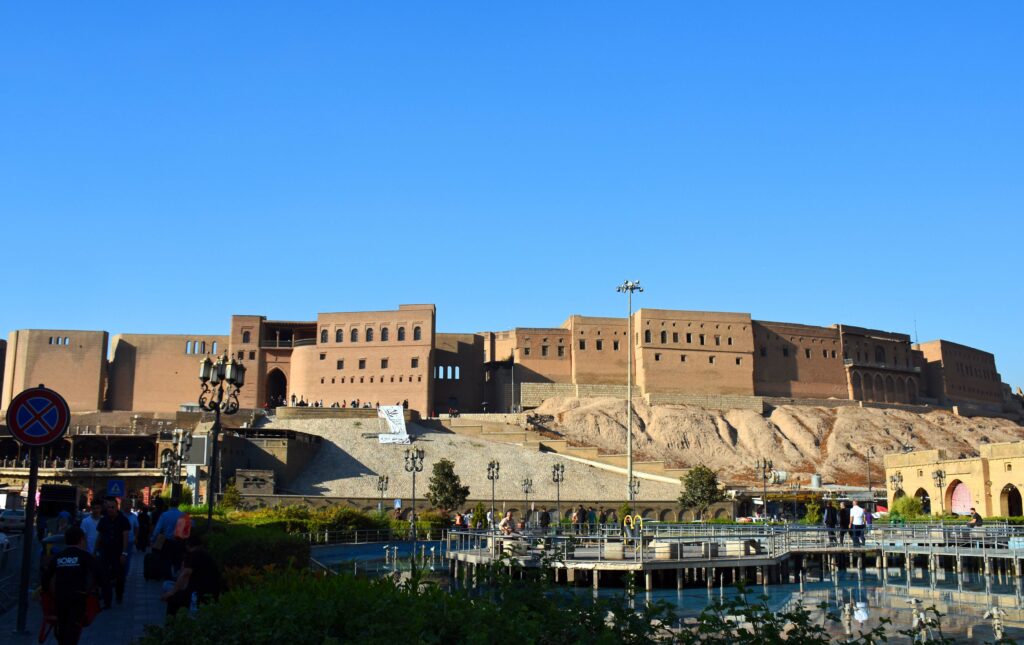
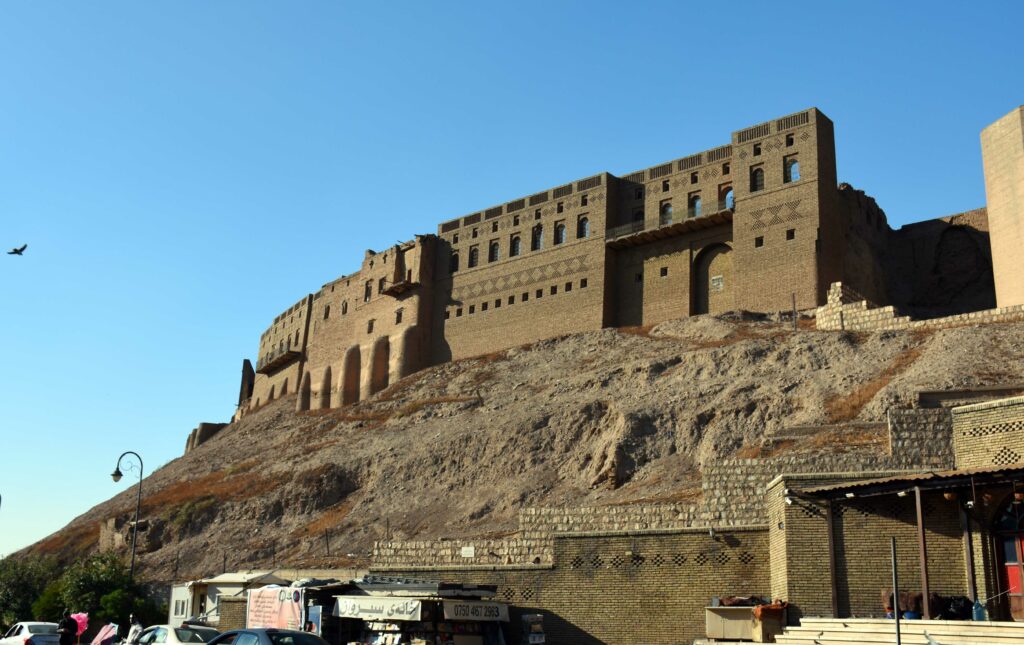
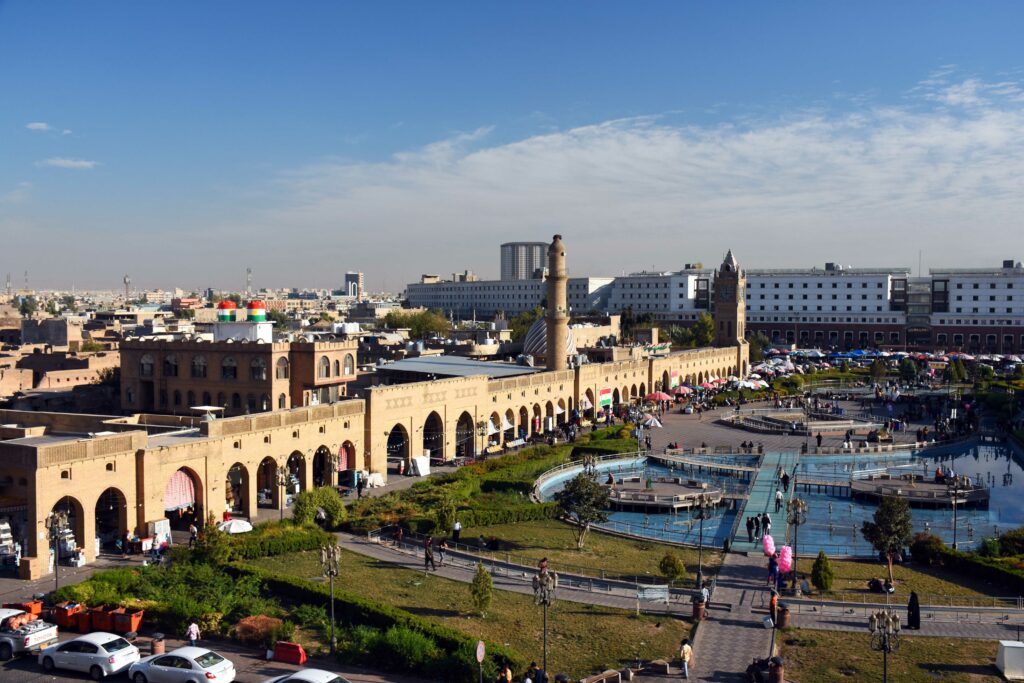
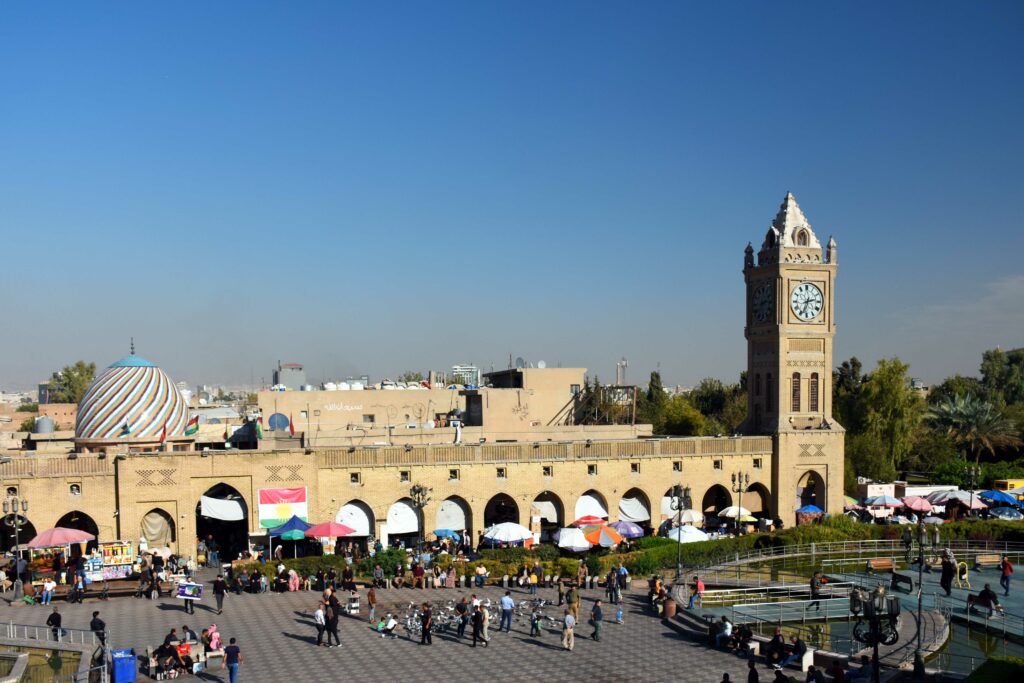
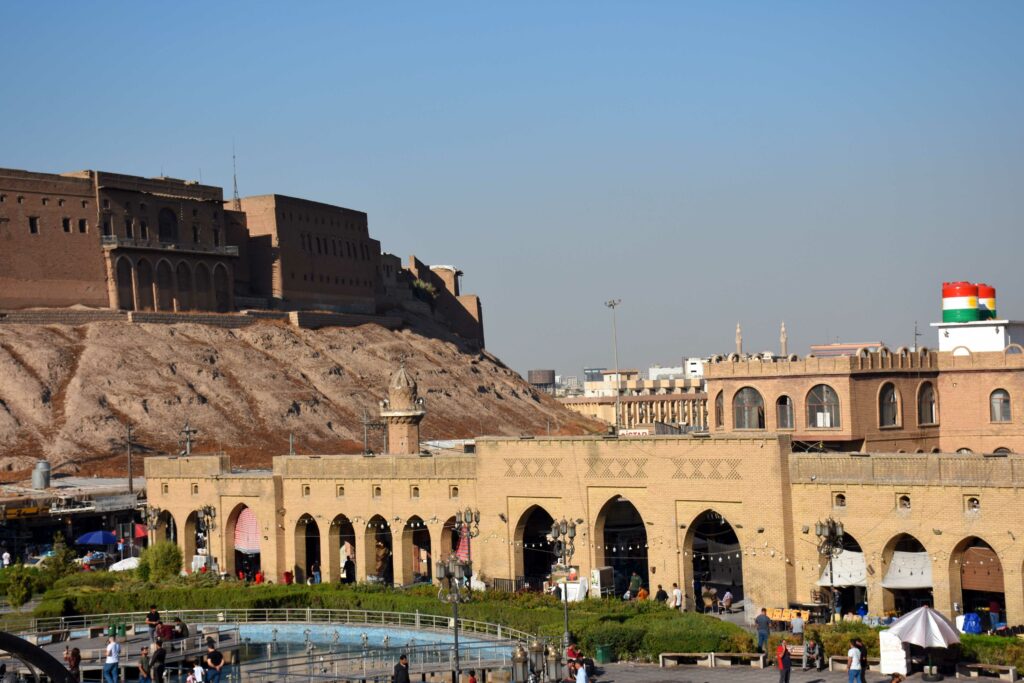
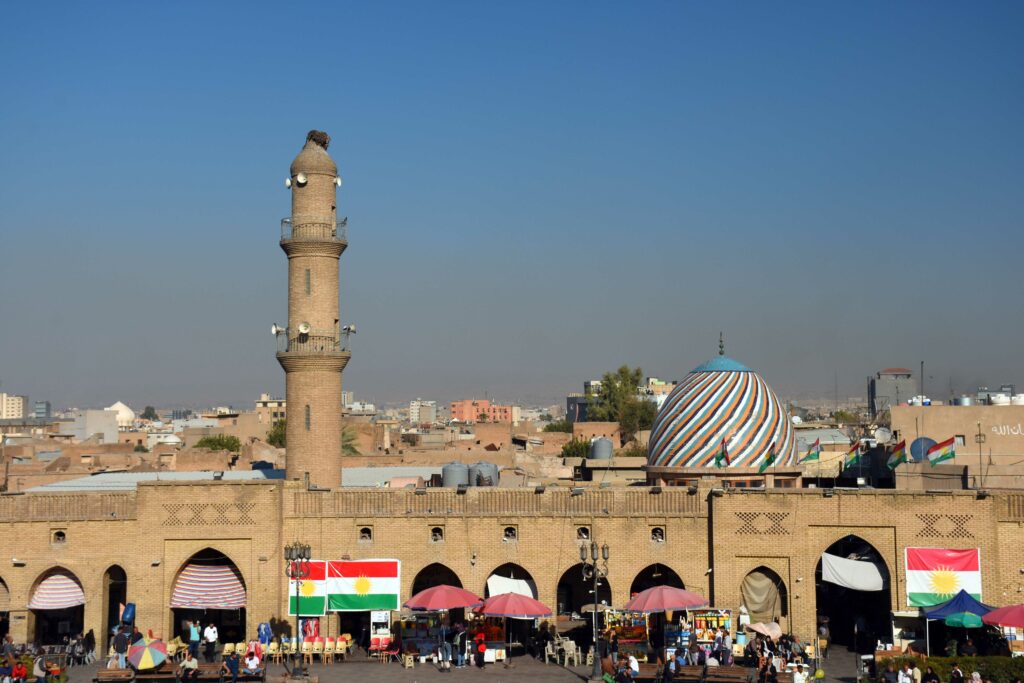
Finally we are at Erbil and we have lunch at one of the many cafes in the large and pretty city square. High on the hill above is the Erbil citadel. Built 6000 years ago it is the oldest continually inhabited sites in the world.
Erbil citadelErbil citadelErbil square from citadelErbil citadel
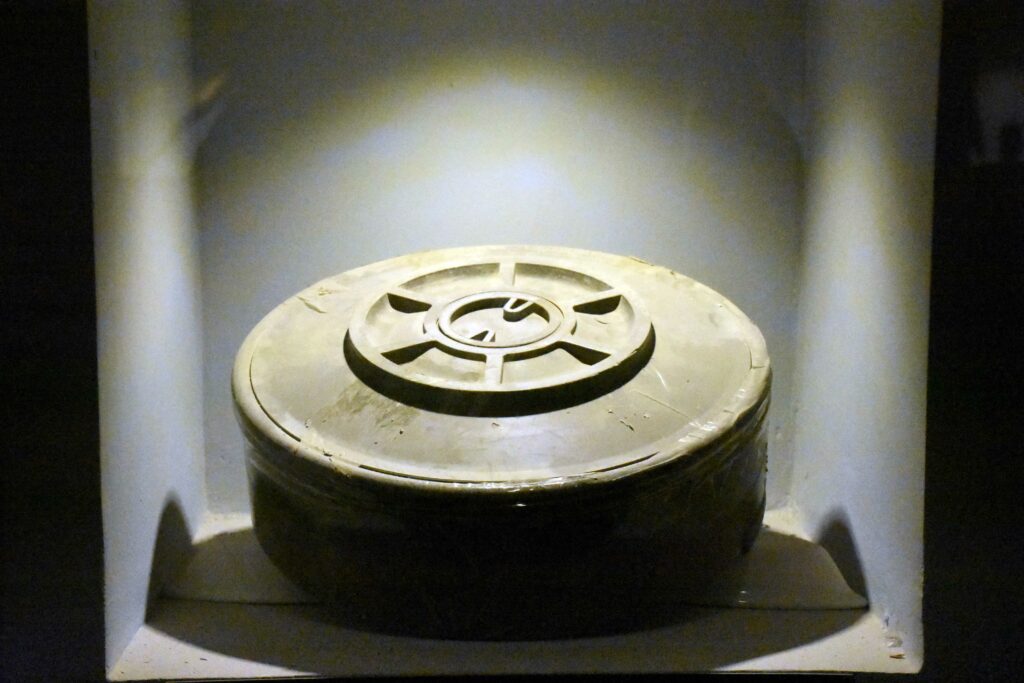
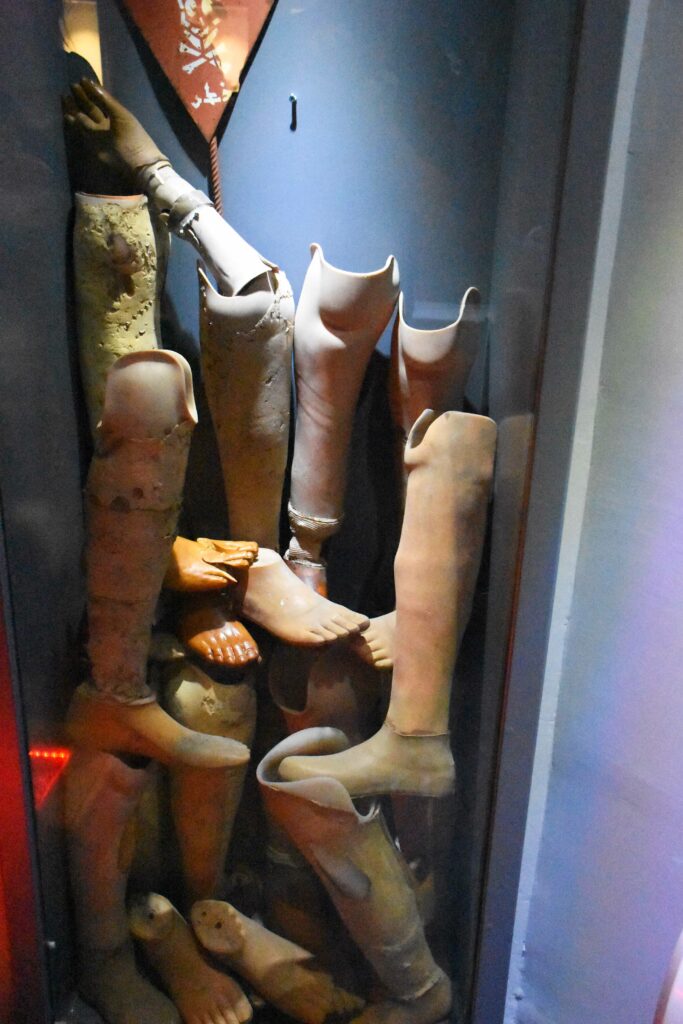
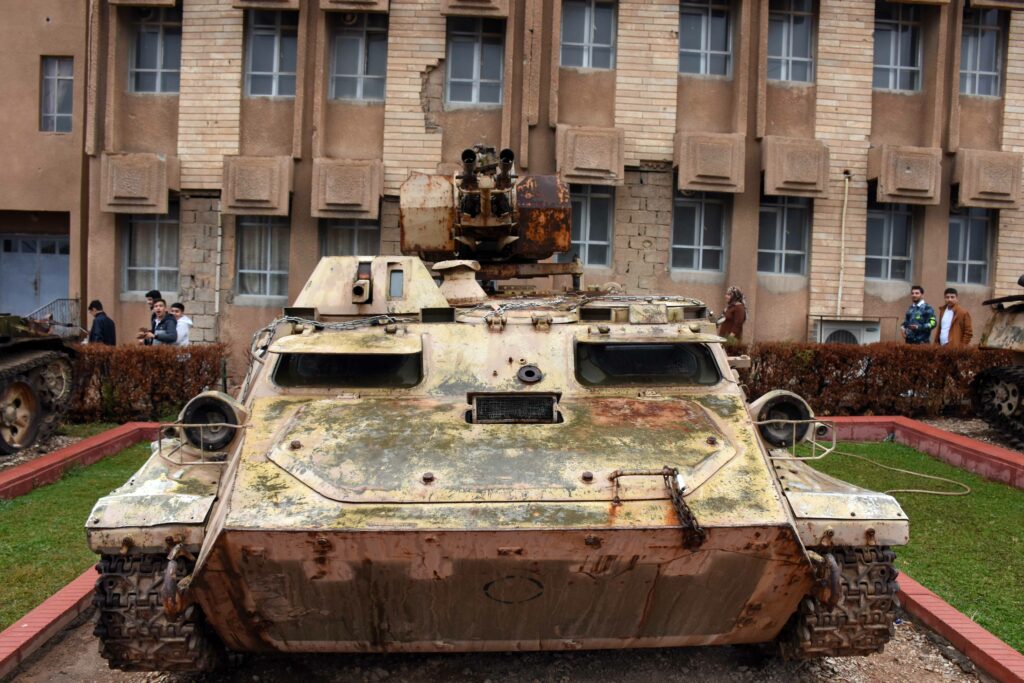
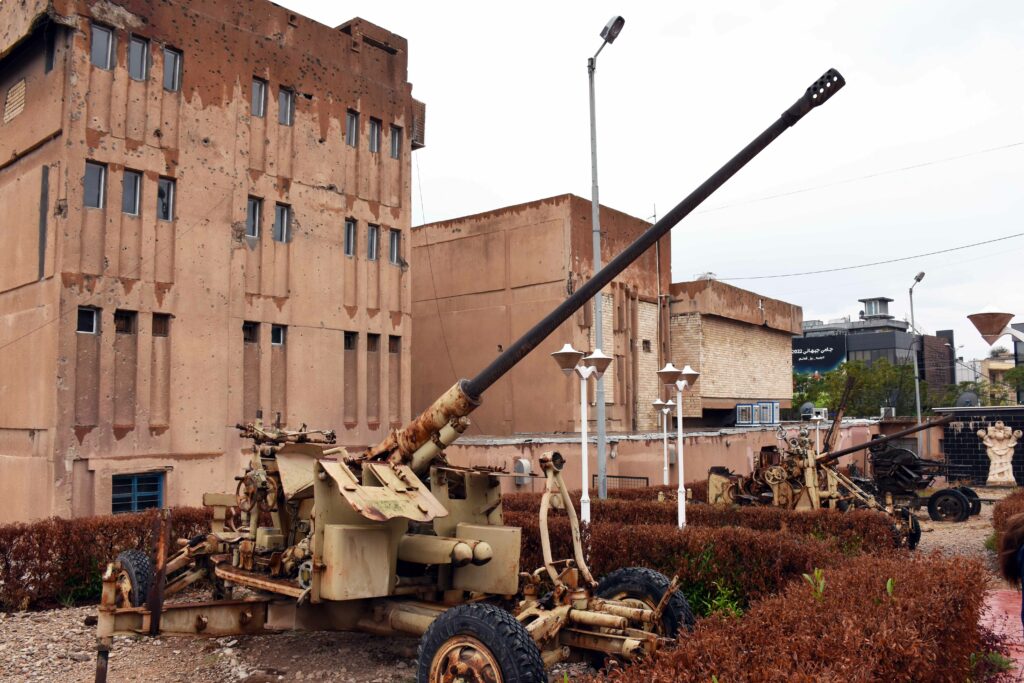
The rain tumbles down from leaden skies as we arrive at the Red museum in Sulymani . It’s as if the heavens are reflecting the deep sorrows that we are about to experience here. Historically the poor Kurds have been the whipping boys of an assortment of countries but none more so than in Iraq, more recently with ISIS but then in the 1980s under the evil Saddam Hussein Baathist regime.
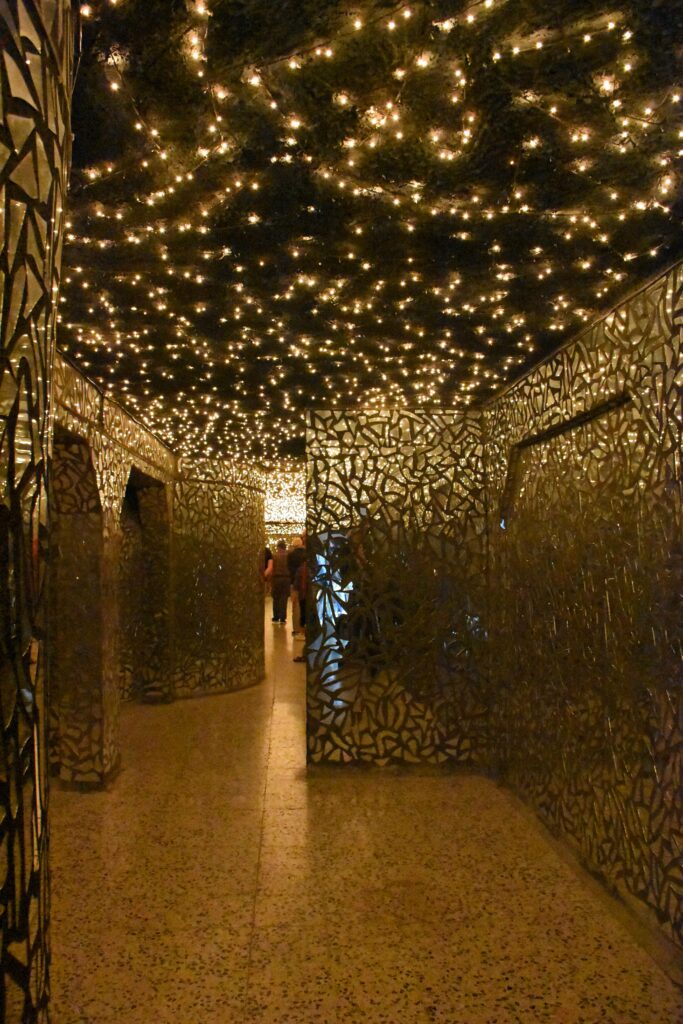
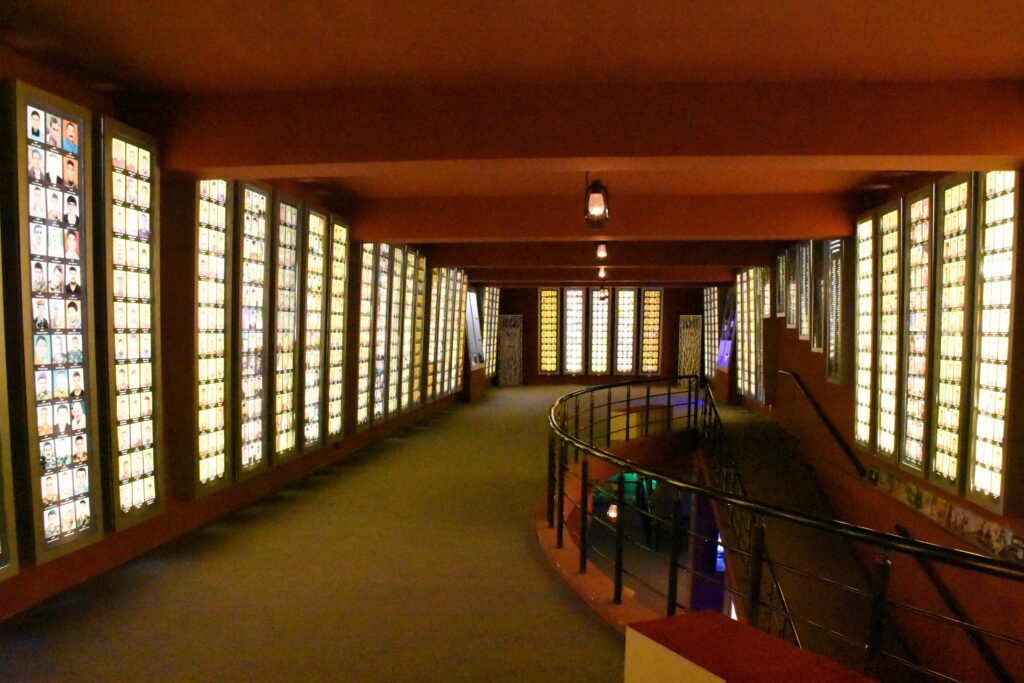
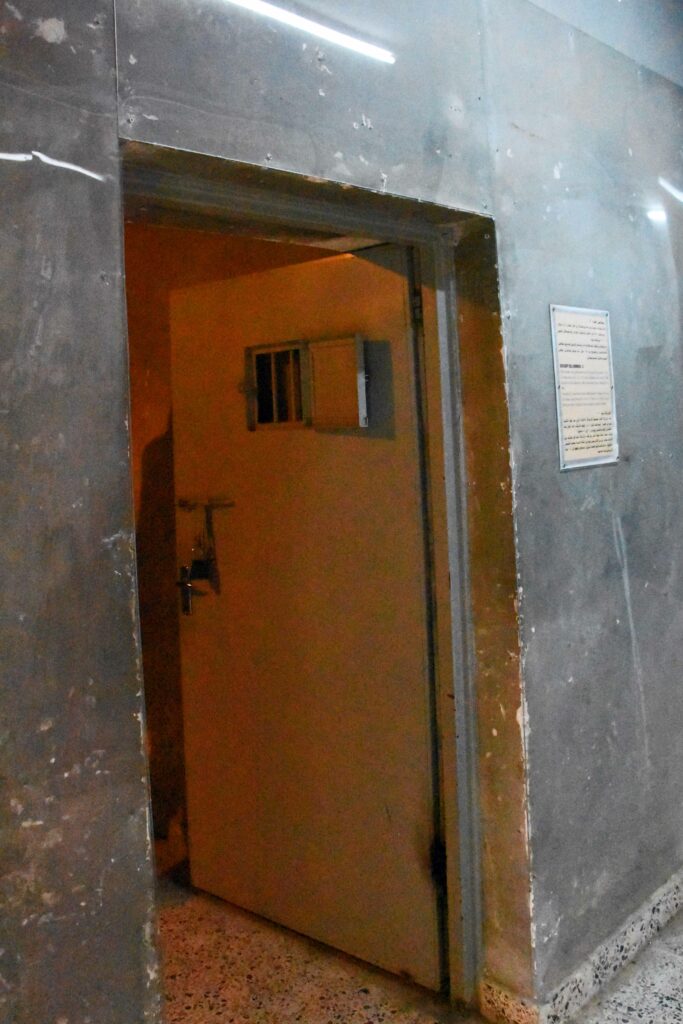
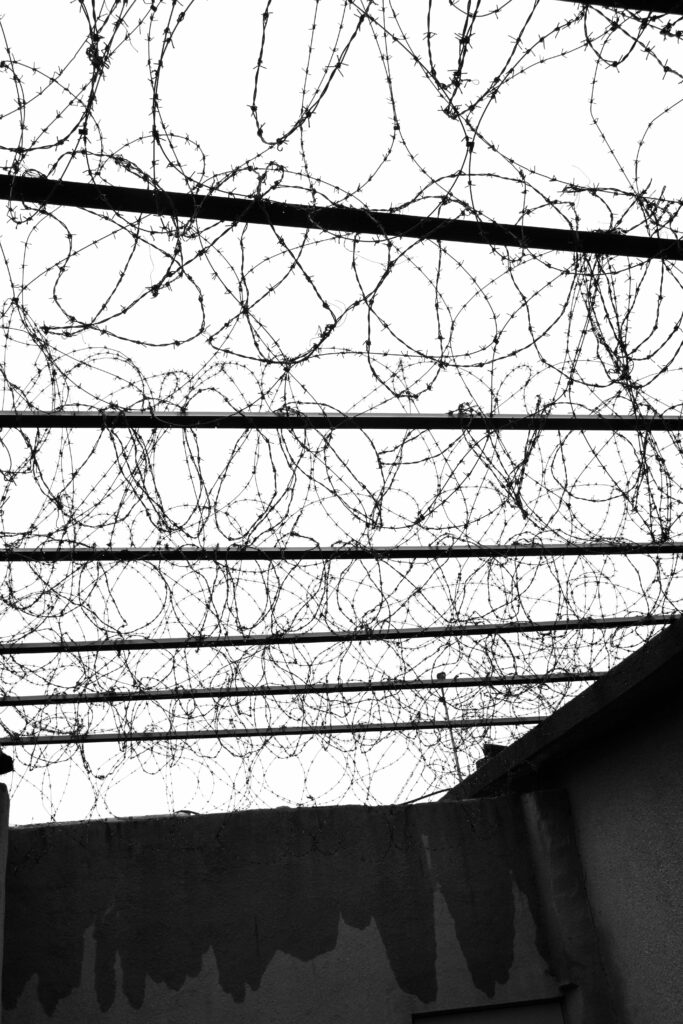
In Sulymani in 1983 Saddam’s reign of terror hit Sulymani. 182,000 people were killed, many buried alive, others imprisoned and tortured before their grisly demise. In total of 5000 villages 4500 were razed to the ground. The destruction was of epic proportions. As we walk into the entrance of the former jail turned museum the long corridor is illuminated with 4,500 little fairy lights in the ceiling one for each destroyed village. The walls are lined with 182,000 mirrored tiles one for each death. It is poignant and evocative.
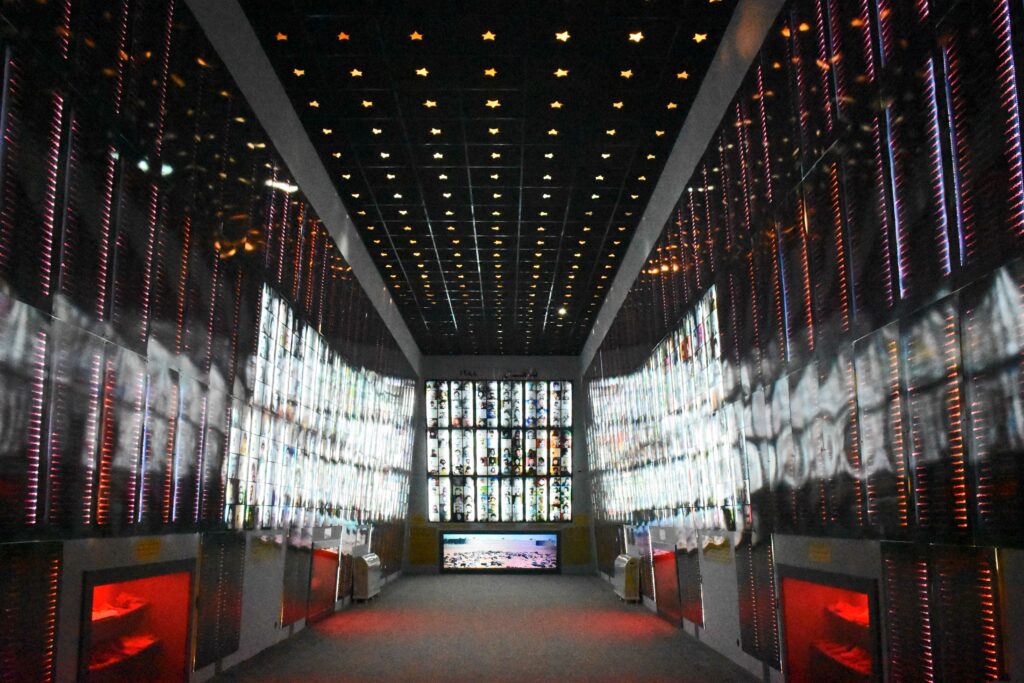
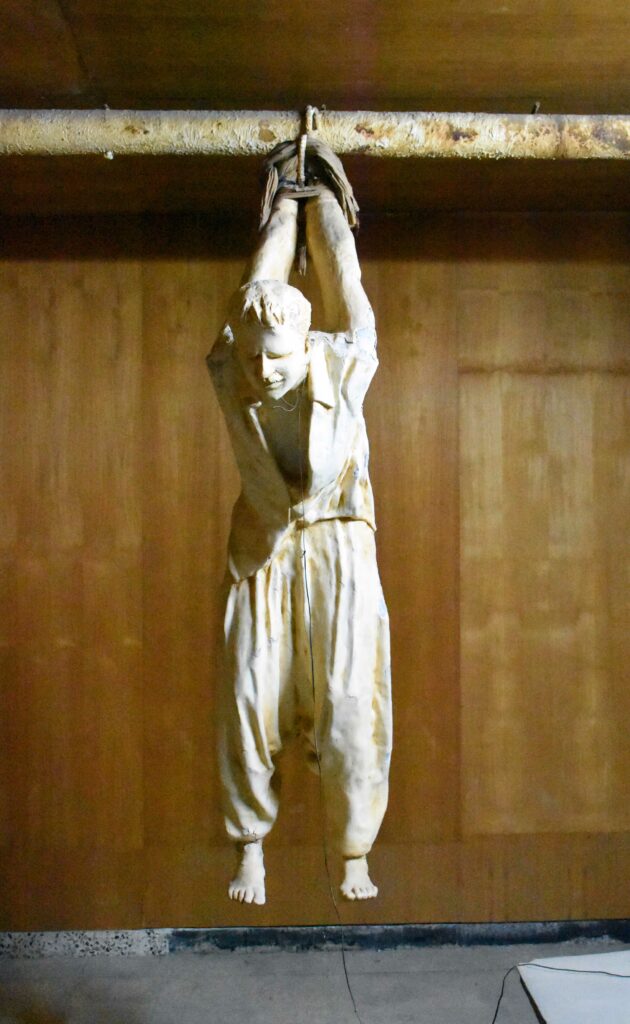
We spend 2 hours here, room after room of photos and exhibits. We visit prison cells, torture chambers set up with recreations of the torture. Our pretty young Kurdish guide, Haana, relates how her further was strung oup hanging from a beam while electrodes were placed on his penist to deliver electric shocks. When he eventually, somehow escaped he had no fingernails nor toenails removed as part of the torture. A short video clip showing the violent beating of prisoners is a bridge too far for me and I walk out with tears in my eyes.
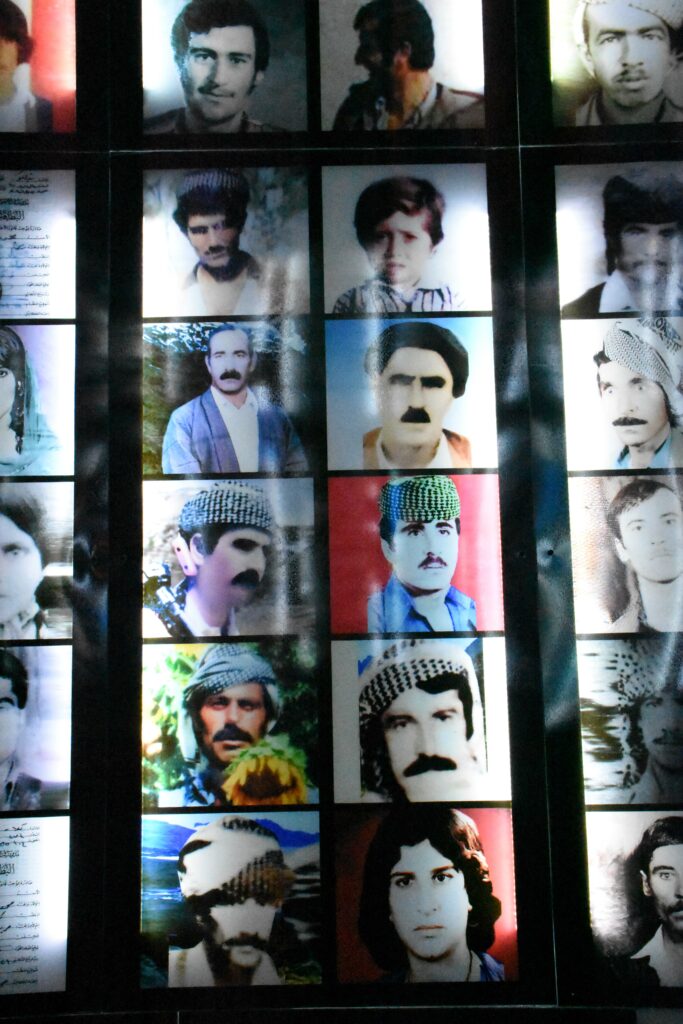
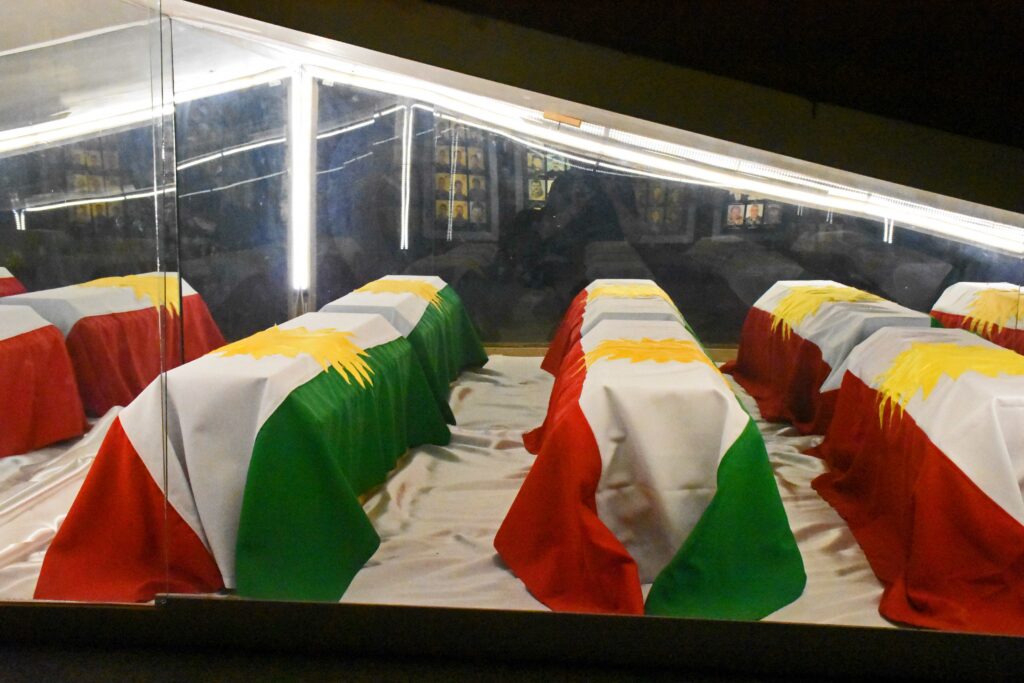
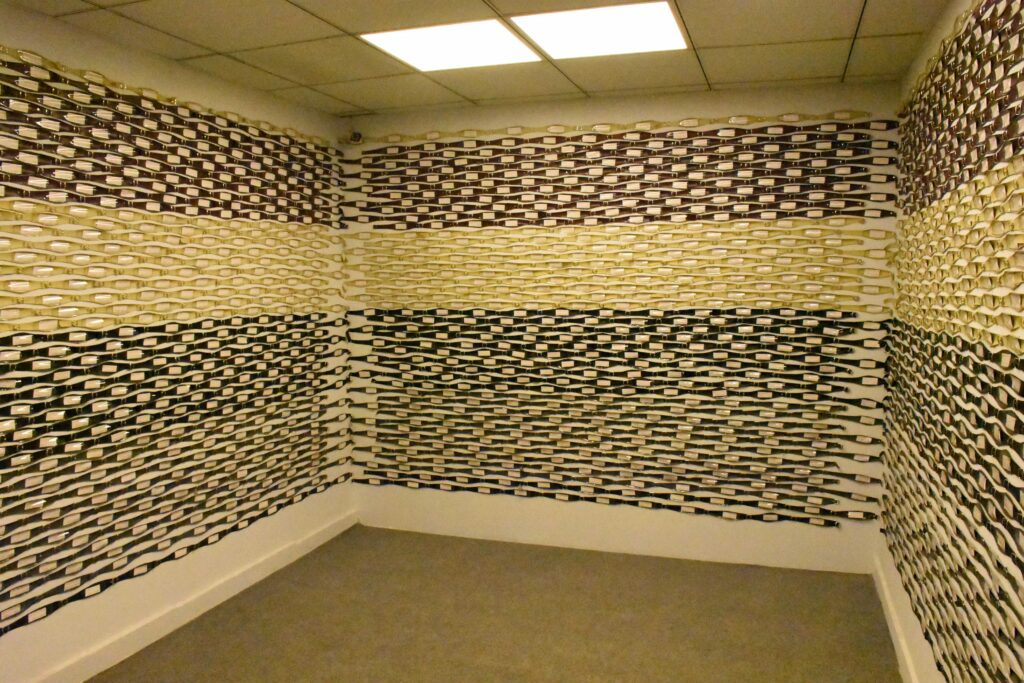
Gallery of killed prisoners. On the walls everything that looks like a light is actually the name of a killed KurdWalls are covered with photos of the killed KurdsLand minesPictures of the deadPeshmerga coffinsCellsTortureOn the walls are prisoner wrist bands. Each has a name and as a psychological torture the date that the prisoner will be killed
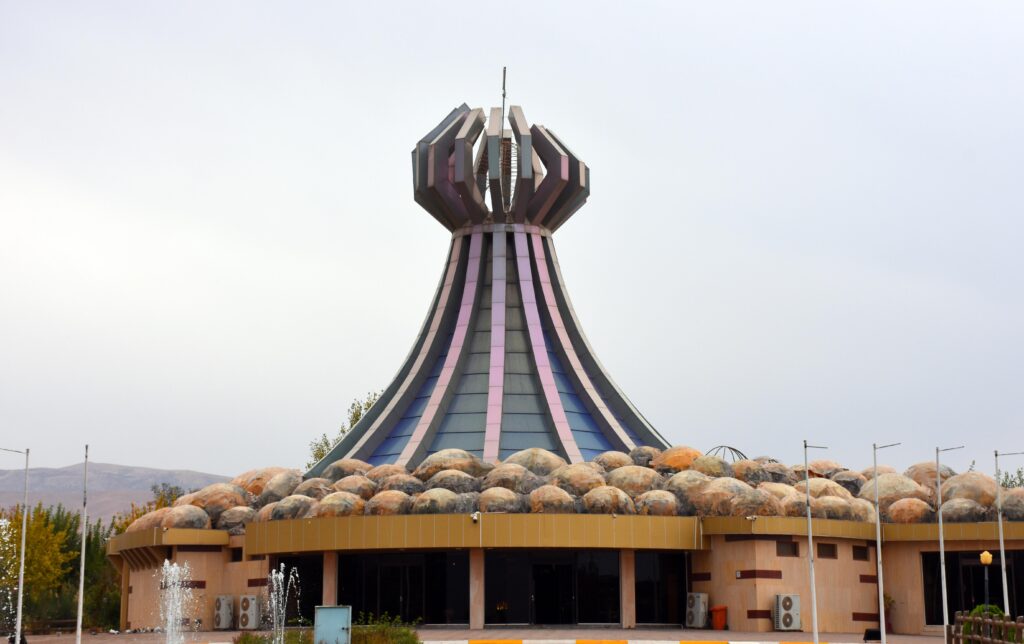
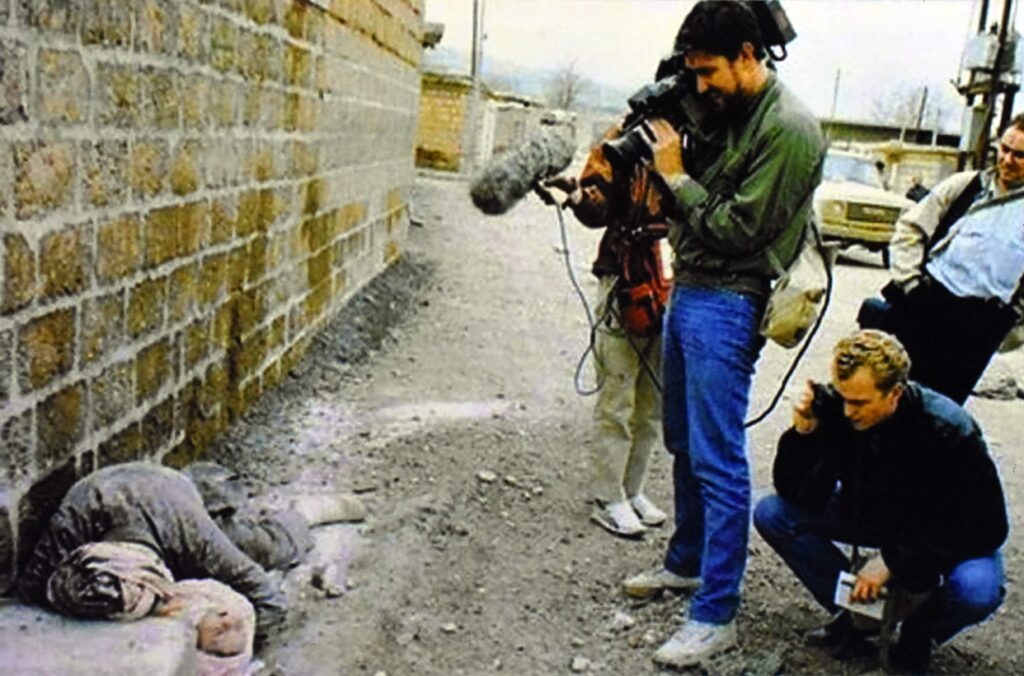
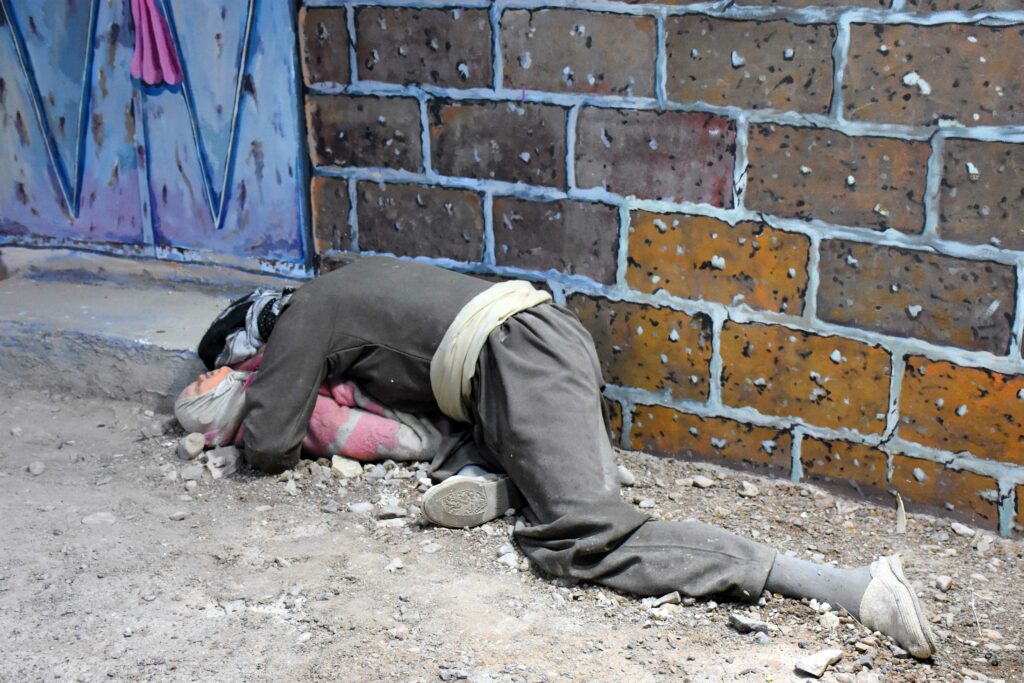
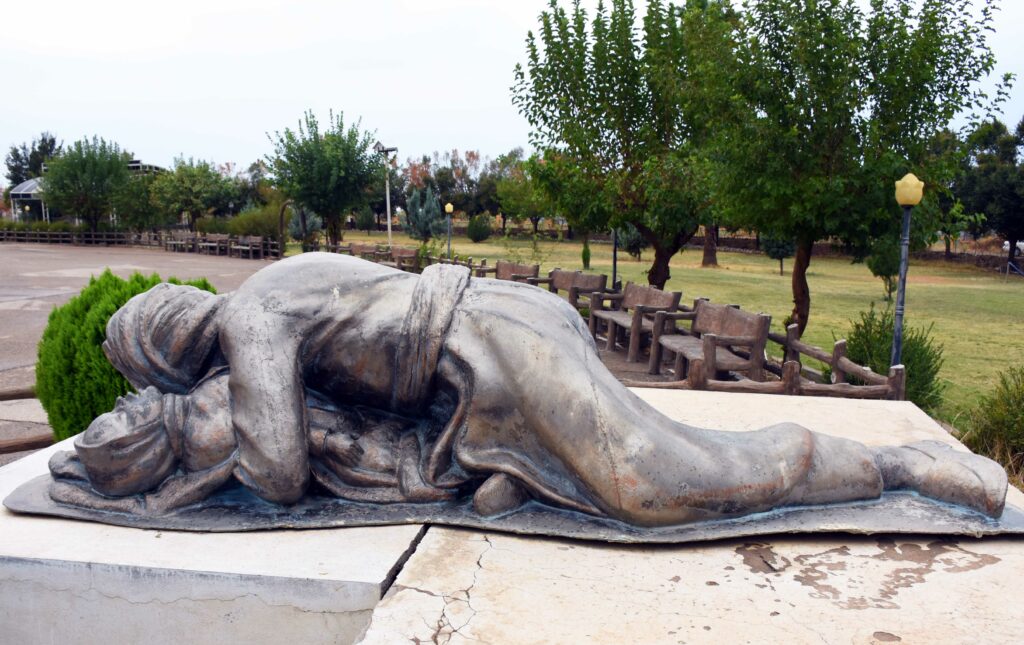
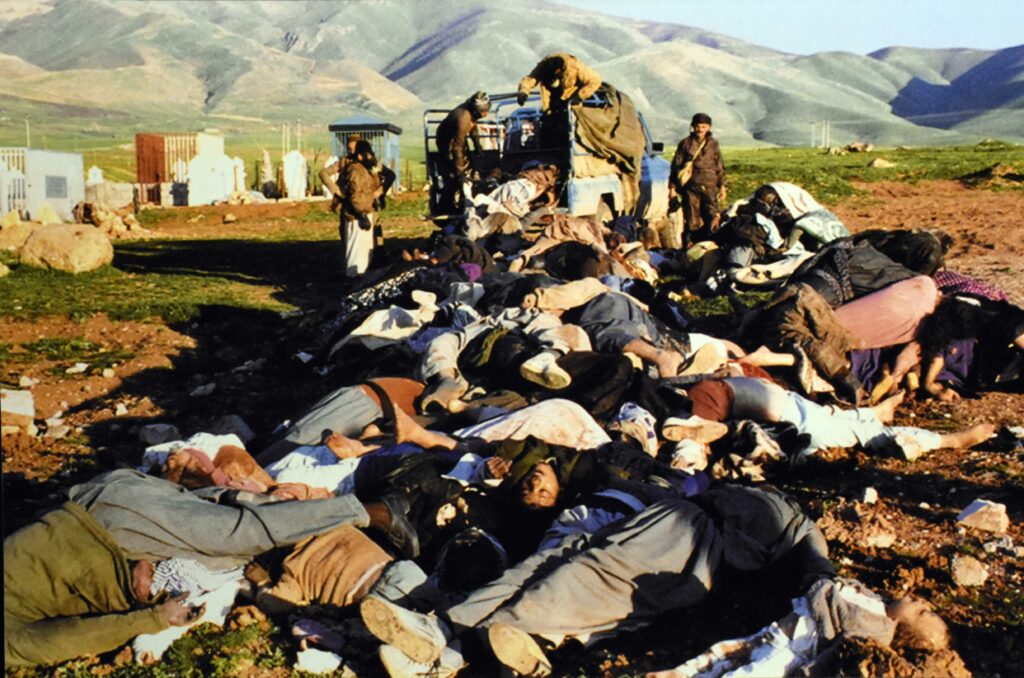
The rain continues and we visit another genocide site, Halabja. In 1988 Saddam struck again. Early in the morning of March 16 Iraqi airforce jets flew over this small townnear to the Iranian border. Apart from his hated Kurds there were stories of Iranian military infiltrating the area, double the incentive for attack. At first they pounded the town with conventional weapons to break windows and doors and force residents to hide in cellars. Then they released mustard gas, which being heavier than air sinks to the ground and any underground chambers right where their intended targets were hiding.Some 7000 people are believed to have died on the day another another 12000 for the after effects of the poisoning. There is a moving memorial there with a small museum and a commerative wall where the victims are listed.
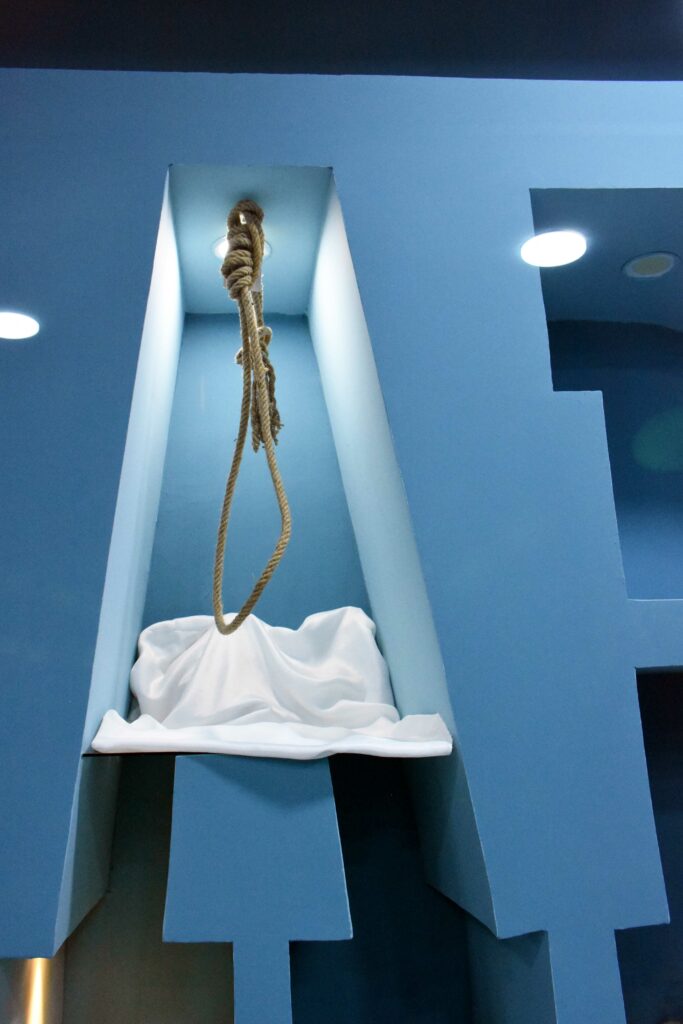
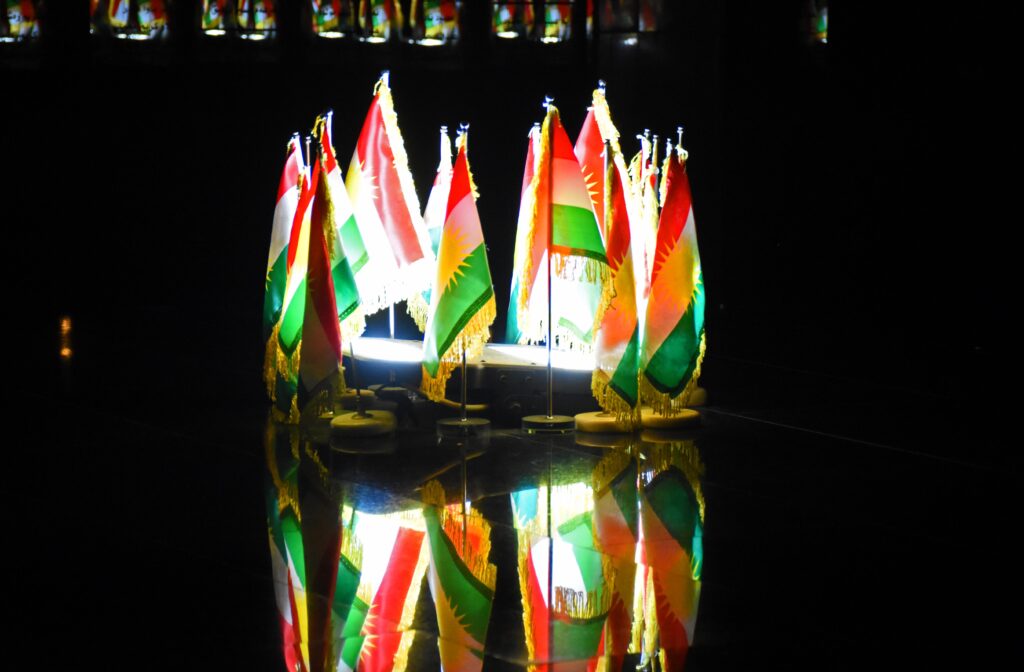
Memorial at HalabjaPhoto of journo capturing a father trying to protect his infant. Both are dead from the gassingAbove image recreated in the museumStatue outside the museumImage post the chemical attackRope that hanged Saddam’s accomplice who coordinated the gassing, “Chemical Ali”Sign outside museumKurdish flags
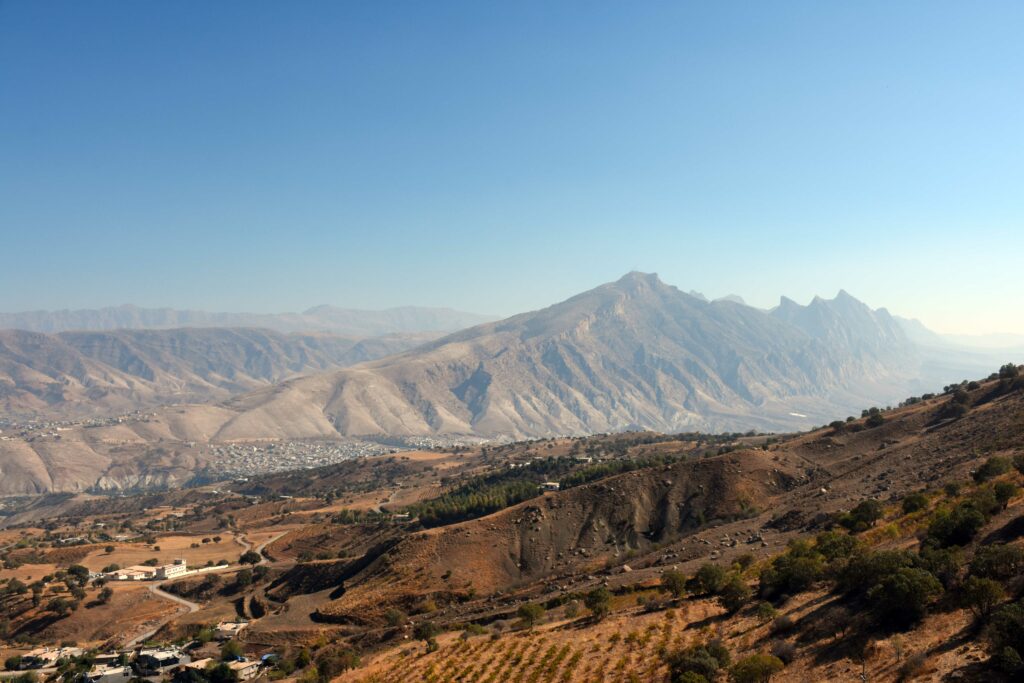
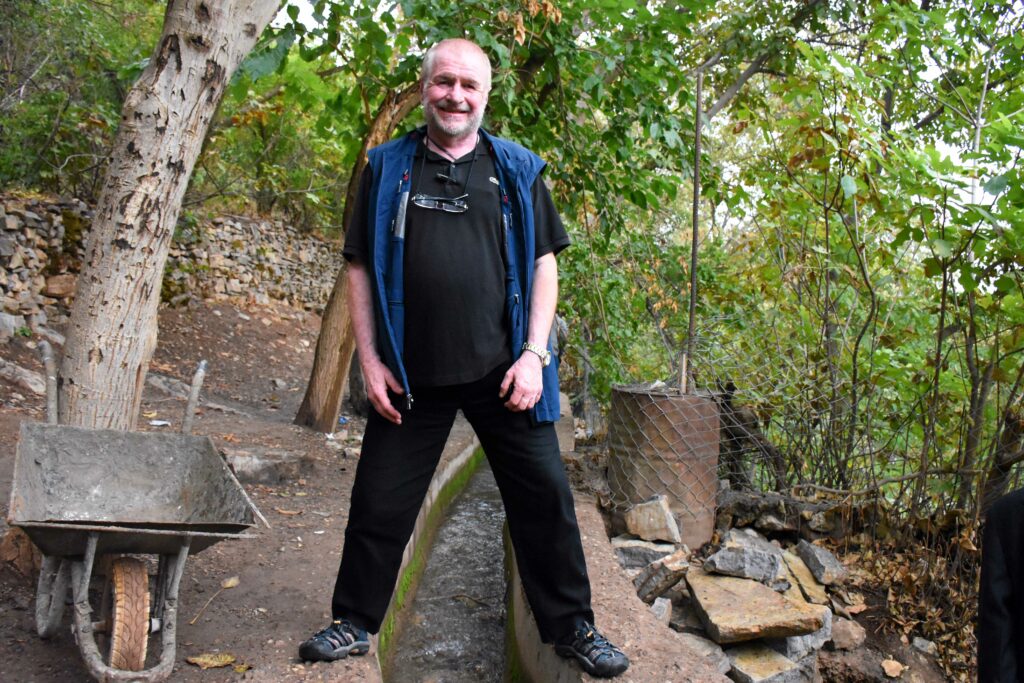
Filled with enough stories of the depths of depravity that men can sink to the afternoon concluded with a visit to the little tourist town of Byara which is right up against the border with Iran. The border here is quite porous as Kurds live on either side and have free movement. We take the steep walking track up the hill and a small acqueduct marks the border. There is no fence nor officials on either side and we take the obligatory border photos with one foot in each country.
Byara main squareMy right foot in Iran, left in Iraq
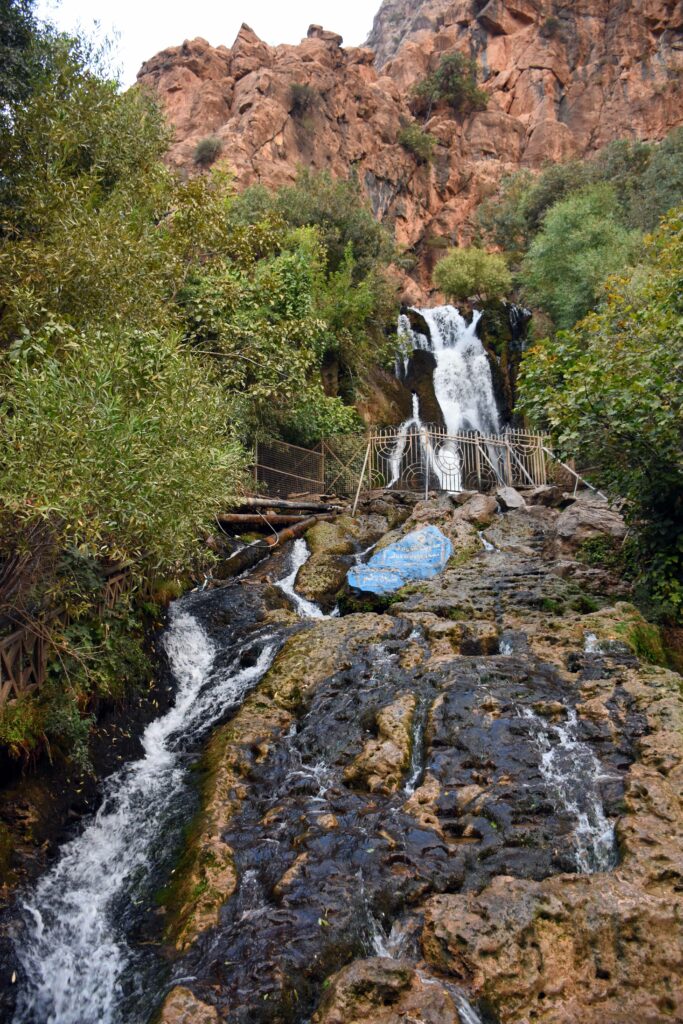
Just before sunset we make it to the Ahmad Awa waterfall and enjoy a coffee at the base. A perfect end to a confronting day.