Categories
Cook Islands

Rarotonga

The main road is a ring road that hugs the beaches. In a cute twist there are two buses that circulate on this road and one is labelled “clockwise” and the other “counterclockwise”. I have rented a car and the total drive time is 40 minutes.

On Saturday morning the market in the main town of Avarua is a popular destination for locals and tourists alike. Mid morning they put on a free dance show.

Market
Cultural show

After lunch I take the steep walk up to Wigmore Falls. Sadly during the dry season it is reduced to a trickle.

Wigmore Falls

On the way down I wander through a bizarre tourist “attraction”, the derelict Sheraton Hotel complex abandoned in 1993. The story behind this is fascinating. In 1987 an Italian construction company presented the Cook Island government a proposal to build their first 5 star hotel. The Cook Island Government signed a $52 million deal with an Italian bank to fund the development. In 1990 at the sod turning ceremony a local family disputing the ownership of the land placed a curse upon it. Not long after the construction company went broke. A second Italian construction resumed work until the Italian Government withdrew its guarantee amid rumours of Mafia involvement. The Cook Island government remained liable for the interest on the loan which grew to $120 million, almost bankrupting the country. The resulting wave of government cuts resulted in a wave of migration to NZ.

Sheraton

We drive around the island stopping for photos.

Avarua Christian Church, oldest in Cook Islands built from limestone in 1828
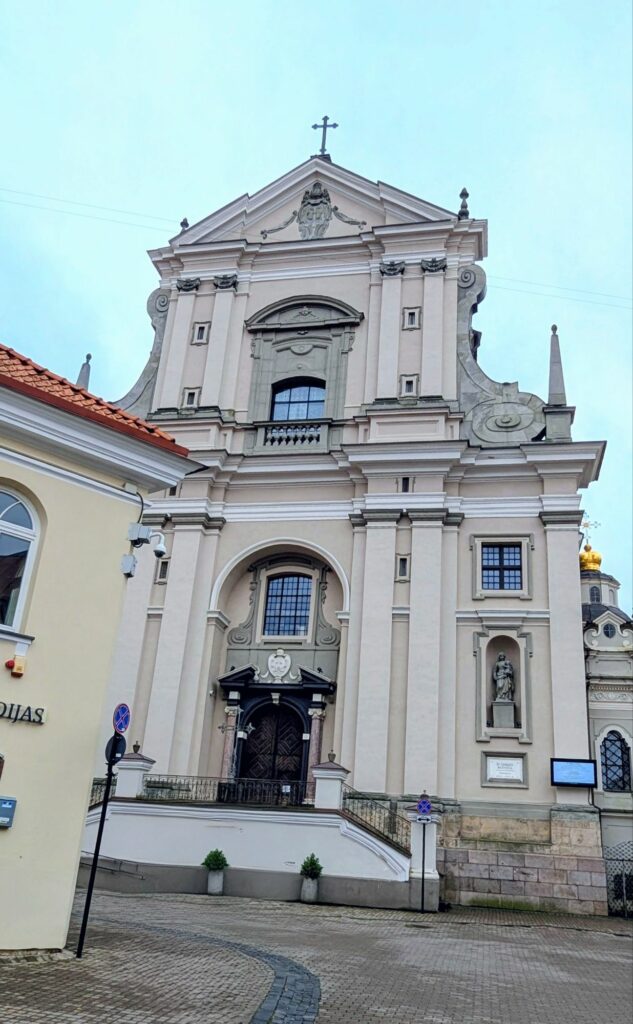
St Joseph Catholic Cathedral
View from our lunch at Charlies Cafe
Rugged mountainous interior

Late in the afternoon we take a long stroll along the white sand beach and stop for a dip on the beach opposite Government House before our last dinner on the island.

Government House
Dinner overlooking the lagoon at Antipodes restaurant
Categories
Cook Islands

Turtles

Snorkelling with turtles is a popular tourist activity and I am in there with bells on. My life partner declines the invitation so I set out early in the morning to Ariki tours and they kit us up with well oiled efficiency and soon we are walking across the lagoon to the Avaavaaroa passage, a small break in the reef to allow us out of the lagoon into the sea. Unsurprisingly it is also a spot with strong tricky currents as the “Danger, beware of currents” sign on the beach reflects.

In addition to the standard snorkelling gear we have an underwater sea scooter strapped to our right wrist. It’s a nifty little James Bond like gadget that whisks us from the beach to the reef in no time at all. In addition I have Chris’ GoPro attached to the scooter and have my new little underwater water camera also strapped to my right wrist. In all I have 3 completely new gadgets to wrestle with and it is probably a mistake. Especially as our guides are taking professional quality images which they upload for us as part of the package.

Me fussing around with equipment
Manta rays on the bottom

The reef drops away and initially all I see is clear deep blue water. Then a turtle deep down on a rock ledge comes into view. We all experience multiple turtle sightings both far and near at one point the current pushed me within a few centimetres of a turtle up near the surface and it took a huge effort to battle the current and avoid a collision.

My turtle pictures

After a magic hour we scooter back into the lagoon for the boat ride to the shore.

Categories
Cook Islands

Time machine

Jetstar has a time machine. We boarded our flight in Auckland on 1st May and arrived in Raratonga on 30 April. The joys of crossing the International date line! Something that makes planning for these trips complex and confusing.

We arrive at our resort at 9:30pm and our spacious and airy villa looks a bit minimalist. Sliding open the rear French doors we hear waves lapping in the darkness. The next morning we awake to the piece de resistance! The view out of the window from our bed is paradise, golden sand beach, turquoise sea and languid palm trees. Twenty to thirty steps takes us to the warm clear sea.

View from our bed
Our villa and beach

The Cook Islands are just over half way between Auckland and Hawaii. Spanish navigator Alvaro de Mendana was the first European to reach the islands in 1595. James Cook visited the islands in 1773 and 1777. He named the island of Manuae Hervey Island. It was Russian cartographers who referred to these islands as Cook Islands in the 1820s and the name has stuck. It is a group of 15 Polynesian Islands, a self governing country but with New Zealand overview in defence and governance. The main island is the biggest, Rarotonga it is a classic Pacific tropical island with beautiful white sand beaches, lagoons and a jungle clad mountainous spine.

I have booked a lagoon cruise on our first day. We start at 11 am and it is a lively crew joking and singing taking us to a snorkeling site and then to a lagoon island for BBQ lunch and entertainment. The snorkelling was a disappointment with uninspiring coral and minimal numbers of fish. The island visit was pretty and good fun.

The lagoon cruise boat
Lagoon snorkelling
Island off Muri beach
Categories
Heart of darkness

Epilogue

Two nights ago I was in a tent pitched on a South Sudanese encampment in cow dung. Now I am chowing down in a first class lounge on foie gras, Wagyu beef and Bordeaux wine. The massive incongruity is most certainly not lost on me and on reflection encapsulates all of what is wrong with this planet.

I love Africa. It is raw, basic and an adventure. The people are warm and fascinating. So too with the wildlife. My first adventure here was in 1986 with a 2 month back pack in East Africa. Sadly this place doesn’t change, at least not for the better. In fact more and more armed conflict seems to define this content. Ranging from Islamic extremists in Saharan Africa to tribal conflicts in places such as South Sudan and, more poignantly the Hutu – Tutsi conflict which continues across at least 4 countries in central Africa.

The West’s response is insipid. An armada of white 4 WD bearing the UN badge criss cross this continent. You see them everywhere! Toothless tigers accomplishing nothing. In some of the better destinations a glorified junket for so called peacekeepers. If the UN/west really wanted to make a difference here how about getting back to basics? Perhaps a 5 year program to supply clean reliable reticulated water to everyone on  the continent. Perhaps another plan for waste/ sewage management. Not as sexy as being a Mickey mouse “peacekeeper” but a whole lot more impactful.

In the meanwhile I look to achieving my goal of visiting and providing a photo record of this diverse continent.

Categories
Heart of darkness

Mundari

A long time ago I saw a documentary about Leni Riefenstahl. In the 1930s she was a prominent cinematographer with potentially a glittering career ahead of her. WW2 erupted and Hitler coopted her to be his cinematographer and she made a number of propaganda films for him. Viewing them now in grainy black and white one can ee she is a master of her craft. Post WW2 she maintained that she was forced into making these films but her career as a movie maker was over. In her sixties she flew over and lived with the Nuba in South Sudan. Her eponymous book published in 1972 I have at home and is a remarkable photo essay of these proud, statuesque noble people. It is a glimpse of this that I am here to see. Interestingly this amazing woman took up SCUBA diving when she was 90 years of age and lived to the age of 101 as a vigorous active amazing lady.

The Mundari are a seminomadic pastoralist tribe. The actual drive to them only takes 40 minutes from Juba which is visible on the horizon from their camp. These people have a rich culture based upon their cattle herds. They take the animals out to graze during the day returning at night to tie them up securely to pegs laid out on ground. The setting sun provides the backdrop for the securing of hundreds of lowing cattle each of them tenderly managed including a dusting of ash to ward off insects. There is an intimacy, almost mysticism about being here to watch this.

We camp overnight with the Mundari. The morning is a flurry of activity. Obviously they milk the cows but That’s not all. They do not kill the cows at all so don’t use milk and hides unless they die of natural causes. They do, though, use the dung drying and burning that for ash to decorate themselves and also repel insects. They also use their urine in the morning supposedly as antiseptic and to moisturise skin but the end result is literally a “golden shower”. It does not stop there if a crow’s milk is declining they employ a technique of blowing into the vagina of the cow which apparently stimulates milk production.

Sunrise at our camp
Milking
Brushing teeth
Golden shower
Vaginal blowing
Breakfast

Smoking Ganja
Juba from Mundari camp
Categories
Heart of darkness

South Sudan

South Sudan shares the dual “honour” of being the youngest nation in the world established in 2011 and also the poorest country in the world. As an aside on this trip I have visited the 3 poorest contries on the planet in order South Sudan, Burundi and CAR. This is a large country hived off from Sudan to the north, Sudan being Muslim and South Sudan being Christian/tribal religions. South Sudan is a country rich with oil resources but these are useless when the pipeline to export this runs through Sudan and has been sabotaged in Sudan who refuses to repair it.

It is a country that was born in the crucible of war with Sudan and all of its short history has been wracked with war, ongoing with Sudan and civil war from within with dissenting tribes. There are 64 ethnic groups in South Sudan. I tried to research the ongoing conflicts here and went cross eyed reading about and understanding the various groupings in this crazy mixed up nation.

Once again the capitol, Juba is underwhelming. Unlike Europe one doesn’t visit Africa for the sights of the big cities. Nonetheless it does have the white Nile flowing through it before it becomes th massive swamp known as the Sud. Eventually it merges with the blue Nile in far off Khartoum before becoming the main artery of Egyptian existence thence flowing into the Mediterranean sea.

Catholic Cathedral
Market
Street scenes
University
White Nile cruise
This is what $100 looks like
Hate an airport where I can’t bring my pistol!
Categories
Heart of darkness

Bangui

The capitol of CAR, Bangui sits in the southwestern corner of this large country. The sluggish slate grey Ubangi River separates it from neighbouring DRC. Traditional dug out canoes ply the river and they are particularly busy ferrying passengers early morning and late afternoon. Most of the town is ramshackle but there is a small section around parliament, government offices and the embassies that is a bit less scruffy. Our city tour took us around these venues for a couple of hours and that completes CAR for me.

Early morning transport across the river from my hotel
The infamous President Bokassa who at one stage had himself emperor. There are some gruesome stories about him online. Worth a read
Parliament with present President Kolinga statue
Football stadium
Basketball stadium built by the Yugoslav government. That was a while ago! It has seen better days and the pervading aroma of piss at he entrance is particularly unappealing
Wagner monument protecting the innocent locals. A monument to a vicious Russian mercenary group composed of criminals and misfits. That says it all!
Martyrs monument dedicated to victims of Bokasa’s rule
Notre Dame Cathedral
Categories
Heart of darkness

That’s not a pygmy! (With apologies to Paul Hogan)

Our visit to a pygmy settlement in Rwanda was, as I mentioned before, light on with pygmies. Two hours rough drive out of town I am taken to a real pygmy village. At least none of them were anywhere near as tall as I am. The countryside is lush and green with native forest. Market towns are everywhere and the locals seem to be enjoying their labor’s. My guide tells me that food out here is cheaper than in the capitol and I am happy to have him stop and buy things it leads to photo opportunities for me but I am a bit grossed out by his initial purchase of a massive dead rat! Perhaps ratatouille is on the menu tonight!

Rural village life
Rat seller
Pygmy village
Chief
Traditional pygmy huts
The chief and I

The dance begins

The journey back

Categories
Heart of darkness

Central African Republic (CAR)

A wall of heat greets me as I deplane in the capitol, Bangui. As we taxied in there is not a single other passenger aircraft here. There are, though, 2 rows of UN branded aircraft something I have never seen before. The airport terminal is pure 1950s era with big fans whirring in the small cramped immigration area. Entry is not visa on arrival and I only have a cover note from my tour operator not a visa. An anxious 40 minute wait ensues before the corpulent African official with the booming voice exclaims “Mr Peter” and hands me my stamped passport.

This is Africa in the raw, no tourists minimal infrastructure. Driving in the streets are crowded with pedestrians, few vehicles and lined with ramshackle structures selling what goods they can obtain. I had low expectations before coming here and they have not been exceeded. My rundown hotel still sports a Sofitel name plate dating back to 1965. I am sure it has long ceased to be part of the Sofitel stable.

My hotel
Don’ts you just hate it when a hotel doesn’t allow your AK 47 in!
Ubangi River from my hotel. Opposite bank is the town of Zongo in DRC The border is midway through the river
Rural villages

I have only had a couple of hours broken sleep due to the flight schedule but when my guide suggests we see the Boali Waterfalls this afternoon, I am instantly reenergised. Leaving town it is a 2 hour road pockmarked with potholes some of which could swallow a small car. The waterfalls are the main geographical tourist attraction here and they do not disappoint.

Boali Falls
Upriver
Categories
Heart of darkness

Genocide

During the Belgian occupation the Belgians divided this population basically on their wealth. If one owned 10 or more cos you were deemed as Tutsi, supposedly smarter and superior. The rest of the population, sizeable 84% were named Hutus and deemed to be less intelligent and less successful. The Belgians installed the minority Tutsis as the ruling class and this kept the majority Hutus downtrodden.
After independence Hutus ruled Rwanda excluding all Tutsis from any position of power or influence. Open conflict ensued frequently but in the lead up to 1994 the Hutu backed army and militias planned a sophiscated operation to exterminate Tutsis drawing up a well researched hit list of victims. At that stage there was a peace plan drawn up by Hutu president Habyarimana to reintegrate the Tutsi minority into one state, one peoples.. On 6 April 1994, he and the president of Bujumbura were shot down in a plane flying back from a signing ceremony in Dar es Salaam. Bizarrely the aircraft crashed into the palace grounds killing all. Even more bizarrely the missile was shot from the Hutu army barracks clearly from his own side but unhappy at the prospect of reconciliation with the Tutsis.

Former presidential palace

Overnight a bloodthirsty, murderous Hutu force was unleashed. The Rwandan media repeatedly urged listeners to “kill the cockroaches (Tutsis)” One million were killed in 3 months until the Tutsis RPF forces could enter the country and establish order and and end to the bloodshed. It is not only the sheer scale of death but the obscene sick and violent modes of killings that is so disturbing. Also worth mentioning shame on the UN for withdrawing its peacekeeping force at the start of the genocide. Similarly the duplicitous French armed the Hutus and as the tide turned used their troops to ensure the safe passage of the inhuman Hutu murderers.

The Rwandan capitol of Kigali is all about the genocide monuments ranging from the museum to the Hotel Mille Collines featured as the Hotel Rwanda in the eponymous movie to the nearby genocide sites both churches that used to be safe havens for all inside it and now turned into killing fields in the most barbarous manner by the Hutus. Once again visiting these sites of barbarity reduces me to tears.

Kigali Genocide memorial
Mass graves, thousands of massacred Tutsis interred there
Nyamata was a church where thousands of Tutsis sought refuge. Hutus threw grenades in and macheted and clubbed to death any survivors
Same happened at the Ntarama church

We are sitting enjoying a drink at the bar of the “Hotel Rwanda”. I have long wondered how this country can have victims and perpetrators of the genocide coexist. Anyone over the age of 35 must have some memory of the violence and bloodshed. How does one live with that? Maybe the answer to my question has emerged from the mouth of our drinks waiter who the group engages to talk about his hotel’s humanitarian achievement in 1994. When asked directly his response was “We are not allowed to talk about the genocide”. So suppression is the answer for these peoples. I hope it works for them.

Kigali
Hotel Rwanda